

What sizes are available for printed jewelry boxes?
Struggling to find the right size for your printed jewelry boxes? Choosing incorrectly can lead to wasted materials and unhappy clients. Let's explore the common options and how to get it right.
Printed jewelry boxes come in many standard sizes for rings, earrings, necklaces, and bracelets. However, custom sizes are very common to perfectly match specific jewelry pieces and branding needs.
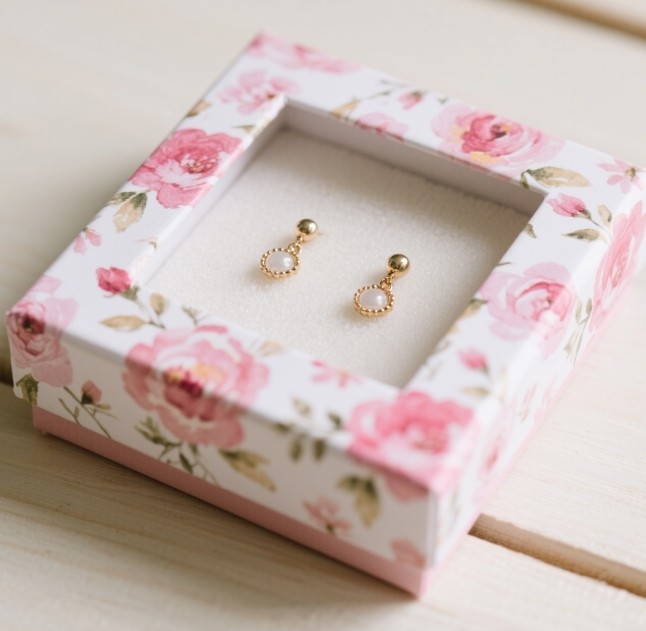
Getting the size spot-on is crucial not just for presentation, but for efficient production. You want a box that fits the item snugly and looks great, but you also need sizes that your machines can handle effectively. Understanding the common dimensions and how they relate to production is key, especially when you're aiming for quality and efficiency, something we focus on here at Kylin Machine. Let's dive into the specifics.
What is the size of a jewelry box?
Wondering what the "standard" size for a jewelry box actually is? This lack of clarity can cause confusion and errors in your production planning. Let's pin down typical sizes.
There isn't one single standard size. Dimensions vary greatly depending on the jewelry type (ring, necklace, etc.), brand style, and insert requirements. Common ranges exist, but custom sizing is frequent.
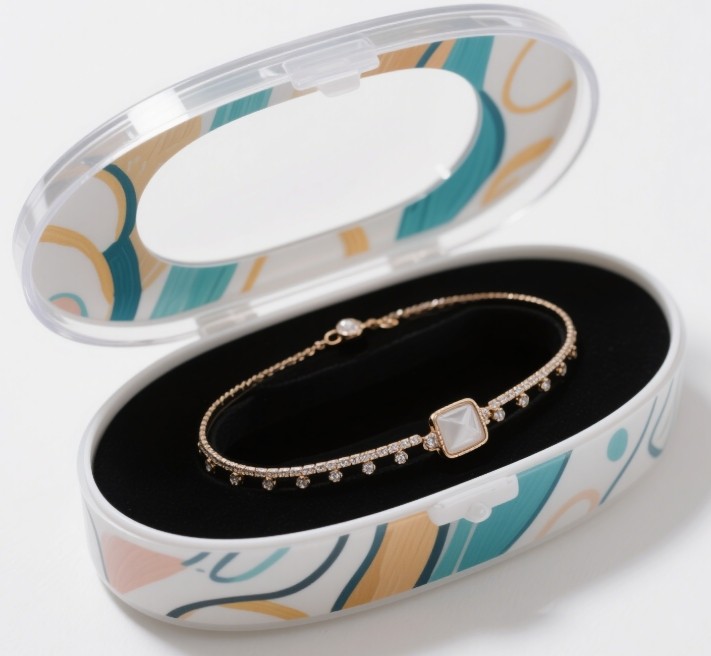
When we talk about jewelry box sizes, we're usually looking at ranges tailored to the item inside. While customization is king, knowing the typical starting points helps streamline design and production.
Common Jewelry Box Size Ranges
Here's a general idea of common internal dimensions you might encounter:
| Jewelry Type | Typical Internal Size Range (L x W x H) | Notes |
|---|---|---|
| Ring Boxes | 2" x 2" x 1.5" to 3" x 3" x 2" | Often square, sometimes includes a slit. |
| Earring Boxes | 2" x 2" x 1" to 4" x 4" x 1.5" | Can be square or rectangular. |
| Bracelet Boxes | 8" x 2" x 1" to 9" x 3" x 1.5" | Usually long and rectangular. |
| Necklace Boxes | 6" x 6" x 1" to 8" x 8" x 1.5" | Often larger squares or rectangles. |
| Pendant Boxes | 3" x 3" x 1" to 4" x 4" x 1.5" | Similar to earring boxes, slightly larger. |
Factors Beyond the Jewelry
It's not just about fitting the piece:
- Brand Aesthetic: A luxury brand might choose a larger, more substantial box.
- Protective Inserts: Foam, velvet, or cardboard inserts take up space and influence internal dimensions.
- Production Costs: Larger boxes use more material. Smaller, standard sizes might be more cost-effective to produce in bulk.
For us at Kylin Machine, understanding these variations is vital. Our rigid box making machines are designed for flexibility. Whether you're producing thousands of standard ring boxes or need to switch to a custom run of larger necklace boxes, the adaptability of equipment like our Robotic Spotters ensures precision and minimal downtime, handling various sizes efficiently. This capability is essential for our customers serving diverse client needs.
How do you measure a jewelry box?
Getting measurements wrong can be costly. Incorrect dimensions lead to boxes that don't fit, wasting materials and production time. Let's clarify the simple, correct way to measure.
Measure a jewelry box using Length x Width x Height (L x W x H). Critically, measure the internal dimensions to ensure the jewelry fits, and external dimensions for shipping and storage.
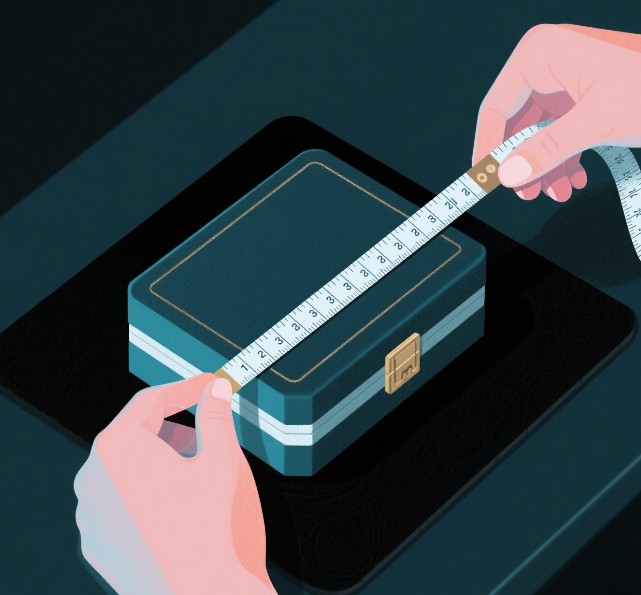
Measuring seems basic, but precision matters greatly in box making. Slight errors can compound quickly, especially in large production runs.
Inside vs. Outside: What Matters Most?
- Internal Dimensions (L x W x H): This is usually the most critical measurement. It determines if the jewelry item, along with any necessary insert or padding, will actually fit inside the closed box. Think of it as the usable space. Always measure the inside length, width, and height from wall to wall.
- External Dimensions (L x W x H): This measurement includes the thickness of the box walls (paperboard, wrapping). It's important for:
- Shipping: Calculating shipping volume and costs.
- Storage: Planning warehouse space.
- Retail Display: Ensuring the box fits shelves or display cases.
Precision is Key
Use a reliable ruler or caliper for accuracy. Even a millimeter difference can impact the fit and finish. When specifying dimensions for production, always clarify whether you mean internal or external measurements.
In my experience at Kylin Machine, providing precise dimensions is fundamental for automated production. Our machines, like the automated rigid box lines, rely on exact measurements programmed into the system. This data guides the cutting, grooving, corner pasting, and wrapping processes. For instance, our Robotic Spotter uses vision systems to place the wrap with sub-millimeter accuracy based on the programmed box dimensions. Consistent, accurate measurements input into machines like ours are essential for producing high-quality, perfectly fitting jewelry boxes every time.
What are the different compartments in a jewelry box for?
Using a simple, empty box often isn't enough. Jewelry gets tangled, scratched, or looks poorly presented without proper support. Understanding compartments helps you create better packaging.
Compartments, like inserts, dividers, slots, or pads, are designed to securely hold specific types of jewelry (rings, earrings, necklaces), preventing damage, keeping items organized, and enhancing presentation.
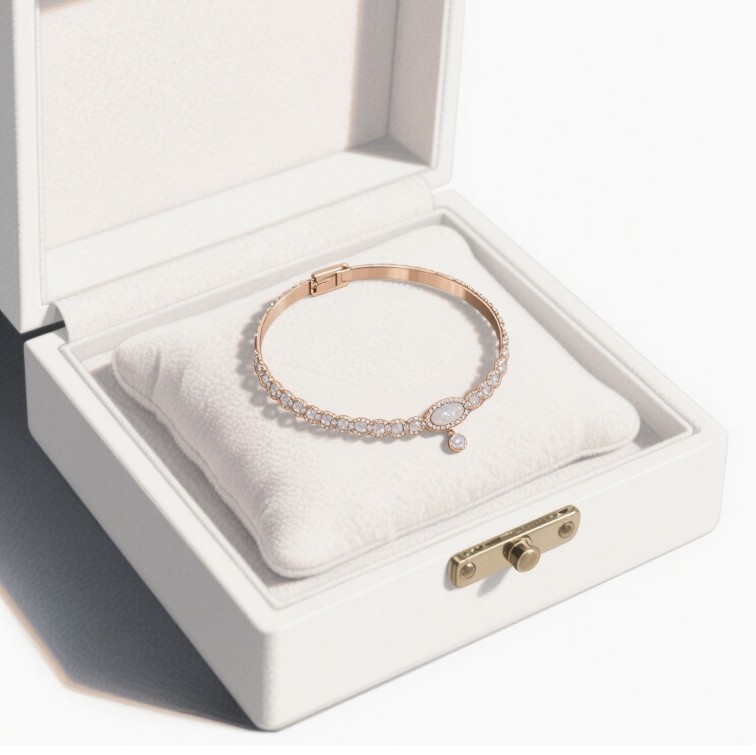
Compartments, often created using custom inserts, transform a basic box into functional, protective packaging. They add significant value for the end-user.
Types and Functions of Compartments
Here’s a look at common types:
- Ring Slits/Rolls: Usually made of foam or velvet-covered material with slits to securely hold ring bands upright.
- Earring Holes/Pads: Small holes punched into a card or foam pad to hold stud or dangle earrings separately.
- Necklace Hooks/Clips: Small hooks or elastic loops at the top of an insert to hold chains, preventing tangling. Often paired with a lower slit or pocket.
- Watch Pillows: Small, soft cushions designed to wrap a watch around, keeping its shape and protecting the band and face.
- Divided Sections: Cardboard or foam dividers creating separate areas for multiple items like charms, beads, or sets.
- Velvet/Foam Pads: Flat pads provide a soft base and can have cutouts shaped to fit a specific jewelry piece snugly.
Why Use Compartments?
- Protection: Prevents items from scratching against each other or the box walls. Stops chains from tangling.
- Organization: Keeps multiple items neat and easy to view. Essential for sets.
- Presentation: Showcases the jewelry beautifully, enhancing perceived value.
Creating boxes with these internal structures requires careful planning and capable machinery. While the inserts themselves might be made separately, the box dimensions must perfectly accommodate them. Our Kylin rigid box lines are designed to produce precise box shells consistently, ensuring that these custom inserts fit perfectly every single time. The accuracy in forming the base and lid is critical for a seamless fit with intricate internal compartments, delivering the high-quality finish your clients expect.
What size box for bracelets?
Choosing a box for bracelets presents a unique challenge. Bracelets vary widely, from delicate chains to chunky bangles. Get the size wrong, and the bracelet might rattle around or be squashed.
Bracelet boxes are typically long and rectangular (e.g., 8" x 2" x 1") or sometimes square (e.g., 3.5" x 3.5" x 1.5"). The ideal size depends heavily on the bracelet's style, thickness, and flexibility.
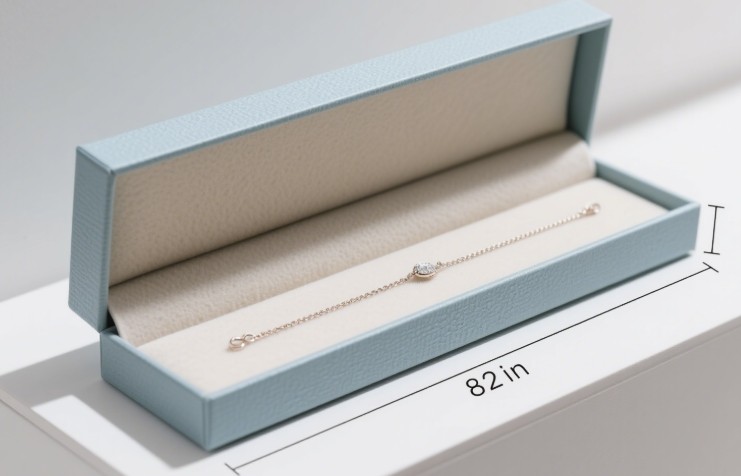
Bracelets need specific consideration because their shapes and sizes differ so much. A one-size-fits-all approach rarely works well.
Common Bracelet Box Sizes and Considerations
| Bracelet Type | Typical Internal Size Range (L x W x H) | Key Considerations |
|---|---|---|
| Chain Bracelets | 8" x 2" x 1" to 9" x 2" x 1" | Needs length; often uses clips or elastic loops. |
| Charm Bracelets | 8" x 2" x 1.5" or 4" x 4" x 1.5" | Needs depth for charms; may need padding. |
| Bangles (Rigid) | 3.5" x 3.5" x 1.5" to 4" x 4" x 2" | Often square; needs padding or a pillow insert. |
| Cuff Bracelets | 3" x 3" x 2" to 4" x 4" x 2.5" | Needs depth and width; often uses a pillow. |
Factors Influencing Bracelet Box Size:
- Flexibility: Chain bracelets can be laid out straight, requiring a long box. Rigid bangles or cuffs need a box that accommodates their fixed diameter, often square.
- Thickness/Bulk: Charm bracelets or thick cuffs need deeper boxes than delicate chains.
- Padding/Inserts: Using a pillow insert (common for bangles and watches) requires a deeper, often squarer box. Flat pads might work for thinner bracelets in rectangular boxes.
- Presentation: How do you want the bracelet displayed when the box is opened? Lying flat? Wrapped around a form?
Producing these varied sizes efficiently is crucial for packaging manufacturers. At Kylin Machine, we ensure our equipment can handle these different formats. Whether it's adjusting for the longer dimensions of a standard bracelet box or setting up for the squarer, deeper boxes needed for bangles with pillows, our automatic rigid box makers provide the necessary flexibility and precision. This allows our customers to confidently offer packaging solutions for the entire range of bracelet types their clients might sell.
Conclusion
Jewelry box sizes vary widely, from standard dimensions to fully custom designs. Measuring correctly and understanding compartments is key. Ultimately, producing high-quality, perfectly sized boxes relies on precise, flexible machinery like ours at Kylin Machine.
About Me:
My name is Jacob, and I represent Kylin Machine (www.kylinmachines.com). We're based in Dongguan, China, and since 2003, we've specialized in manufacturing advanced post-press machinery. We focus on high-tech solutions like Robotic Spotters and Hybrid machines for rigid box and hardcover book production. Serving the graphic arts, paper converting, and bookbinding industries, we operate on a B2B wholesale model, providing technology and service to thousands of users across more than 20 countries. Our goal is to empower businesses like yours with efficient and reliable packaging production capabilities.



发表回复