

How much does it cost to make a cardboard box?
The rising costs of raw materials, labor, and shipping have left many businesses struggling to manage their packaging expenses. Are you paying too much for your cardboard boxes?
The cost to make a cardboard box typically ranges from $0.35 to $5 per unit depending on material quality, size, quantity, customization, and supplier location. Standard cardboard boxes cost $2-3 each, while custom or rigid boxes can reach $4-5 per unit.
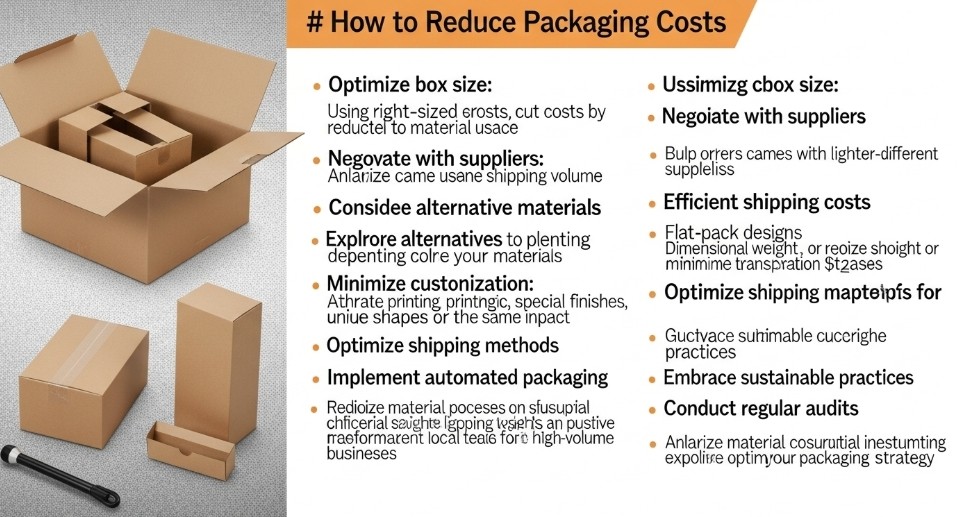
Understanding what drives these costs can help you make smarter packaging decisions for your business. Let's break down exactly what you're paying for and how to optimize your packaging budget without sacrificing quality.
How much does it cost to produce a cardboard box?
The raw materials alone can make up 60% of your box costs, with corrugated fiberboard prices constantly fluctuating due to wood pulp and recycled paper market conditions. Have you noticed your packaging costs creeping up lately?
Production costs for cardboard boxes are primarily driven by material quality, thickness, and manufacturing processes. Corrugated cardboard with multiple layers costs more but provides better protection. For 100 units of printed cardboard boxes, expect to pay between $380-$480 total, or roughly $3.80-$4.80 per unit.
 ](https://postpressmachines.com/?attachment_id=5549)
Material Quality and Thickness
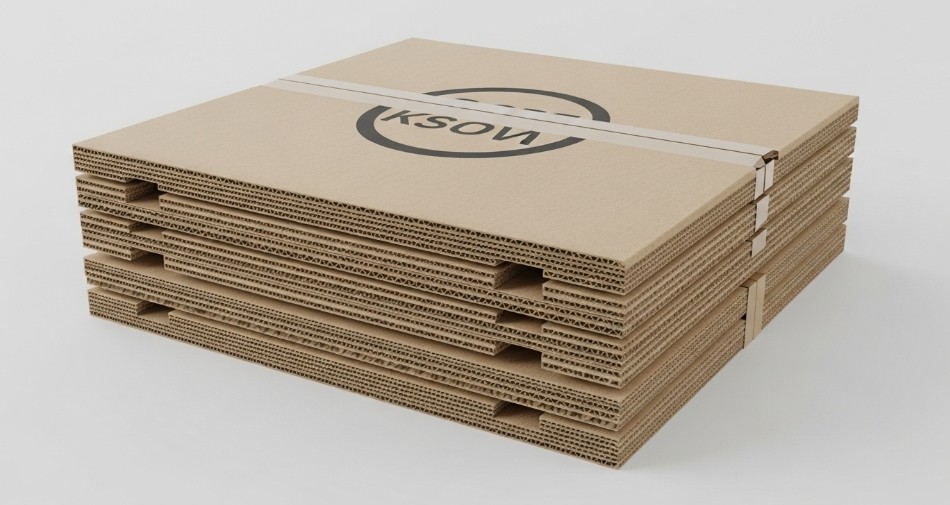
The quality and thickness of cardboard significantly impact the final cost of your boxes. Standard cardboard is generally the most affordable option, suitable for packaging lightweight products. However, if you're shipping fragile items or need boxes that can withstand rough handling, you'll want to invest in corrugated cardboard.
Corrugated cardboard consists of multiple layers, providing superior strength and durability. This added protection comes at a higher price point, typically increasing your per-unit cost by 30-50% compared to standard cardboard. I've found that for my clients in the electronics industry, this additional cost is well worth the investment, as it significantly reduces damage claims during shipping.
The thickness of cardboard is measured in flutes, with different flute sizes (A, B, C, E, and F) offering varying levels of cushioning, stacking strength, and printing surface quality. B-flute provides a good balance of strength and printability for most retail packaging, while E-flute offers excellent printing surfaces for high-end retail boxes but at a premium price.
When selecting materials, consider not just the immediate cost but also the total value. A slightly more expensive box that prevents product damage will save you money in the long run through reduced returns and improved customer satisfaction.
What is the cost of making a box?
Size matters when it comes to box pricing - larger boxes require more material and take longer to manufacture, driving up costs. But did you know that custom sizes often cost more than standard dimensions?
The total cost of making a box includes materials (60%), labor (15-20%), overhead (10-15%), and profit margin (10-15%). Economies of scale significantly impact pricing - ordering in bulk can reduce per-unit costs by 30-50%. A box that costs $4 in quantities of 100 might cost only $2 in quantities of 1,000.
Quantity and Economies of Scale
One of the most significant factors affecting your cardboard box costs is order quantity. The principle of economies of scale applies strongly to packaging production - the more units you order, the lower your per-unit cost will be.
This cost reduction occurs because setup costs (preparing printing plates, configuring machinery, etc.) are spread across more units. Additionally, manufacturers can optimize production runs and purchase raw materials in larger quantities at better rates.
For example, ordering 100 custom boxes might cost you $4-5 per unit, but increasing your order to 1,000 boxes could bring that cost down to $2-3 per unit - a savings of up to 50%. When I helped a small cosmetics company restructure their packaging strategy, we found that by ordering quarterly instead of monthly, they reduced their packaging costs by 35% without changing box specifications.
However, larger orders also mean higher upfront costs and increased storage requirements. You'll need to balance these factors against your cash flow and warehouse space limitations. For businesses with predictable, steady product demand, larger orders make financial sense. For those with seasonal fluctuations or limited storage, smaller, more frequent orders might be preferable despite the higher unit cost.
How much does a box cost to make?
Labor costs have been rising globally, with skilled packaging workers commanding higher wages. This, combined with increased automation investments, has pushed up the overall cost of box manufacturing. Is your supplier passing these costs directly to you?
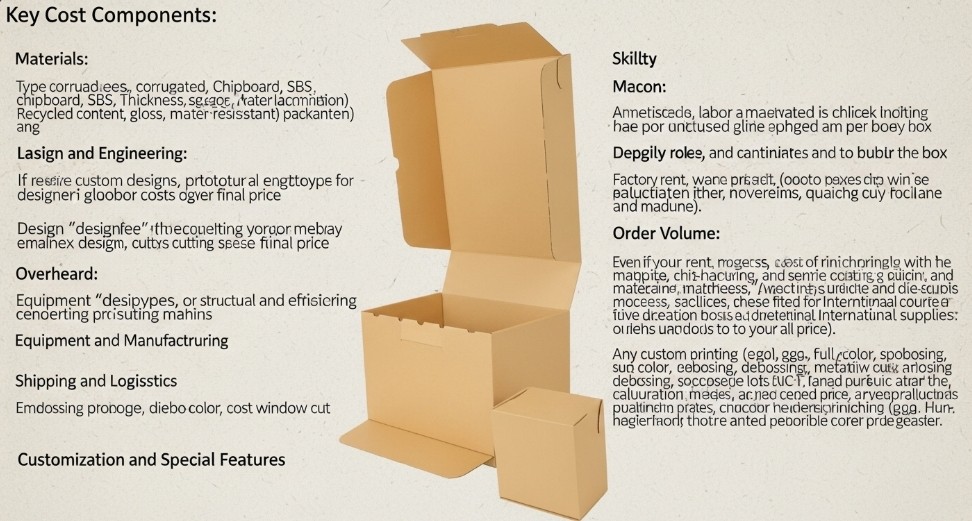
Box manufacturing costs vary by supplier and location. Local suppliers might charge more but offer convenience and lower shipping costs. Suppliers in regions with lower production expenses may offer better rates but with longer lead times. Every manufacturer factors in labor costs, designer fees, equipment costs, and overhead when calculating per-unit pricing.
Supplier Selection and Location Impact
The supplier you choose can significantly impact your cardboard box costs. Different manufacturers have varying overhead costs, equipment efficiency, labor rates, and profit margin requirements. This explains why you might receive quotes that differ by 10-20% for seemingly identical specifications.
Geographic location plays a crucial role in pricing. Manufacturers in regions with higher operating costs (labor, rent, utilities, etc.) typically charge more than those in lower-cost areas. However, proximity to your business location can offset some of these differences through reduced shipping costs and faster delivery times.
When I worked with a publishing company looking to reduce their packaging expenses, we found that switching from a local supplier to one located 300 miles away resulted in a 15% cost reduction even after accounting for increased shipping expenses. However, this came with a trade-off of longer lead times and less flexibility for rush orders.
Developing relationships with multiple suppliers can be advantageous. Having alternative sources not only provides leverage in price negotiations but also offers backup options during supply chain disruptions. I recommend maintaining relationships with at least two reliable suppliers - one optimized for cost and another for speed and flexibility.
How much does it cost to design a box?
Custom box design adds another layer of cost, but can significantly enhance your brand perception and customer experience. Have you considered how your packaging design impacts customer loyalty and repeat purchases?
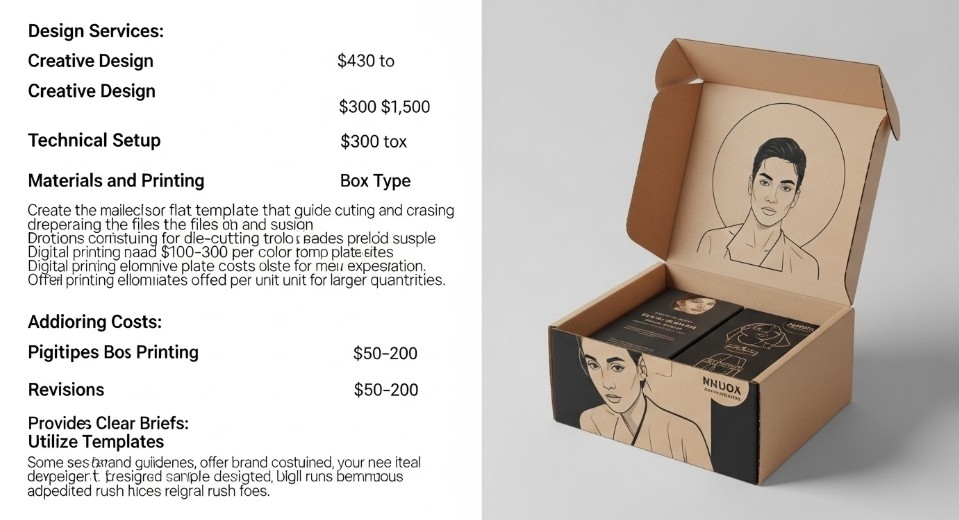
Design costs for cardboard boxes include both creative design fees and technical setup charges. Graphic design services typically range from $300-$1,500 depending on complexity. Technical setup costs include die-cutting tools ($300-$500 for small boxes) and printing plates ($100-$300 per color). Digital printing eliminates plate costs but is more expensive per unit for larger quantities.
Design Complexity and Printing Methods
The complexity of your box design directly impacts both initial setup costs and per-unit production expenses. Simple one or two-color designs with basic shapes cost significantly less than elaborate multi-color designs with special finishes or structural elements.
Printing method selection also plays a crucial role in determining costs:
| Printing Method | Best For | Cost Factors | Typical Cost Range |
|---|---|---|---|
| Digital Printing | Small runs, detailed graphics | No plate costs, higher per-unit cost | $1.50-$3.00 per unit for 100-500 units |
| Offset Printing | Medium to large runs, consistent quality | Plate costs, lower per-unit cost for volume | $0.80-$2.00 per unit for 1,000+ units |
| Flexographic Printing | Large runs, simple designs | Plate costs, very economical at scale | $0.50-$1.50 per unit for 5,000+ units |
When I helped a specialty food company redesign their gift box packaging, we initially considered a six-color design with spot UV highlights. After analyzing the cost impact, we simplified to a four-color design that maintained the premium look while reducing printing costs by 25%.
Special finishes like embossing, foil stamping, spot UV coating, or soft-touch lamination can dramatically enhance perceived value but add $0.50-$1.50 per unit to your costs. These premium finishes are typically justified for luxury products where packaging plays a significant role in the overall brand experience.
Conclusion
The cost to make a cardboard box depends on multiple factors including materials, size, quantity, customization, and supplier selection. By understanding these cost drivers, you can make informed decisions to optimize your packaging budget.
My Role
At Kylin Machine, we specialize in manufacturing high-quality post-press machines for the packaging industry. Our rigid box machines like the KY-550C

发表回复