

What defines a truly good carton box factory?
Struggling with inconsistent box quality? Worried about late deliveries? Finding a reliable carton box factory is key to your product's safety and presentation.
A good carton box factory delivers consistent quality, reliable service, and utilizes efficient machinery. This often includes advanced solutions like those from Kylin Machine, ensuring they meet diverse and demanding packaging needs effectively.
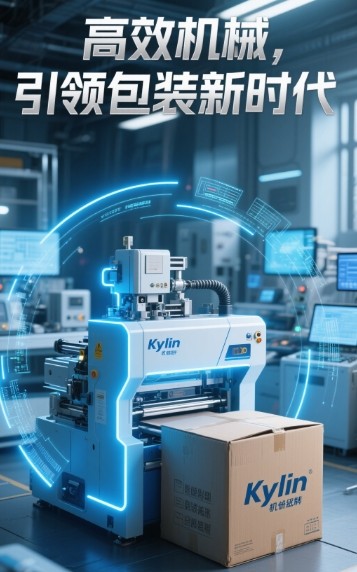
It's not always easy to tell a great factory from an average one just by looking at their website. You need to dig a bit deeper to understand what sets the best apart. We will explore several aspects that help you identify a top-tier carton box manufacturing partner, someone who can truly support your business. Let's look at some common questions people have.
Who is the largest manufacturer of cardboard boxes?
Wondering about the Goliaths of box making? Curious who produces the most? It's natural to think big names mean big quality.
Globally, companies like WestRock and International Paper are among the largest. However, "largest" doesn't always equate to the best fit for your specific, possibly specialized, carton box needs where precision machinery is crucial.
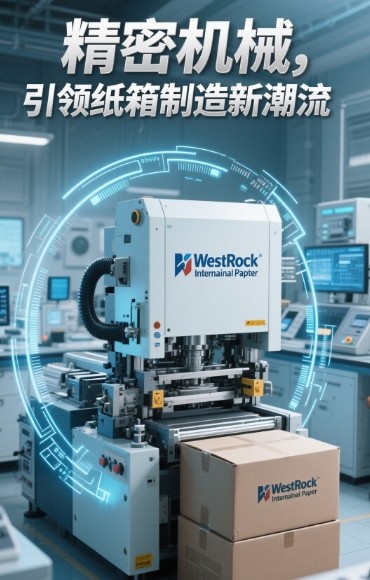
When we talk about the "largest" manufacturers, we often think of sheer volume. Companies that produce millions of standard corrugated boxes daily certainly have impressive operations. They serve vast markets, often focusing on high-volume, lower-complexity packaging. This scale brings advantages like economies of scale in raw material purchasing.
However, my experience in the packaging machinery industry, especially here at Kylin Machine, has shown me that "largest" isn't the only metric for success, nor is it always what a customer needs. Many businesses, particularly in graphic arts, paper converting, and bookbinding, require more than just a standard brown box. They need specialized solutions like rigid boxes, collapsible boxes, or intricate book covers.
The Niche of Specialization
This is where the size of the manufacturer becomes less important than their capability and technology. A factory might not be the "largest" in terms of square footage or total tonnage, but it can be a leader in producing high-quality, value-added packaging. This is achieved through:
- Advanced Technology: Utilizing state-of-the-art machinery.
- Skilled Workforce: Employing operators who understand the nuances of complex box making.
- Focus on Quality: Prioritizing precision and durability over sheer volume.
How Kylin Machine Empowers Factories
At Kylin Machine, we don't build the boxes, but we empower factories to become good and profitable by providing the technology they need. Our machines, like the Robotic Spotter and Hybrid systems for rigid box and hard book cover solutions, enable manufacturers to:
- Produce highly precise and complex designs.
- Achieve consistent quality that commands better prices.
- Automate processes, increasing efficiency and reducing reliance on manual skill for certain tasks.
So, while a few giants dominate bulk production, a "good" factory for your needs might be one that has invested in specialized technology like ours. They focus on quality and customized solutions, making them a leader in their specific market segment. I remember visiting a client who wasn't the largest in their region, but after integrating our Kylin rigid box lines, they became the go-to supplier for luxury packaging, significantly boosting their reputation and profit.
How do you check the quality of a carton box?
Concerned about boxes failing? Worried your products might get damaged? Learning to assess carton box quality is vital for peace of mind.
Check the material (flute type, paper weight, liner quality), construction (secure gluing, accurate folds, tight corners), and print finish. For premium rigid boxes, precision from machines like Kylin's is fundamental to quality.
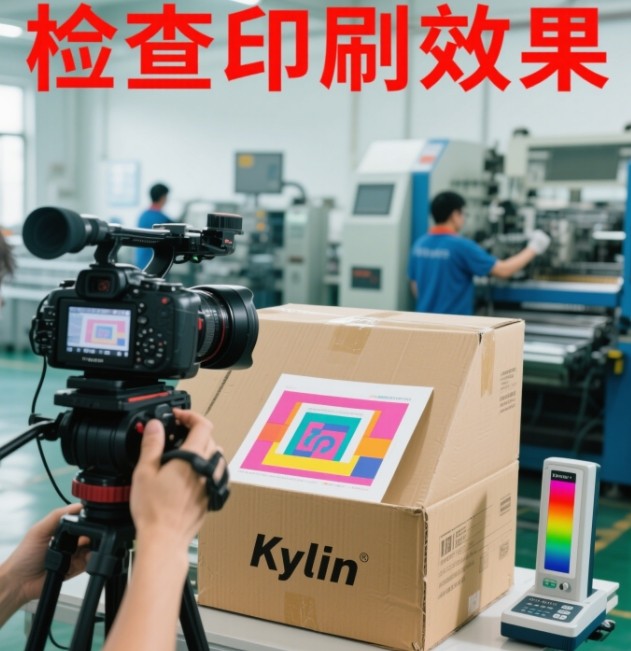
Ensuring the quality of your carton boxes is crucial because they protect your products and represent your brand. From my perspective at Kylin Machine, where we focus on the equipment that makes these boxes, I've learned that consistent quality comes from attention to detail at every stage, heavily influenced by the machinery used.
Here’s a breakdown of what to look for:
Material Inspection
The foundation of a good box is its material.
- Paper Type and Weight: Is the paperboard or corrugated material appropriate for your product's weight and the shipping conditions? Heavier items need stronger board.
- Flute Profile (for corrugated boxes): Different flutes (e.g., B-flute, C-flute, E-flute) offer varying crush resistance and cushioning.
- Linerboard Quality: The inner and outer layers should be smooth and robust. For printed boxes, a good quality liner ensures better print results.
Construction Integrity
How the box is assembled is just as important as the materials.
- Adhesion: Check the glue lines. Are they consistent and strong? Poor gluing is a common point of failure. Our Kylin machines, for example, are designed for precise glue application to ensure every box is perfectly sealed.
- Scores and Folds: Are the creases clean and accurate? This ensures the box folds correctly and maintains its shape.
- Dimensional Accuracy: Does the box meet the specified dimensions? Inconsistent sizing can cause problems with packing or automated lines. This is where the precision of machinery, like our Robotic Spotters for rigid boxes, makes a huge difference. I recall a customer struggling with manual assembly variations before switching to our automated solution; their rejection rate dropped significantly.
- Squareness and Seams: Are the corners square? Are the seams tight and well-aligned?
Print and Finish Quality
If your boxes are printed, the visual aspect is key.
- Print Clarity and Color: Is the printing sharp? Are the colors accurate and consistent?
- Finishing: If there are laminations, varnishes, or embossing, are they applied correctly without defects?
Machines from Kylin, especially those for rigid boxes and book covers, are built to ensure these quality aspects. For instance, our Robotic Spotter technology ensures perfect placement of wraps on rigid boxes, leading to flawless corners and a premium finish. This level of precision is hard to achieve consistently with less advanced or manual methods.
| Quality Aspect | Key Checkpoints | Kylin Machine Contribution (for relevant boxes) |
|---|---|---|
| Material | Correct grade, weight, flute type | N/A (material selection is pre-machine) |
| Construction | Glue adhesion, fold accuracy, dimensions, corners | Precise gluing, accurate forming, robotic spotting for perfect alignment |
| Printing/Finishing | Clarity, color, coating, embellishments | Enables precise handling for post-print finishing processes on formed boxes/covers |
Ultimately, a good factory will have quality control processes in place at each step, often aided by the capabilities of their manufacturing equipment.
Is making cardboard boxes profitable?
Considering a venture into box making? Wondering about the financial viability? The cardboard box industry certainly has strong potential for profit.
Yes, manufacturing cardboard boxes can be very profitable. Success depends on efficient operations, consistent product quality, market demand, and importantly, leveraging the right technology, like Kylin Machine's advanced systems, to boost productivity and reduce waste.
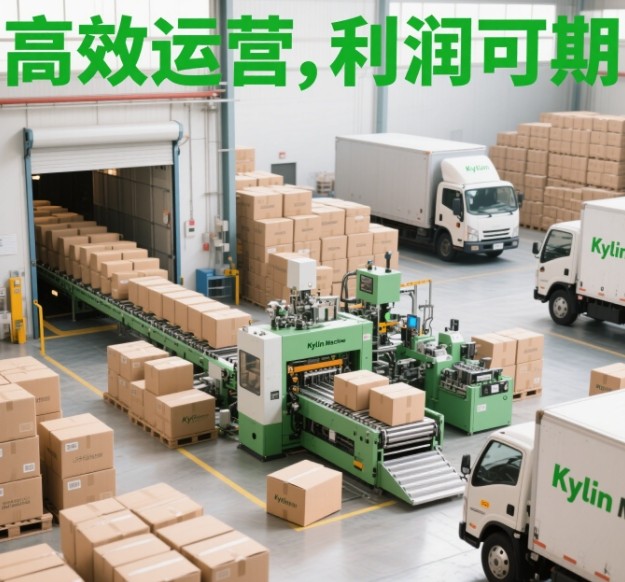
The demand for cardboard boxes is consistently strong, driven by e-commerce, manufacturing, and retail. This underlying demand creates a solid foundation for profitability. However, just because there's demand doesn't automatically guarantee profit for every player. As someone deeply involved in providing machinery for this sector through Kylin Machine, I've seen firsthand what separates highly profitable operations from those that struggle.
Several factors influence profitability:
Raw Material Costs
Paper is the primary raw material, and its price can fluctuate. Managing these costs through smart sourcing and minimizing waste is crucial.
Operational Efficiency
This is where modern machinery plays a massive role.
- Automation: Reducing manual labor lowers costs and increases consistency. Our Kylin machines, for example, incorporate high levels of automation. I remember a client who significantly cut down on labor costs per unit after installing one of our automated rigid box lines.
- Speed and Throughput: Faster machines produce more boxes per hour, increasing overall output and sales potential.
- Waste Reduction: Precise machinery minimizes material waste from errors or poor cuts. Kylin’s Robotic Spotter, for instance, ensures accuracy in placing wraps on rigid boxes, drastically reducing rejects.
Market Demand and Niche
While standard brown boxes have high volume, the margins can be tighter due to competition.
- Specialized Boxes: Producing higher-value items like custom-printed boxes, luxury rigid boxes, or innovative collapsible designs often yields better margins. Our Kylin equipment is specifically designed for these more complex and profitable niches.
- Value-Added Services: Offering design services or just-in-time delivery can also enhance profitability.
Technology and Investment
Investing in advanced machinery might seem like a big upfront cost, but it pays off in the long run.
- Kylin's High-Tech Solutions: Our focus on Robotic Spotters and Hybrid systems for rigid boxes and hard book covers allows manufacturers to tap into premium markets. These machines are designed for:
- High Precision: Essential for luxury packaging.
- Versatility: Handling different designs and sizes.
- Reliability: Ensuring consistent uptime.
A factory that invests wisely in technology like ours can achieve lower per-unit costs, produce higher-value products, and respond more quickly to market demands, all of which are key drivers of profitability. It's not just about making boxes; it's about making them efficiently and targeting the right market segments.
What is the profit margin in corrugated box manufacturing?
Curious about the actual numbers in box profits? Want to understand the financial returns? Let's explore typical profit margins in this industry.
Profit margins in corrugated box manufacturing typically range from 5% to over 15%. These margins are significantly influenced by operational efficiency, the scale of production, and the type of box produced. Specialized boxes, often made with advanced machinery like Kylin's, can achieve higher margins.
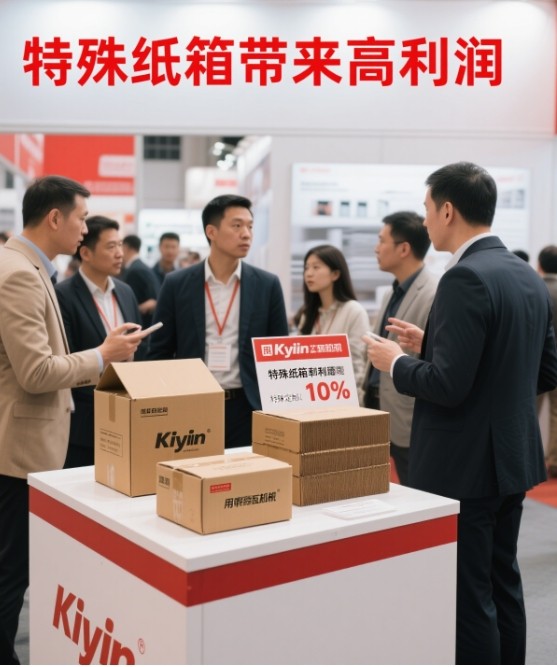
Profit margins in the corrugated box industry aren't fixed; they can vary quite a bit. From my experience at Kylin Machine, working with numerous box manufacturers, I've seen how different factors can push these margins up or down. While a general range might be 5-15% for standard corrugated boxes, some operations achieve even better results, especially when they specialize.
Factors Influencing Profit Margins
Several key elements determine the final profit margin:
- Raw Material Costs: Paper prices are a major component. Efficient sourcing and minimizing waste are critical.
- Operational Efficiency: This is huge. Faster machines, lower labor costs per unit, and reduced downtime all contribute to better margins. This is a core benefit our Kylin machines provide.
- Scale of Operations: Larger volumes can lead to economies of scale, but only if managed efficiently.
- Product Complexity and Value: Standard brown shipping boxes usually have lower margins due to competition. Custom-designed, high-graphic, or specialized structure boxes (like rigid boxes or complex collapsible ones) command premium prices and thus higher margins.
- Overhead Costs: Rent, energy, administrative expenses – keeping these controlled is essential.
Standard vs. Specialized Boxes
There's often a significant difference in margins here:
- Standard Corrugated Boxes: High volume, more competition, generally lower margins. Efficiency is paramount.
- Specialized Boxes (e.g., Rigid Boxes, High-Graphic Retail Packaging): Lower volume (per order, perhaps), less direct competition for highly specific designs, higher perceived value, leading to potentially much higher margins. These are the types of products our Kylin machines excel at producing. For example, the Robotic Spotter technology in our rigid box lines ensures the precision needed for luxury packaging, which carries a premium. I've seen clients successfully shift their focus using our equipment to these more lucrative market segments. One such client in the cosmetics industry was able to increase their margin per box by almost 25% after investing in a Kylin rigid box solution.
The Impact of Technology from Kylin Machine
Our machinery directly impacts profitability by:
- Enabling High-Margin Products: Our rigid box machines, round box machines, and collapsible box machines allow factories to produce premium packaging.
- Reducing Costs: Automation (like our Robotic Spotters) reduces labor needs and improves consistency, cutting down on waste and rework.
- Increasing Throughput: Efficient design means more quality boxes produced per shift.
Here’s a simplified comparison:
| Feature | Standard Corrugated Box Line | Kylin Specialized Box Line (e.g., Rigid Box) |
|---|---|---|
| Product Type | Basic shipping boxes | Luxury, custom rigid boxes |
| Machinery Focus | High speed, volume | Precision, automation, versatility |
| Typical Margin | Lower (e.g., 5-10%) | Higher (e.g., 10-20%+) |
| Key to Profit | Extreme efficiency, scale | Quality, customization, technology |
By investing in advanced technology like that offered by Kylin Machine, manufacturers can move beyond competing solely on price for standard boxes and tap into more profitable, value-added segments of the packaging market.
Conclusion
A truly good carton box factory combines quality materials, skilled operation, and, crucially, advanced, efficient machinery like those we champion at Kylin Machine for superior, profitable production.

发表回复