

# Route 1 Print Takes Wraps Off Canon Investment
A UK trade printer just spent £12 million on new Canon kit. The press is fast. The real problem sits at the finishing end. I see this every week.
Route 1 Print added a Canon varioPRINT iX3200 to print up to 9,120 sheets per hour. Faster print output floods the finishing line. Smart post-press machines, like rigid box and hard cover makers, now decide the real turnaround time.
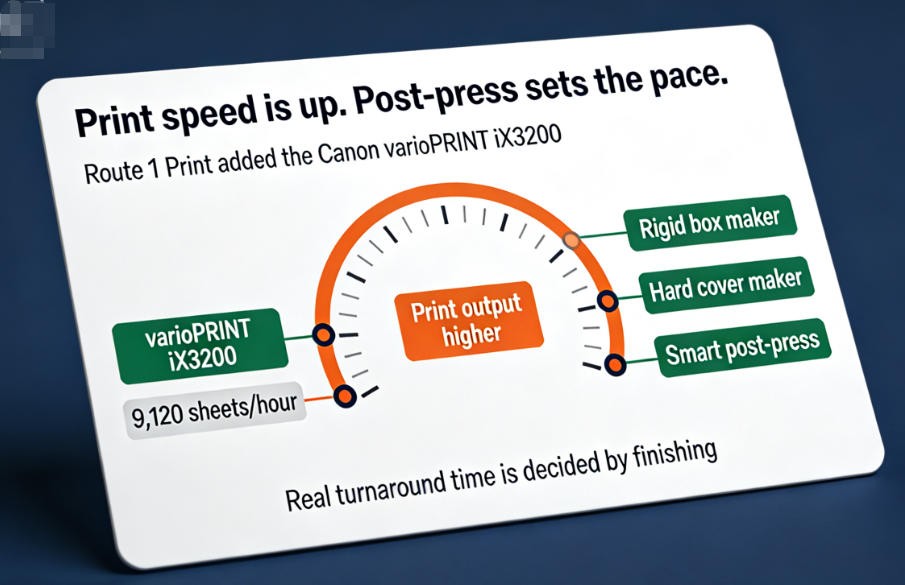
Route 1 Print is not my customer. I do not sell printing presses. I build the machines that come after the print. Their £12 million Canon move tells me one thing. The whole trade is racing to digital print. Few people think about the finishing step that follows. That is where my machines work. That is also where the profit slips away.
What happens to all those printed book covers when a Canon iX3200 speeds things up?
A press prints a cover in seconds. The case needs board, glue, and wrap. A slow case maker ruins the line. I saw a client lose an order.
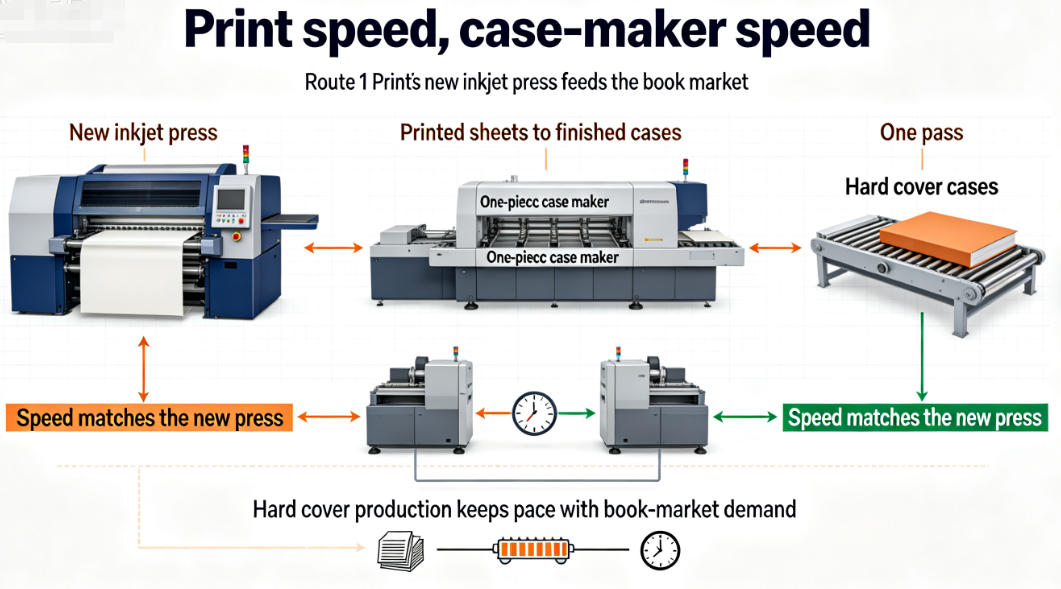
Route 1 Print's new inkjet press feeds the book market. The hard cover must still be made. A one-piece case maker turns printed sheets into finished cases in one pass. That speed matches the new press.
The case maker is the choke point
Route 1 Print mentions books in its range. A digital press prints the cover fast. The cover is not the book. The cover needs board inside. It needs glue. It needs to be wrapped and pressed. A manual team cannot keep up. That team gets tired and makes mistakes. I learned this in our own factory in Dongguan. We once finished cases by hand for a rush order. We missed the deadline. That failure pushed us to build the Ky-380 hard cover making machine. It makes a hard cover in one pass. The board, glue, and wrap all happen on one machine. The Canon press can print many different cover stocks. It can switch between media fast. A case maker must switch just as fast. The Ky-380 handles thin and thick board. It glues and wraps without a long setup. That matters when a reseller runs ten short jobs in one day. This is why I tell print resellers to check their case maker before they buy a faster press.
| Task | Manual case making | Ky-380 case maker |
|---|---|---|
| Board placement | By hand, slow | Automatic |
| Glue spread | Uneven, messy | Even, controlled |
| Wrap and press | Several workers | One pass |
| Output | Low and varied | High and steady |
Why does a trade printer still need rigid box machines after a £12 million spend?
The Canon press prints paper and board. It does not fold them into a rigid box. A reseller who skips this step turns away box orders and money.
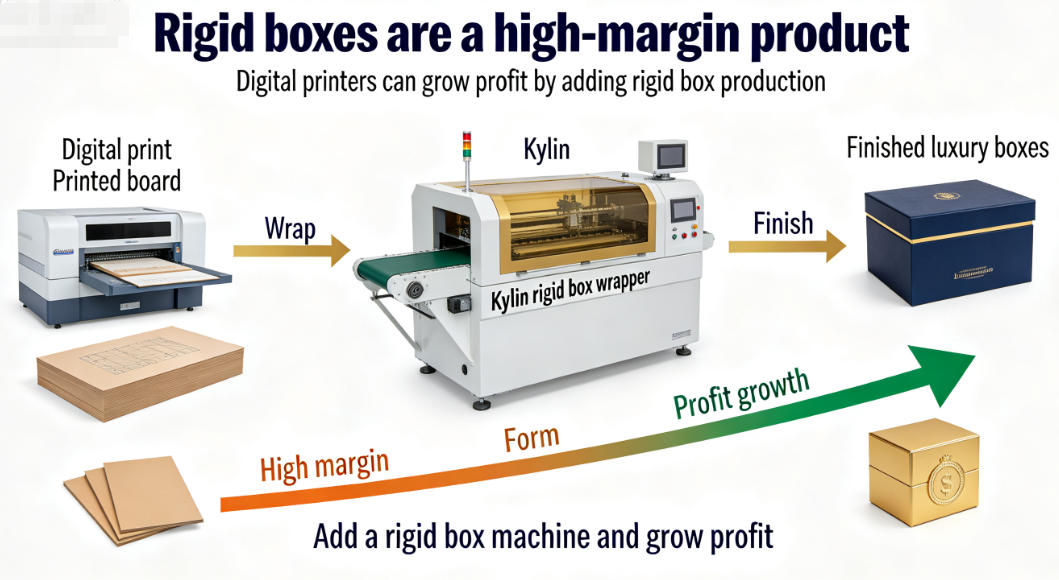
Rigid boxes are a high-margin product. A printer that already runs digital print can add a rigid box machine and grow profit. Kylin's rigid box wrappers turn printed board into finished luxury boxes.
Box finishing turns print into margin
Digital print has squeezed margins on flat sheets. Everyone competes on the same flyers and booklets. A rigid box is different. It carries a brand. It sells for more. The problem is the work. A rigid box needs a base, a lid, glued board, and a wrapped cover. Route 1 Print can print the wrap sheet on its Canon press. The next machine has to build the box. That is where a rigid box machine earns its keep. Our auto rigid boxes machine takes the printed board and forms it fast. A rigid box wraps around a rigid board core. That board must be cut square and glued tight. A wrapper folds the printed sheet over the corners. Hand work leaves creases and bubbles. A machine makes every corner crisp. That crisp finish is why a customer pays more for a rigid box. I have seen a small studio grow into a box supplier with just one of these. The Canon press gave them the print. The box machine gave them the profit.
| Product | Manual approach | Kylin machine |
|---|---|---|
| Rigid box base | Cut and fold by hand | Auto forming |
| Wrap sheet | Press on by hand | Auto wrapper |
| Output | Low per shift | High per shift |
| Finish quality | Varies | Even and tight |
How can a trade printer finish fast digital print without a labour crisis?
Fast print means more sheets to glue, check, and box. More workers cost money and still make mistakes. One bad mix-up can wipe out a day's profit.
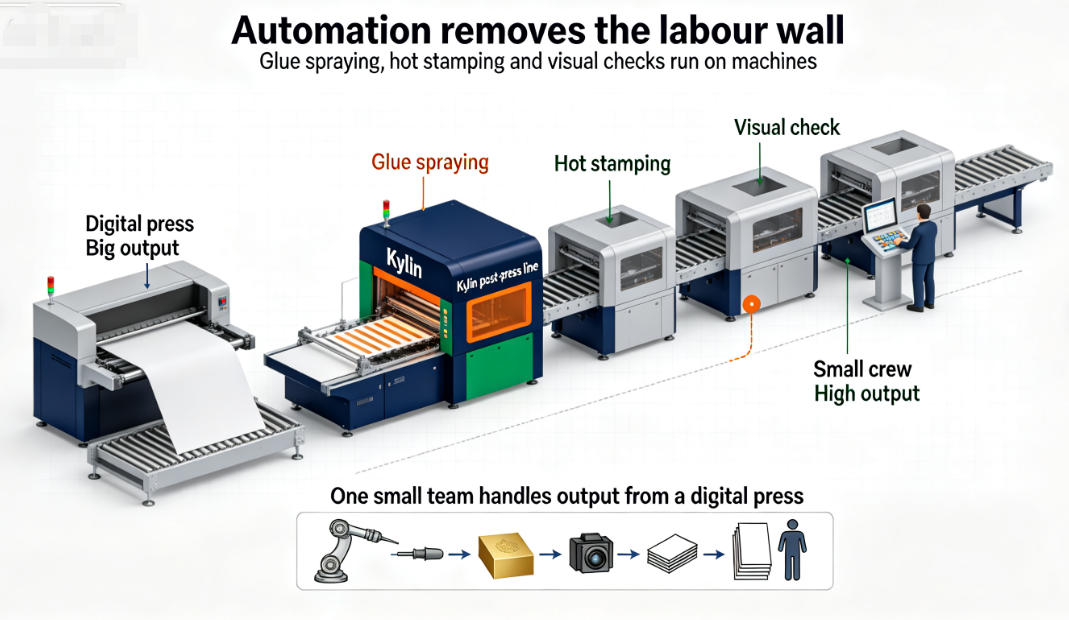
Automation removes the labour wall. Glue spraying, hot stamping, and visual checks all run on machines. Kylin's post-press line lets a small crew handle big output from a digital press.
Machines do the checking and gluing
Route 1 Print runs thousands of jobs a day. Small runs are normal now. That means many changeovers. A person cannot check every sheet at that pace. Errors slip through. A wrong cover on a book is a costly reprint. I put a CCD visual detection machine in front of our boxing line for this reason. It spots a mixed or wrong piece before it ships. The same idea applies to glue. Our glue spraying assembly machine puts down an even coat every time. No dry spots. No over-glue. For a premium finish, our pneumatic hot stamping machine adds gold or foil in one step. Labour is the hidden cost in post-press. A digital press needs few people to run. Finishing by hand needs many people. Those people call in sick and ask for raises. A machine shows up every day. It glues, checks, and stamps at a steady speed. That steadiness is what a reseller needs to quote a fixed price. These tools let a small team run a large digital press line.
| Job | Without automation | With Kylin machines |
|---|---|---|
| Glue a cover | By hand, uneven | Even spray |
| Check for mix-ups | Eyes only | CCD vision |
| Add foil stamping | Outsource | In-house |
| Crew size | Large | Small |
Related machines from my factory
- Ky-380 Hard Cover Making Machine
- Auto Rigid Boxes Machine
- Glue Spraying Assembly Machine
- CCD Visual Anti-Mixing Detection Equipment
- Pneumatic Hot Stamping Machine
Send me your project details. I will match the right machine to your line.
Conclusion
Route 1 Print made printing faster. The finishing line must now keep up. Smart post-press machines protect speed and profit.

发表回复