

How are cardboard boxes manufactured?
Ever wondered about the journey of a simple cardboard box? It’s more complex than you think, and getting it right is crucial for businesses. This guide breaks it down.
Cardboard boxes are made by processing raw paper pulp or recycled paper into paperboard, then cutting, creasing, printing (if needed), folding, and gluing these sheets into their final box shape using various specialized machines.
The world of packaging is vast, and the methods to create it are just as varied. I've spent years in this industry, specifically with Kylin Machine, and I've seen how technology transforms simple paper into essential packaging. We'll explore this process, and I'll point out where specialized machinery, like the kind we develop at Kylin, plays a key role, especially for more intricate designs like rigid boxes. So, let's get into how these everyday items come to life, from basic shipping containers to elaborate custom packaging.
How is cardboard packaging manufactured?
Struggling to understand the complex steps behind your packaging? The journey from raw material to finished box can seem like a maze. Knowing this helps you choose wisely.
Cardboard packaging is manufactured by first creating paperboard or corrugated board from wood pulp or recycled fibers, then printing, die-cutting, and finally folding and gluing it into its intended form using automated machinery.
The creation of cardboard packaging is a fascinating journey, starting from humble beginnings. As someone deeply involved in the machinery aspect at Kylin Machine, I've seen this transformation countless times. Let's look closer.
The Journey from Fiber to Form
The process generally involves a few key stages:
-
Raw Material Processing:
- It all starts with trees (for virgin pulp) or recycled paper. These are broken down into fibers, cleaned, and mixed with water to create a slurry called pulp.
- For corrugated cardboard, this pulp is then pressed and dried into large rolls of paper called linerboard (the flat outer layers) and medium (the wavy inner layer).
-
Board Creation:
- Corrugated Board: The medium paper is fed through heated corrugating rolls to create the flutes (the waves). This fluted medium is then glued between two sheets of linerboard. The number of layers can vary (single wall, double wall) depending on the required strength.
- Paperboard/Boxboard (for folding cartons or rigid boxes): This is a single-ply or multi-ply material made directly from pulp, often with a smoother finish suitable for high-quality printing.
-
Conversion - Where Kylin Machines Excel for Specific Types:
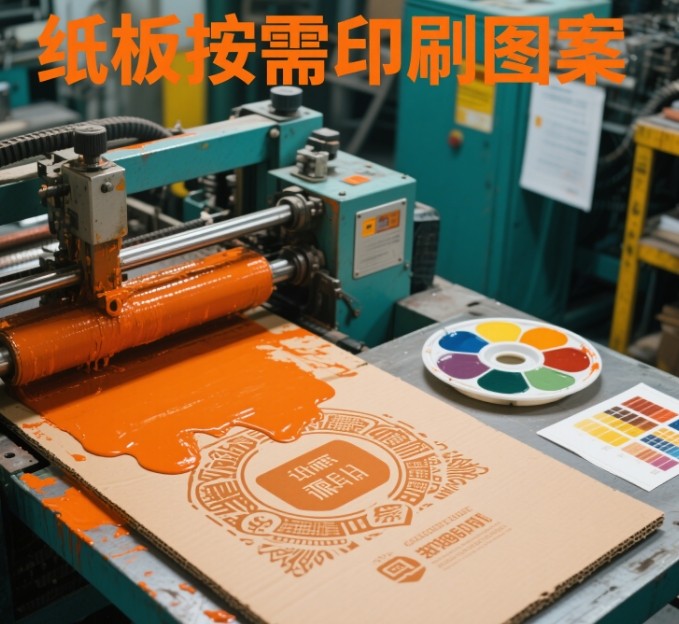
- Printing: Designs, branding, and information are printed onto the flat sheets of cardboard. This can be done using flexography, offset lithography, or digital printing.
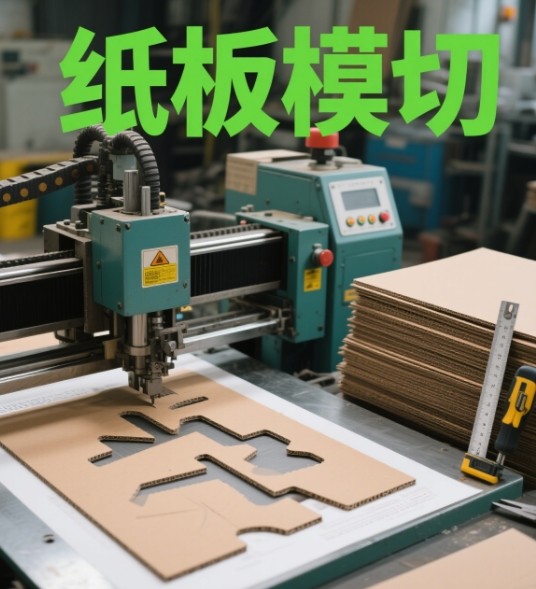
- Die-Cutting and Creasing: The printed sheets are then cut into the specific shape of the box blank and creased along the fold lines using a die-cutter.
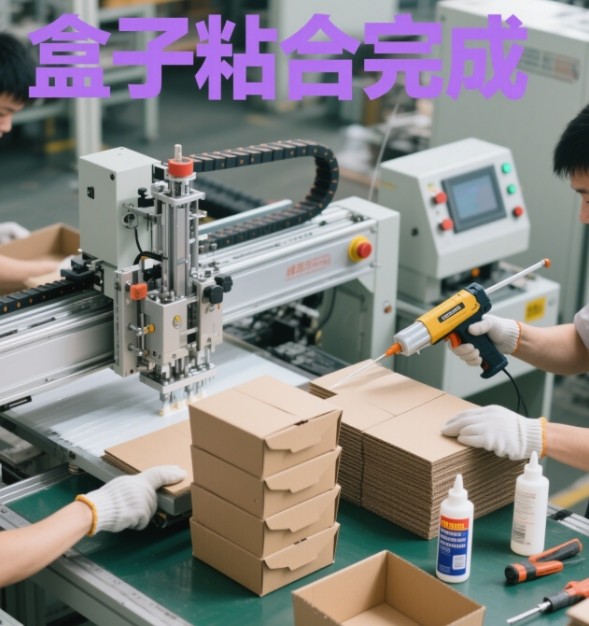
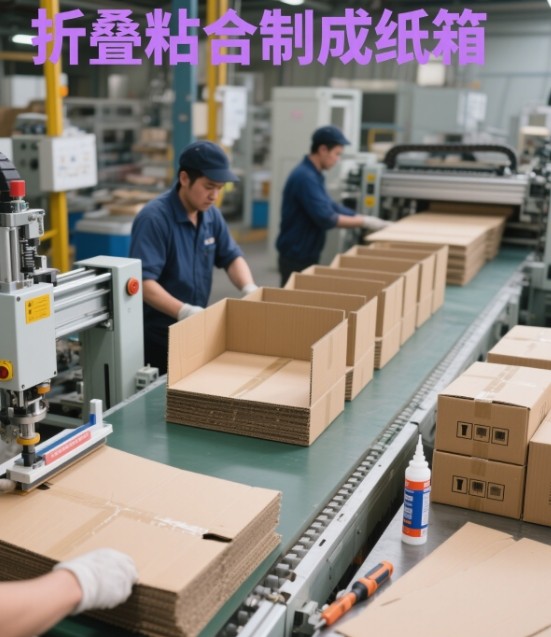
- Folding and Gluing: This is where the flat, die-cut blanks are transformed into three-dimensional boxes. For standard corrugated boxes, folder-gluers rapidly fold and glue the box flaps.
- Specialized Assembly (e.g., Rigid Boxes): For premium packaging like rigid boxes, which don't fold flat, the process is more intricate. This often involves:
- Precisely cutting chipboard (a type of paperboard).
- Scoring or grooving the chipboard.
- Wrapping the chipboard with a printed paper or other decorative material.
- Assembling the box.
This is where machines like Kylin's Robotic Spotter and Hybrid Systems are crucial. They automate the precise placement of wraps, magnets, or other components, and ensure the accurate assembly of these high-value boxes. My experience shows that this level of automation is vital for achieving the quality and consistency demanded by luxury brands.
The type of cardboard packaging dictates the exact machinery and steps involved. Simple brown shipping boxes have a different manufacturing path than, say, a beautifully printed and constructed rigid box for a high-end electronic device.
What is the process of making a cardboard box?
Confused about how flat sheets turn into sturdy boxes? Understanding this basic transformation is key to appreciating packaging engineering. It’s a precise, multi-step operation.
Making a cardboard box involves designing the box structure, preparing paperboard or corrugated material, printing designs, die-cutting the material into flat blanks, and then folding and gluing these blanks into their final 3D shape.
When we talk about "making a cardboard box," the specifics can vary greatly depending on the box type. I've worked with customers producing everything from simple cartons to complex, multi-part rigid boxes. The fundamental steps, however, share common ground before diverging into specialized techniques.
From Flat Sheet to Finished Box: A Closer Look
Let's break down the typical journey for most cardboard boxes, and then I'll highlight how this differs for more specialized types like the rigid boxes Kylin Machine focuses on.
-
Design and Prototyping:
- It starts with a design. What will the box hold? How strong does it need to be? What are the dimensions? Engineers create a dieline, which is like a blueprint for the box.
- Prototypes are often made to test the design.
-
Material Selection and Preparation:
- Based on the design, the appropriate type of cardboard is selected (e.g., corrugated board for shipping, solid paperboard for retail packaging or rigid boxes).
- This material is often in large rolls or sheets.
-
Printing (Optional but Common):
- If the box needs branding, product information, or graphics, the flat sheets of cardboard are printed. Different printing methods offer various quality and cost options.
-
Die-Cutting and Scoring:
- This is a critical step. The printed (or unprinted) cardboard sheets are fed into a die-cutting machine.
- A "die" is a custom tool, like a giant cookie-cutter, with sharp blades for cutting the outline of the box blank and dull blades (creasing rules) for creating the fold lines.
- The result is a flat, cut, and creased piece of cardboard known as a "blank."
-
Stripping (Waste Removal):
- Any excess cardboard from the die-cutting process is removed.
-
Folding and Gluing:
- For most common boxes (like folding cartons or regular slotted containers/RSCs), these flat blanks are fed into a folder-gluer machine. This machine automatically folds the blank along the creased lines and applies adhesive to the appropriate flaps to form the box.
- For Rigid Boxes (a Kylin Machine specialty): The process here is quite different after the initial material cutting.
- Chipboard Cutting & Grooving: Sturdy chipboard is cut and often V-grooved for sharp, precise corners.
- Paper Wrapping: A printed or decorative paper wrap is prepared.
- Assembly & Gluing: This is where precision is paramount. The chipboard structure is formed, and the wrap is meticulously glued and applied. Kylin's Robotic Spotter technology, for example, ensures perfect alignment of the wrap on the chipboard. Our automatic rigid box makers handle the entire forming, gluing, and pressing process. This isn't just simple folding; it's construction.
I've seen firsthand how investing in advanced machinery for these later stages, especially for rigid boxes, makes a huge difference in output quality and efficiency for our clients in the graphic arts and paper converting industries.
How are shipping boxes made?
Ever wonder how those ubiquitous brown shipping boxes are made so consistently strong? It's a streamlined process designed for volume and durability. Knowing this can help in selecting the right box.
Shipping boxes, typically made from corrugated cardboard, are produced by forming corrugated sheets (linerboard and fluted medium), then printing, die-cutting these sheets into blanks, and finally folding and gluing them.
, then printing, die-cutting these sheets into blanks, and finally folding and gluing them.)
Shipping boxes are the workhorses of the packaging world. They need to be strong, reliable, and cost-effective. While my company, Kylin Machine, primarily focuses on machinery for high-end rigid boxes and book covers, understanding the production of standard shipping boxes provides a good baseline for appreciating all packaging manufacturing.
The Making of a Corrugated Shipping Box
Here’s a breakdown of the typical manufacturing process for these essential containers:
-
Corrugation – The Heart of Strength:
- It begins with large rolls of paper: linerboard (for the flat facings) and medium (for the wavy, fluted layer).
- The medium paper is fed through heated, toothed rollers called corrugating rolls. This process creates the "flutes" – the characteristic S-shaped waves.
- Adhesive (typically starch-based) is applied to the tips of the flutes.
- One sheet of linerboard is then pressed onto one side of the fluted medium (single-face corrugated).
- For a standard single-wall shipping box, another layer of adhesive is applied to the other side of the flutes, and a second sheet of linerboard is added, creating a single-wall corrugated board. Double-wall or triple-wall boards are made by adding more layers for extra strength.
- This continuous sheet of corrugated board is then cut to the required size.
-
Printing (Flexographic):
- If the boxes require printing (e.g., company logos, handling instructions), this is usually done next using flexographic printing, a method well-suited for the somewhat rough surface of corrugated board and large print runs.
-
Scoring and Slotting / Die-Cutting:
- For regular slotted containers (RSCs), the most common type of shipping box: The corrugated sheets are scored (to create fold lines) and slotted (to create the flaps that form the top and bottom of the box). This is often done on a machine called a flexo folder-gluer or a printer-slotter.
- For more complex shipping box designs (e.g., mailer boxes with tuck-flaps): A die-cutter is used, similar to making other types of cardboard boxes, to cut the specific shape and create crease lines.
-
Folding and Gluing:
- The scored and slotted (or die-cut) blanks are then folded along the pre-made creases.
- Glue is applied to a specific tab (the "manufacturer's joint" or "glue lap").
- The box is folded and pressed together to create a flat-folded box, ready to be shipped to the end-user who will then erect it.
While Kylin Machine's expertise lies in post-press equipment for more elaborate packaging like rigid boxes, the principles of automation, precision, and efficient material handling are common across all packaging manufacturing. If a shipping box requires a very high-end finish, or is part of a luxury presentation kit, then some elements of rigid box making might come into play for inserts or the primary container, and that's where our specialized machines would be essential. For instance, a luxury product might ship inside a standard corrugated box, but the product itself is housed in a custom rigid box made using Kylin technology.
How do companies make boxes?
Curious about how businesses actually produce boxes at scale? Companies use varied methods, from manual assembly to highly automated lines. The choice depends on volume, complexity, and cost.
Companies make boxes by acquiring raw materials (paperboard/corrugated), then using specialized machinery for processes like printing, die-cutting, folding, and gluing, adapting the level of automation to their production needs and box types.
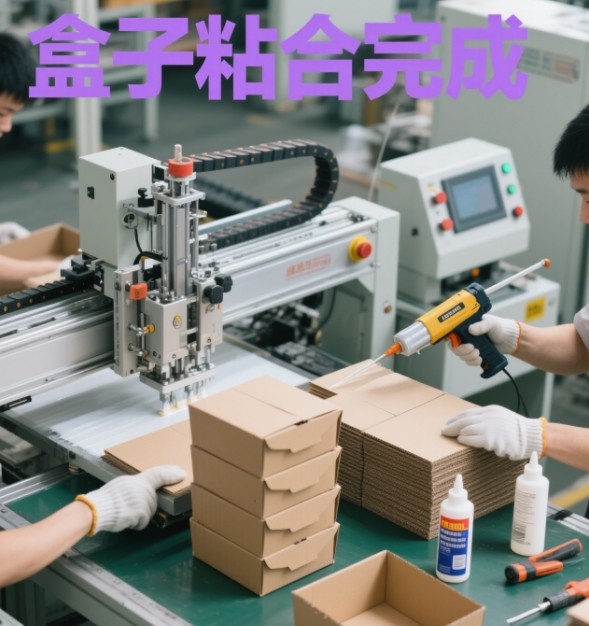
As someone representing Kylin Machine, a company that designs and manufactures packaging machinery, I have a direct view into how different businesses approach box making. It's a spectrum, heavily influenced by the type of box, production volume, and desired quality.
The Spectrum of Box Manufacturing in Companies
Companies, from small workshops to large multinational corporations, employ a range of strategies and technologies:
-
Small-Scale or Boutique Operations:
- Manual/Semi-Automatic: These businesses might handle smaller orders or highly customized, intricate boxes. They might use manual die-cutters, hand-fed gluers, or even assemble boxes by hand, especially for very low volumes or artistic creations.
- Focus: Often on unique designs, specialty materials, and craftsmanship. For example, a small bookbindery might use semi-automatic equipment for creating custom hard book covers or small runs of rigid boxes.
-
Medium-Sized Enterprises:
- Dedicated Machinery: These companies often invest in specific machines for each step: a printer, a die-cutter, and a folder-gluer. They might have separate lines for different box types.
- Balancing Automation and Flexibility: They aim for efficiency but may still require some manual intervention or setup changes for different jobs. This is a common profile for many of our customers at Kylin Machine who are looking to upgrade their rigid box or hard-cover making capabilities from semi-automatic to more automated solutions like our Hybrid systems.
- Example: A paper converting company producing folding cartons for local food producers or retail businesses.
-
Large-Scale Industrial Operations:
- Fully Integrated and Automated Lines: These are typically found in companies producing massive volumes of standard boxes, like corrugated shipping boxes or high-volume folding cartons for consumer goods.
- High-Speed Equipment: Think massive corrugators, high-speed flexo folder-gluers, and robotic palletizers. The focus is on maximizing throughput and minimizing per-unit cost.
- Specialized High-Volume Luxury Packaging: Even in luxury, large brands require volume. Companies serving them invest in high-speed, fully automatic rigid box lines. Kylin Machine serves this segment with our advanced Robotic Spotter technology and complete automatic rigid box makers, which offer precision at speed for industries like electronics, cosmetics, and spirits. Our R&D focuses on increasing automation and maintaining quality for these demanding applications.
The Kylin Machine Approach: Partnering for Advanced Solutions
At Kylin Packaging Machinery Factory, we cater to businesses aiming for the higher end of quality and efficiency, particularly in rigid box and hard book cover manufacturing. Our business model is B2B and wholesale.
Companies come to us when they need:
- Precision: Our Robotic Spotters ensure perfect alignment.
- Efficiency: Automated lines reduce labor and increase output (our factory has a monthly capacity of about 60 sets).
- Versatility: Machines capable of producing various styles like collapsible boxes or round boxes.
- Reliability: Built on over two decades of experience (founded in 2003) and strict QC management.
I've seen many of our 10,000+ users (about 2,500 for Kylin Machinery Limited) across more than 20 countries successfully scale their operations and improve their product quality by integrating our advanced post-press technology. It's about choosing the right tools for the job to meet market demands.
Conclusion
Making cardboard boxes involves transforming paper into precise structures using specialized machines, with companies like Kylin Machine providing advanced solutions for high-quality, complex packaging needs.
My name is Jacob, and at Kylin Machine (www.kylinmachines.com), we specialize in post-press machinery from China, helping businesses worldwide create exceptional packaging.

发表回复