
Is It Legal to Photocopy a Book for Personal Use?
Are you worried that copying a few pages from a book for your studies might get you into trouble? The fear of breaking copyright law is real, and the rules can be very confusing. Let's clear up the confusion right now.
Generally, photocopying a small portion of a book for personal, non-commercial purposes like private study or research is considered "fair use" under copyright law. However, copying an entire book, or a substantial part of it, is almost always illegal, even if it's just for you.

But what is the actual difference between a few pages and a "substantial portion"? It feels like a gray area, but it's the most important part of the puzzle. Understanding this limit is the key to staying on the right side of the law, so let's explore the details together.
Is It Illegal to Photocopy a Whole Book?
Thinking about duplicating an entire textbook to save some money? It seems like a simple solution, but this action could land you in serious legal trouble you didn't expect. It's a shortcut that isn't worth the risk.
Yes, photocopying a whole book, even for your personal use, is illegal. This act directly violates copyright law because it reproduces the entire creative work. It harms the author's and publisher's ability to earn a living from their intellectual property.
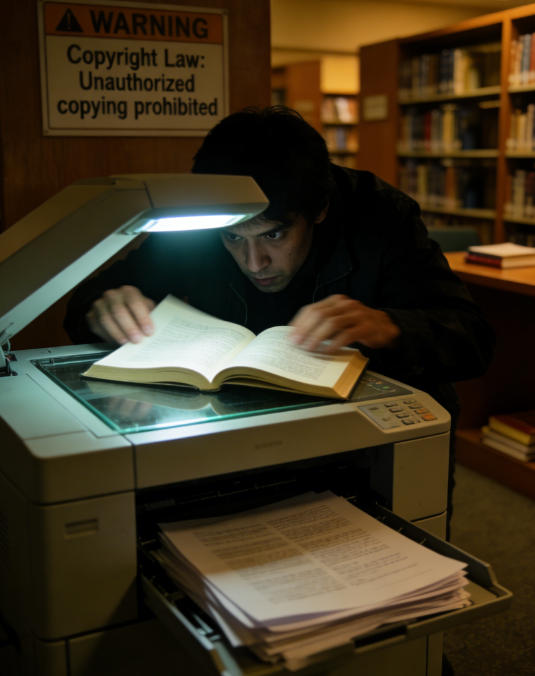
In my years of business, I've learned that intellectual property is the foundation of all creative industries. When someone's hard work is stolen, it hurts more than just their wallet; it discourages innovation for everyone. The law protects creators through a set of principles, often called the "four factors" of fair use, to decide if a copy is legal or not. Copying a whole book fails these tests completely. It's not about your personal intentions; it's about the amount you take and the damage it does to the original creator's market.
The "Four Factors" of Fair Use
To understand why copying a whole book is a problem, it helps to know how "fair use" is judged. Here is a simple breakdown of the four factors courts consider:
| Factor | What It Means in Simple Terms |
|---|---|
| Purpose and Character | Why are you copying it? For-profit use is less fair than non-profit educational use. |
| Nature of the Work | What are you copying? Copying from a factual work (like a news article) is often more fair than copying from a highly creative work (like a novel or song). |
| Amount and Substantiality | How much are you copying? Copying a small piece is more fair than copying a large portion or the "heart" of the work. |
| Effect on the Market | Does your copy hurt the creator's ability to sell their original work? If your copy replaces a sale, it is not fair use. |
Copying a whole book fails the "Amount" and "Effect" tests in a big way. You are taking 100% of the work, and you are creating a replacement that means the author and publisher lose a sale. It's a direct hit to their livelihood.
How Much of a Book Can You Copy Legally?
You know you can't copy the whole book, but how much is too much? The line between what is considered fair use and what is copyright infringement can feel blurry, making it hard to know what's safe to copy.
There is no exact page number set in stone, but a general guideline accepted in many places is to copy no more than one chapter or about 10% of a book, whichever is less. This is widely seen as acceptable for personal study or research.

This guideline helps keep things fair. It allows you to get the information you need for your project or study session without taking away the creator's right to be paid for their work. Think of it as quoting someone; you can use a sentence or two to make your point, but you can't recite their entire speech and call it your own. It's about balance and respect for the original work.
The 10% Guideline
The "10% or one chapter" rule is a very useful benchmark for students, researchers, and teachers. It's a practical way to apply the principles of fair use without needing a lawyer to look over your shoulder every time you use a photocopier. I remember my university days, carefully selecting just the chapter I needed for my exams. This guideline was our protection. It allowed us to learn without crossing a legal line. It’s important to remember this is a guideline, not a law, but it's a very safe one to follow.
Context is Everything
The purpose of your copying is just as important as the amount. Copying one chapter for your own personal study is very different from copying that same chapter to give to 50 people in a seminar. The first is likely fair use; the second is probably not, because you are distributing the work widely. As a manufacturer at Kylin Machine, we deal with patents and designs all the time. We understand that context is everything. We respect the intellectual property of others because we expect the same for our innovative machine designs. It's the foundation of fair business.
Is It Illegal to Print a Book for Personal Use?
You found a free PDF of a book online and want to print it out for easier reading. It feels harmless since you're not selling it, but this simple act might be just as illegal as photocopying the physical book.
Yes, printing a book from an unauthorized digital file (like a pirated PDF) for personal use is illegal. You are still making an unauthorized copy of a copyrighted work, regardless of the format. The key word here is "unauthorized."
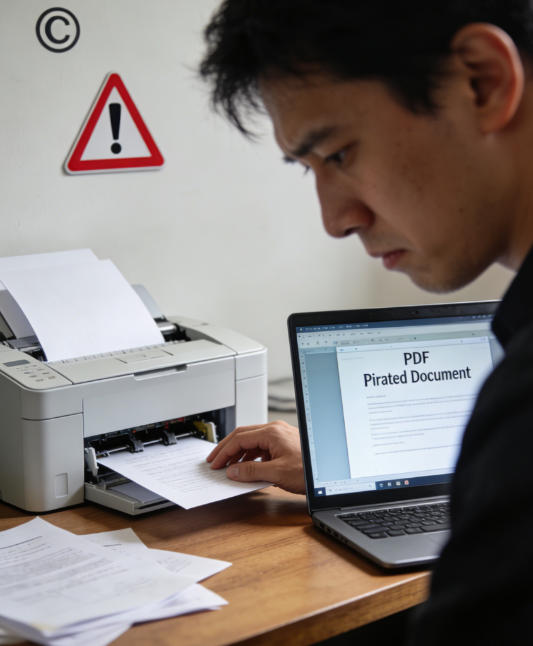
The problem isn't the act of printing; it's the source of the file. Copyright protects the creative work itself—the words and images—not the container it comes in. Whether it's a physical book or a digital file, the creator's rights are the same. If the digital version you have was not shared legally by the copyright holder, then making another copy from it, even by printing, is an infringement.
Digital vs. Physical Copies
From a legal standpoint, there is no difference between making an illegal photocopy and printing an illegal digital file. Both actions create a copy of a work that you do not have the rights to reproduce. I've seen this in manufacturing; a design can be stolen as a physical blueprint or as a digital CAD file. The theft is the same, and the damage is the same. The law looks at the unauthorized reproduction, not the method used to achieve it.
The Source Matters
So, how do you know if a digital file is legal? If you purchased the ebook from a legitimate store like Amazon Kindle, Barnes & Noble, or Kobo, you have a license to read it. However, this license usually does not give you the right to print the entire book. If you downloaded the book from a random website for free, it is almost certainly an unauthorized, pirated copy. Printing from such a source is a copyright violation. On the other hand, there are millions of books in the "public domain," meaning their copyright has expired. You can legally download and print these books from sites like Project Gutenberg.
How Do I Protect My Books from Being Copied?
As a creator or publisher, you've poured your heart, time, and money into your work. The thought of it being illegally copied and distributed is frustrating, and it can feel like you are powerless to stop it.
While you can't completely stop illegal copying, you can take strong steps to discourage it. The best methods include using clear copyright notices, applying Digital Rights Management (DRM) for ebooks, and, most importantly, creating high-quality physical books that are an experience to own.
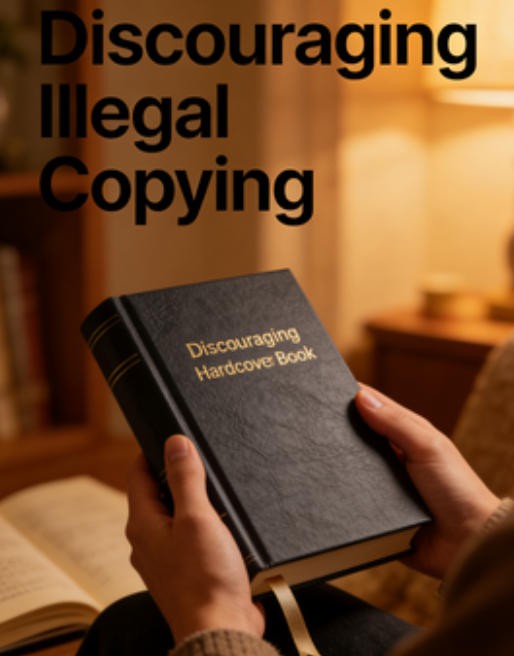
In my industry, we believe the best defense is a great offense. A cheap, flimsy paperback is easy to photocopy and feels disposable. But a beautifully crafted hardcover book? That's an experience a copy machine can't replicate. The feel of the cover, the quality of the paper, and the durability of the binding all add value that a stack of photocopied pages simply cannot match. This is how you fight back.
Legal and Digital Deterrents
The first steps are simple. Always include a clear copyright notice (e.g., © 2025 Jacob) in your book. For ebooks, Digital Rights Management (DRM) technology can be used to restrict copying and sharing. While not foolproof, these methods act as digital locks that deter casual piracy and remind readers that the content is protected.
The Power of Premium Quality
The ultimate way to protect your work is to create a product that people want to own, not just read. This is where my passion for machinery comes in. At Kylin Machine, we help publishers create books that are objects of value. Our hard cover making solutions are designed to produce beautiful, durable books that stand the test of time. When a reader holds a sturdy, elegantly bound book, the incentive to make a cheap copy diminishes. You're selling an experience, not just text. By investing in quality production, you create a premium product that pirates can't easily devalue with a simple copy.
Conclusion
So, while the law allows for "fair use" copying in small amounts for study, it firmly protects creators from the theft of their complete works. For us creators, the best path forward is to focus on quality and create works that people are proud to own.

发表回复