

How to find the best quality packaging boxes?
Are your products arriving damaged because of flimsy boxes? This costs money and hurts your brand's reputation. You need packaging you can trust, and finding it should be simple.
Finding top-quality boxes means checking the material strength (like flute type and paper weight), ensuring solid construction (precise cuts, strong glue), understanding test ratings (like ECT), and working with reliable manufacturers who use precise equipment.
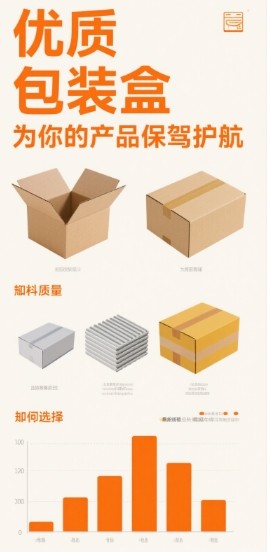
Choosing the right packaging is crucial for protecting your products and satisfying your customers. But knowing what makes a box "high quality" involves looking beyond the surface. Let's explore the details so you can make informed decisions and ensure your goods are always well-protected, reflecting the quality within. We need to look closer at how to check quality, choose the right type, and understand common styles.
How to check carton box quality?
Worried your boxes might fail during shipping? Poor quality leads to damaged goods and unhappy customers. Learn simple checks you can perform for peace of mind and product safety.
Check box quality by examining the paper liners and the corrugated fluting inside. Look for clean cuts, proper folding, and strong gluing. Also, consider industry standards like the Edge Crush Test (ECT).
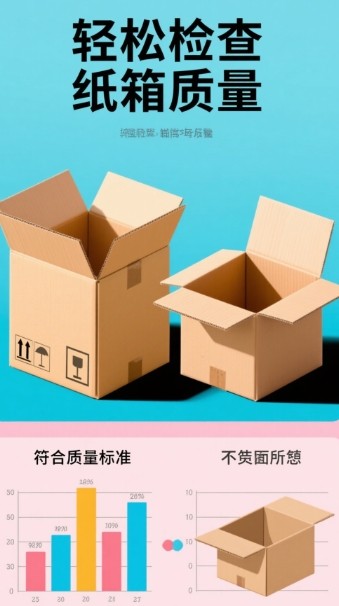
Ensuring your carton boxes are up to standard doesn't always require a lab. You can start with some basic visual and physical checks. These initial steps can tell you a lot about the manufacturing precision and the materials used. For businesses like ours in the packaging and printing fields, consistent box quality is essential for maintaining customer trust. High-quality production, often achieved with advanced machinery, leads to boxes that perform reliably.
Material Inspection
The first thing I look at is the paper. Are the outer and inner liners smooth and free of defects? What about the wavy part inside, the fluting? Common types are B-flute (good all-around), C-flute (stronger stacking), and E-flute (better printing surface). The paper weight, measured in GSM (grams per square meter), also matters – heavier paper generally means a stronger box.
Construction Checks
Next, examine how the box is put together. Are the cuts clean and the score lines (where it folds) precise? Messy cuts or uneven folds mean lower quality manufacturing. Check the glued seam – it should be securely bonded along its entire length. Poor gluing is a common failure point. Precision here often points to automated systems ensuring consistency.
Standard Tests Explained
While visual checks help, standard tests give objective measures.
- ECT (Edge Crush Test): Measures the stacking strength of the corrugated board. Higher ECT means the box can handle more top-to-bottom pressure.
- Mullen Burst Test: Measures the force needed to rupture the box wall. It indicates toughness against rough handling.
| Check Type | Focus | What it Tells You |
|---|---|---|
| Visual Check | Liners, Fluting, Cuts | Obvious defects, material type |
| Construction | Glue Seams, Folds | Manufacturing precision, assembly |
| Standard Tests | ECT, Mullen | Objective strength data |
How do I choose a box?
Feeling overwhelmed by the different box options available? Picking the wrong box can lead to damaged products or unnecessary costs. Let's simplify how to select the perfect box for your needs.
Choose a box based on your product's weight, size, and fragility. Also think about how it will be shipped, your budget, and any branding needs. Match the box style to the product's requirements.
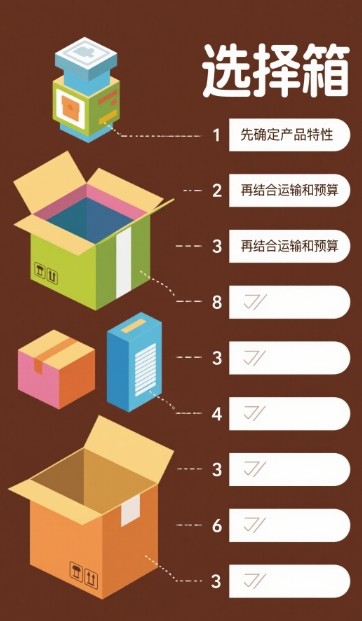
Selecting the right box is more than just finding one that fits. It's about balancing protection, cost, and presentation. As someone who provides machinery for box making, I know that the type of box dictates the manufacturing process. Let's break down the key factors to consider.
Product Characteristics
The item you're packing is the starting point.
- Weight: Heavier items need stronger boxes, often double-wall or even triple-wall corrugated.
- Size & Shape: The box should fit snugly with appropriate cushioning, avoiding wasted space or movement.
- Fragility: Delicate items require more protection – perhaps thicker walls, inserts, or even premium rigid boxes for maximum safety.
Shipping & Handling
Think about the journey your package will take. Will it be stacked high in a warehouse? Will it face rough handling during transit? International shipping often demands more robust packaging than local deliveries. The box needs to withstand the specific stresses it will encounter.
Box Style & Function
Different box styles serve different purposes. Standard RSC boxes are great for general shipping. Mailer boxes offer a better unboxing experience. For high-end products where presentation is key, rigid boxes (sometimes called setup boxes) are ideal. These often require specialized equipment, like the robotic spotters and hybrid machines we produce at Kylin Machine, to achieve their premium finish and complex structures.
| Factor | Considerations | Potential Box Choice Influence |
|---|---|---|
| Product Weight | Light, Medium, Heavy | Single Wall, Double Wall, Triple Wall Corrugated |
| Fragility | Robust, Delicate | Standard Box, Box with Inserts, Rigid Box |
| Shipping Method | Parcel Carrier, Freight, International | Box Strength (ECT/Mullen), Durability |
| Presentation | Basic Protection, Unboxing Experience, Luxury Feel | RSC, Mailer Box, Rigid Box |
| Budget | Cost-Effective, Mid-Range, Premium | Corrugated (various grades), Custom Printed, Rigid Box |
What is the difference between RSC and HSC boxes?
Confused about box acronyms like RSC and HSC? Using the wrong style can slow down your packing line or not suit your product. Understand this basic difference to choose more effectively.
An RSC (Regular Slotted Container) has four flaps on top and bottom that meet in the middle. An HSC (Half Slotted Container) is similar but has flaps on only one end, needing a separate lid.
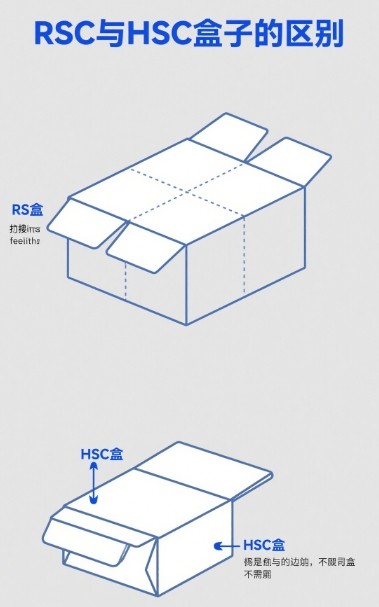
RSC and HSC are two of the most fundamental corrugated box styles. Knowing when to use each can improve efficiency and product presentation. While seemingly simple, producing these consistently requires reliable machinery for cutting, scoring, and folding. Let's look at each one.
RSC (Regular Slotted Container)
This is the most common box style you'll see. All the flaps have the same length, and the two outer flaps meet in the center when closed.
- Pros: Very economical to produce (minimal manufacturing waste), easy to assemble and seal with tape, versatile for a huge range of products.
- Cons: Offers basic presentation, may require fillers if the product doesn't fit perfectly.
- Manufacturing: Generally produced using die-cutters or flexo folder-gluers. Consistent quality relies on precise machine setup for scoring and cutting.
HSC (Half Slotted Container)
Imagine an RSC box, but without the flaps on one end. It's essentially a tray with flaps on the bottom. It needs a separate lid (often a tray-style lid that fits over the top) to be fully enclosed.
- Pros: Good for products that need to be easily accessed or viewed (like produce or items stacked on shelves), allows for separate branding/info on the lid.
- Cons: Requires two pieces (box and lid), potentially higher cost, less structural integrity than a sealed RSC unless the lid is tight-fitting.
- Manufacturing: Similar processes to RSC, but often involves making two separate components (the base and the lid).
Key Differences Summarized
| Feature | RSC (Regular Slotted Container) | HSC (Half Slotted Container) |
|---|---|---|
| Structure | One piece, flaps top & bottom | One piece base, flaps on one end only |
| Closure | Flaps meet at center, sealed (tape) | Requires separate lid |
| Assembly | Simple fold & seal | Assemble base, place lid |
| Common Uses | Shipping, storage, general purpose | Produce, bulky items, display trays |
| Cost | Generally lower | Can be higher (two parts) |
Understanding these basic styles helps you choose the right starting point for your packaging needs.
What is the best type of box?
Are you trying to find the single "best" box for everything? That search often leads to frustration because the best box truly depends on what you need it for.
There isn't one single "best" type of box. The ideal choice depends completely on your product, how you ship it, your budget, and the look you want. Corrugated is versatile; rigid boxes offer premium quality.
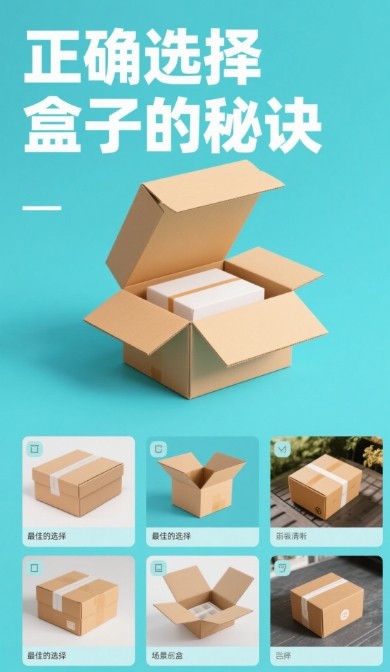
The question "What is the best type of box?" is one I hear often. But the answer is always: "It depends!" What works perfectly for shipping bulk items won't be suitable for luxury goods presentation. As providers of machinery for creating various packaging types, especially high-end rigid boxes, we understand this tradeoff well. Let's compare the main categories.
Corrugated Boxes (RSC, Mailers, etc.)
These are the workhorses of the packaging world. Made from fluted paper sandwiched between liners, they offer good protection relative to their cost and weight.
- Pros: Cost-effective, lightweight, recyclable, versatile (many styles, strengths), good for shipping.
- Cons: Basic appearance (unless custom printed), can be crushed if overloaded, not ideal for a luxury feel.
- Best For: E-commerce shipping, moving, general product packaging where function outweighs form.
Rigid Boxes (Setup Boxes)
These are made from thick paperboard wrapped with paper or other materials. They don't fold flat and offer a premium feel.
- Pros: Excellent protection, high-end look and feel, great for branding, durable, provides a superior unboxing experience.
- Cons: More expensive, bulkier for storage/shipping (don't ship flat), require specialized manufacturing.
- Best For: Luxury goods, electronics, cosmetics, gifts, situations where presentation is paramount.
- Manufacturing Note: Creating high-quality rigid boxes involves precise processes like V-grooving, board cutting, and accurate positioning of magnets or wraps. This is where advanced machinery, like the robotic spotters and automated lines we build at Kylin Machine, becomes essential for efficiency and quality.
Choosing Based on Your Needs
The "best" box aligns with your priorities. If cost and shipping efficiency are key, corrugated is likely your answer. If premium presentation and maximum protection for high-value items are critical, a rigid box is often the superior choice, despite the higher cost and manufacturing complexity.
| Feature | Corrugated Box | Rigid Box (Setup Box) |
|---|---|---|
| Material | Fluted paper between liners | Thick paperboard, often wrapped |
| Strength | Good (variable by grade) | Excellent |
| Appearance | Utilitarian (can be printed) | Premium, high-end |
| Cost | Lower | Higher |
| Assembly | Often shipped flat, needs assembly | Ships assembled, doesn't collapse |
| Best Use | Shipping, general packaging | Luxury goods, gifts, presentation |
Conclusion
Finding the best quality boxes means checking materials and construction, understanding tests, and choosing the right type for your product and goals. Quality often comes from precise manufacturing processes.
About me:
My name is Jacob, and I work with Kylin Machine (www.kylinmachines.com). We're based in China and specialize in advanced post-press machinery, particularly for creating high-quality rigid boxes and hard book covers using robotic and hybrid technologies. We help businesses in the graphic arts, paper converting, and bookbindery industries worldwide produce top-tier packaging efficiently.

发表回复