

How are cardboard boxes manufactured?
Ever wonder how simple cardboard boxes are made? It's a complex journey. I'll show you the fascinating process, with a peek at the machines involved.
Cardboard boxes are made by processing raw paper into corrugated board. This board is then cut, creased, folded, and glued. Specialized machines, like those from Kylin Machine, handle these precise steps for various box types.
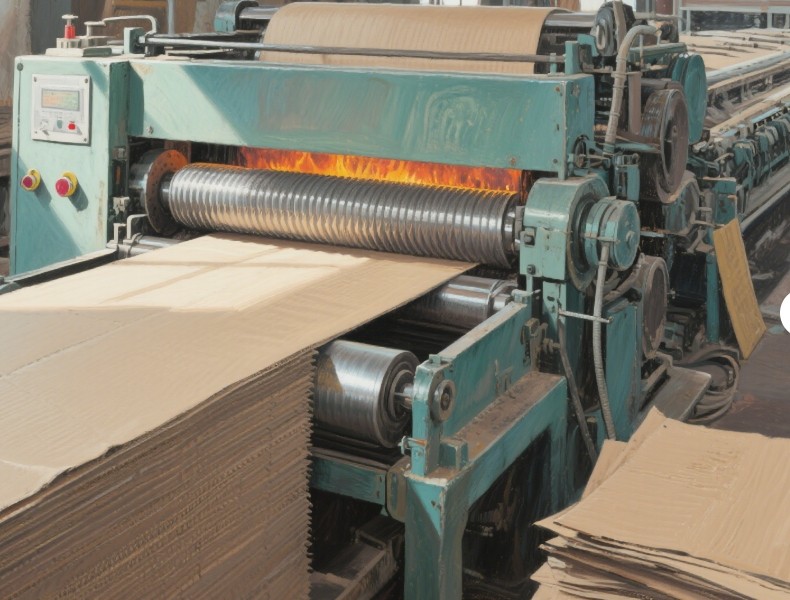
Now that you have a basic idea, you might be curious about the specific steps. You also might want to know the types of machines that bring these boxes to life. Let's dive into the details. There's a lot more to explore in the world of box manufacturing, and I am here to guide you.
What is the process used to make cardboard?
Curious about cardboard itself? It’s not just thick paper. I'll explain how this essential packaging material comes to be, step by step.
Cardboard, or corrugated fiberboard, is made by sandwiching a fluted paper sheet between linerboards. Machines called corrugators bond these layers. This structure provides strength for packaging.
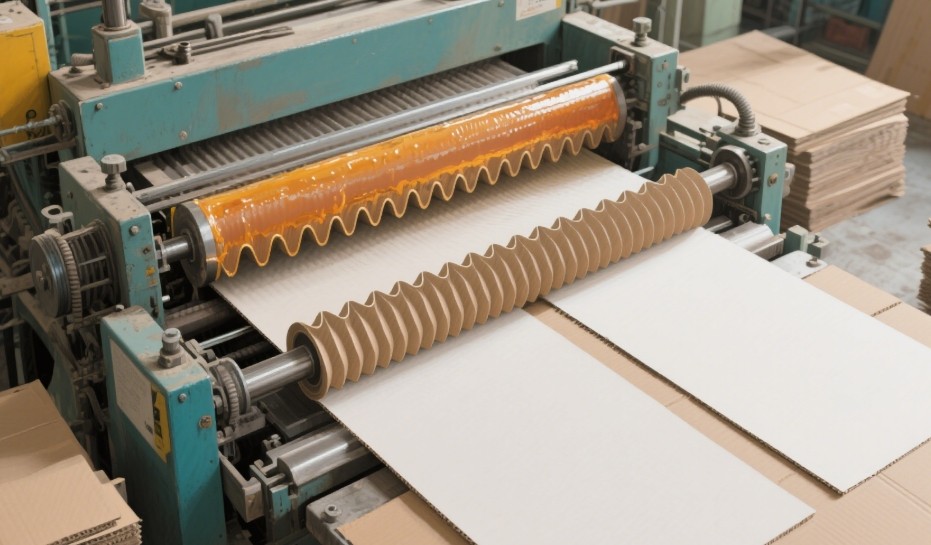
Making the actual cardboard, or corrugated board, is the first big step. It's a fascinating process that I've seen up close in many large paper mills. This material is the foundation for so many packaging solutions our customers create.
From Pulp to Paper Rolls
Everything starts with paper. This paper is made from wood pulp or recycled paper. Huge machines turn this pulp into giant rolls of paper. There are two main types of paper used: linerboard and medium. Linerboard is the flat paper that goes on the outside. The medium is the wavy, fluted paper in the middle. The quality of these papers really impacts the final box strength. I always tell my clients that good materials are the first step to a good product.
The Magic of the Corrugator
Next, these paper rolls go to a machine called a corrugator. This machine can be as long as a football field! The corrugator heats and moistens the medium paper to make it flexible. Then, it passes the medium through large, toothed rollers. These rollers give the paper its characteristic wavy flutes. Glue is applied to the tips of these flutes. Then, the linerboard is pressed onto the fluted medium. This forms a single-faced board. For a single-wall board, another linerboard is glued to the other side. The machine then cuts the continuous board into large sheets. It’s quite a sight to see these machines running at full speed.
Types of Corrugated Board
Different flute sizes (like A, B, C, E, F) and combinations create various board types. This affects strength and printability. Understanding these differences is important for choosing the right material for the job.
| Board Type | Structure | Common Uses |
|---|---|---|
| Single Face | 1 Liner + 1 Medium | Wrapping, cushioning |
| Single Wall | 1 Medium between 2 Liners | Shipping boxes, retail packaging |
| Double Wall | 2 Mediums, 3 Liners | Heavy-duty boxes, industrial parts |
| Triple Wall | 3 Mediums, 4 Liners | Very heavy items, shipping crates |
While we at Kylin Machine don't build corrugators, understanding this base material is vital. Our customers use these corrugated sheets with our advanced post-press machinery to create the final, high-quality boxes.
What is the process of making a cardboard box from these sheets?
Seen stacks of flat cardboard? Ever wonder how they become sturdy boxes? I’ll break down the transformation, highlighting the crucial machine-led stages.
Making a box from cardboard sheets involves designing, printing if needed, then die-cutting. After that, machines crease, fold, and glue the flat blanks into their final 3D shape.
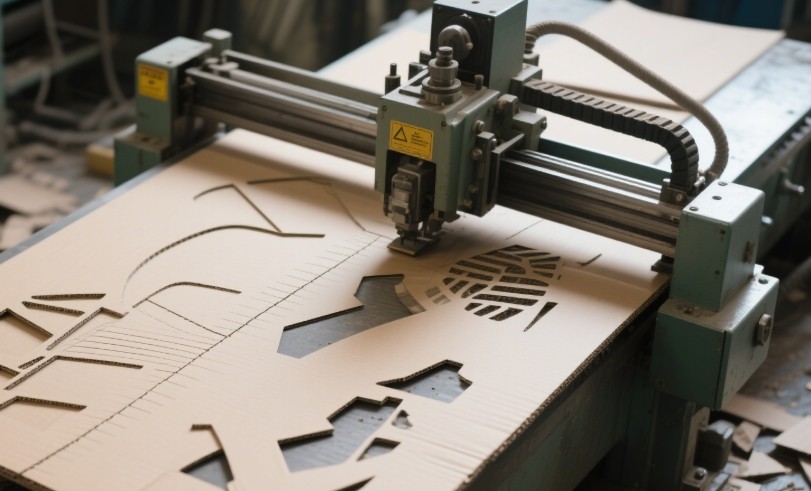
Once we have the corrugated sheets, the journey to a finished box begins. This is where precision and efficient machinery really shine. Many of our clients in the paper converting industry handle these steps daily. I've worked with many of them to optimize their production lines.
Designing the Blueprint
First, every box needs a design. This is often done using CAD (Computer-Aided Design) software. The design specifies the box's dimensions, style, and how it will fold. This design is then used to create a cutting die if die-cutting is needed. For our customers, a good design ensures the box functions well. It also makes sure the box can be manufactured efficiently on their machines. A small mistake in design can cause big problems later.
Printing and Die-Cutting: Shaping the Box
Next, many boxes get printed with logos, branding, or product information. This can be done using flexography, offset printing, or digital printing directly onto the corrugated sheets. After printing, the sheets go for die-cutting. A die is like a big cookie cutter. It cuts the box shape out of the flat sheet. It also creates creases for folding. There are flatbed die-cutters for smaller runs or complex shapes. There are also rotary die-cutters for high-volume production. I’ve seen how quickly these machines can process thousands of sheets. The choice of die-cutter often depends on the volume and complexity of the boxes our customers produce.
The Crucial Folding and Gluing Stage
The flat, die-cut blanks are now ready to become boxes. This happens in a folder-gluer machine. The machine folds the blank along the pre-made creases. Then, it applies glue to specific flaps. Finally, it presses the parts together to form the box. These machines can be very complex. They handle different box styles and sizes at high speeds. While general folder-gluers handle many standard boxes, specialized boxes like rigid boxes or collapsible boxes require more advanced solutions. This is an area where our expertise at Kylin Machine really helps our customers achieve top quality and efficiency for premium packaging. We often help them select or customize machines for these specific needs.
How to manufacture a high-quality paper box, like a rigid box?
Want to create premium paper boxes? It’s an art and science. I’ll show you the detailed steps, especially for high-quality rigid and collapsible boxes.
Manufacturing a high-quality paper box, like a rigid box, involves precisely cutting chipboard, wrapping it with decorative paper, and using specialized machinery for accurate assembly, like Kylin's robotic spotters.
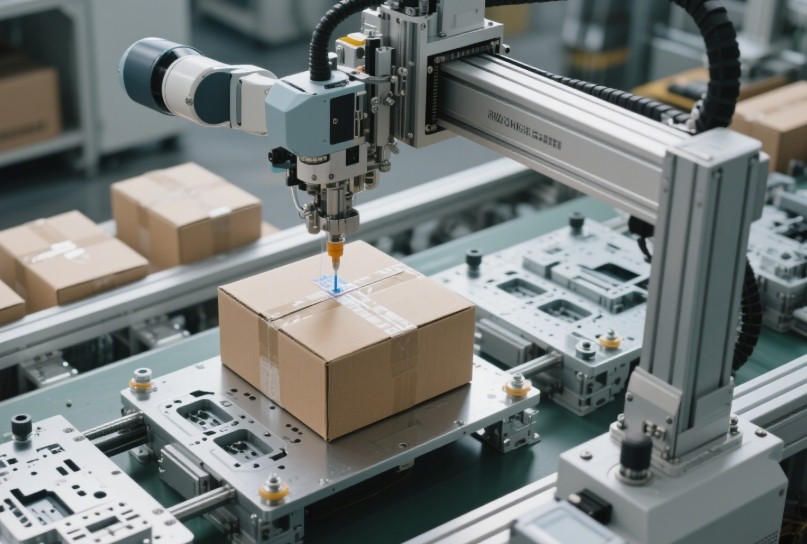
When we talk about high-quality paper boxes, we often mean rigid boxes. Think of luxury product packaging, gift boxes, or electronics boxes. These are not your average shipping cartons. They are made to impress and protect. At Kylin Machine, we specialize in the technology for these premium products. Many of our customers in the Graphic Arts and high-end Paper Converting sectors rely on our solutions. I've personally seen how our machines transform their capabilities.
Crafting the Sturdy Inner Core
A rigid box usually starts with a dense paperboard, like greyboard or chipboard. This board is cut to size. Then, for sharp, crisp edges, V-grooving machines cut V-shaped grooves into the board. This allows for perfect 90-degree folds. I always emphasize the importance of good grooving for a premium feel. After grooving, the corners of the flat blank are often taped or stayed using a corner pasting machine. This forms the basic structure of the inner box. This core needs to be strong and perfectly formed.
Preparing the Elegant Outer Wrap
The visual appeal of a rigid box comes from its outer wrap. This is usually high-quality paper, fabric, or other decorative material. The wrap is cut to the correct size, often larger than the box blank. An even layer of glue is applied to the inner side of this wrap material. This step is critical for a smooth, bubble-free finish. Many times, I've advised customers on the right glue application techniques for different wrap materials. It's a small detail that makes a big difference.
Precision Assembly: The Kylin Machine Advantage
This is where advanced machinery is essential. The glued wrap is precisely positioned over the flat or formed chipboard core. Our Robotic Spotter machines at Kylin Machine excel here. They use vision systems to pick up the chipboard and place it onto the glued wrap with incredible accuracy, often within fractions of a millimeter. After spotting, the wrapper machine folds the edges of the wrap tightly around the chipboard core. It presses the wrap firmly to ensure good adhesion and a sharp finish. Our Hybrid machines combine several of these steps for streamlined rigid box production. We also have specialized machines for collapsible rigid boxes, which are very popular for saving shipping space. The technology is also very similar for making hard book covers, another area where Kylin machines are widely used by businesses in the bookbindery industry.
| The difference between a manually assembled rigid box and one made with our automated solutions is night and day. This is true in terms of consistency, speed, and ultimately, cost-effectiveness for our B2B clients. | Feature | Manual Assembly | Kylin Automated Assembly (e.g., Robotic Spotter) |
|---|---|---|---|
| Precision | Variable, operator-dependent | High, Consistent (e.g., ±0.1mm) | |
| Speed | Slow (e.g., few per minute) | Fast (e.g., 20-40 pieces per minute) | |
| Labor Cost | High per unit | Lower per unit, less operator skill needed | |
| Waste | Higher due to errors | Minimized with accurate placement | |
| Complex Shapes | Difficult to align | Achievable with precision systems |
Investing in this technology has been a game-changer for many of our partners.
Conclusion
Cardboard box manufacturing is a multi-step journey, from raw material to finished product. Modern machines, like those from Kylin Machine, are key to efficient and precise production.

发表回复