

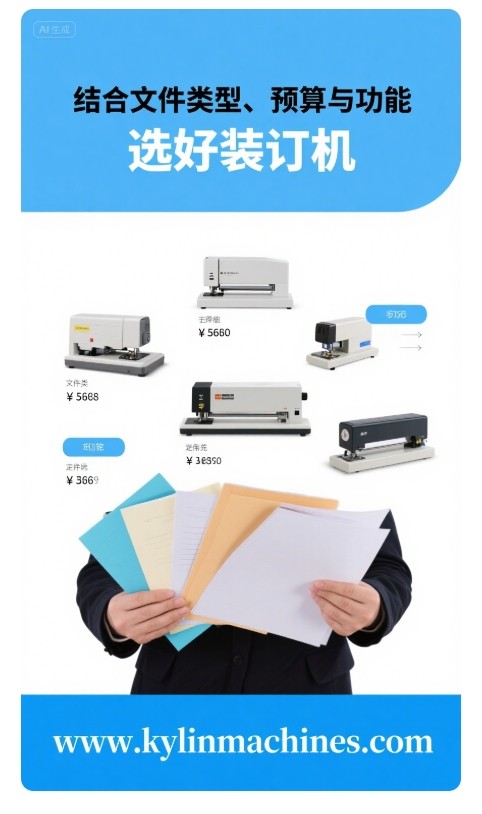
What is a good binding machine for a small office?
Tired of loose papers and unprofessional documents? This disorganization can hurt your image and waste time. A good binding machine brings order and professionalism.
A good binding machine for a small office depends on your needs. Consider binding volume, document type, and budget. For robust, professional solutions, especially for businesses scaling up, exploring specialized machinery like those from Kylin Machine (www.kylinmachines.com) for advanced post-press needs is key.
It is good to know what makes a binding machine suitable. But how do you pick the right one from so many options? Let's look into that so you can make a smart choice. We will explore different aspects to help you.
How do I choose a binding machine?
Feeling lost with so many binding machine options available? Choosing wrong means wasted money and unsuitable results for your business. Let's break down how to select the perfect machine.
To choose a binding machine, assess your binding frequency and volume. Also, consider the types of documents you'll bind, your budget, and desired features like electric punching. For business-grade binding, think long-term value.
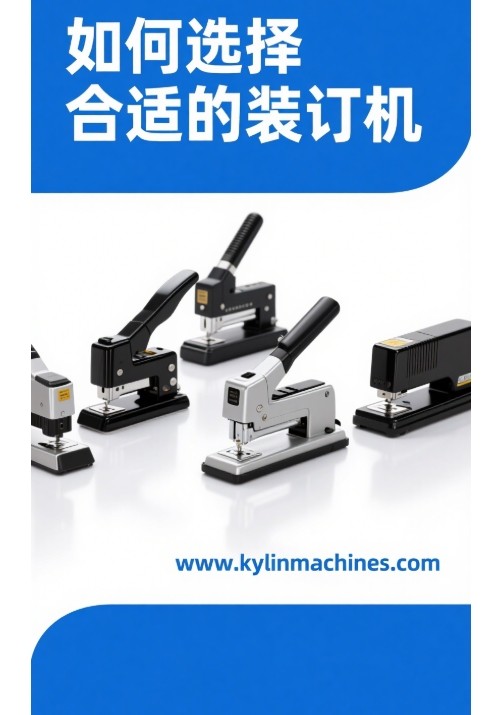
Understanding Your Binding Needs
First, think about how often you will bind. Also, consider how many pages you usually handle. A small office might bind a few reports a week. A busy print shop, like many of our Kylin Machine clients, binds hundreds or thousands of items daily. For low volume, a manual machine might seem okay. But for regular, larger tasks, an electric machine saves time and effort. If your business produces high-quality bound products like books or premium packaging, you need something more robust. At Kylin Machine, we specialize in machines for these demanding, high-volume applications in the graphic arts and bookbinding industries. I've seen clients grow from basic needs to requiring automated solutions for efficiency and professional output. So, think about your current and future needs.
Common Binding Types and Their Applications
There are several binding types. Comb binding is common for internal reports. This is because pages can be added or removed. Wire binding gives a more professional, secure finish for client proposals. Thermal binding creates a clean, book-like spine. Coil binding is durable. It also allows pages to turn 360 degrees. For businesses creating products for sale, like hardcover books or rigid boxes, the binding technology is far more specialized. Kylin Machine focuses on these high-end solutions. For example, our machines are used to create beautiful, durable hard book covers and sophisticated rigid boxes. These require precision and technology beyond typical office binders. This ensures a premium product for our B2B customers in the packaging and printing sectors.
Budget vs. Long-Term Value in Business
Your budget is important. But think about long-term value, especially for a business. A cheap machine might save money now. However, it could break down or produce lower-quality results. This can hurt your brand. For businesses in printing and packaging, investing in reliable machinery is crucial. At Kylin Machine, we provide machines that are built to last. They also deliver consistent quality. Our customers understand that the initial investment pays off. This happens through efficiency, durability, and the ability to produce high-value products. Consider the total cost of ownership. This includes maintenance and the quality of output, not just the upfront price.
| Feature | Manual Machine | Electric Machine (Office) | Industrial Machine (Kylin Focus) |
|---|---|---|---|
| Volume | Low | Medium | High / Very High |
| Speed | Slow | Moderate | Fast / Automated |
| Initial Cost | Low | Medium | High (Investment) |
| Use Case | Occasional internal use | Regular office reports/presentations | Mass production of saleable goods |
| Our Focus | Not typically our area | Not typically our area | Core for Kylin Machine |
What is the cheapest binding method?
Worried about binding costs, especially when starting out? Cutting corners on binding can make your important documents look cheap. Let's find a cost-effective method that still looks good.
The cheapest binding method is often manual plastic comb binding or slide binders for very low volumes. However, for business use, consider the cost per document and the impression it creates. Sometimes, investing a bit more is smarter.
Manual Simplicity vs. Electric Efficiency
Manual binding machines, like basic comb or wire punchers, have the lowest initial cost. You punch holes and insert the binding element by hand. This is fine for a few documents now and then. I remember using one when I first needed to bind a presentation for a small meeting. It was slow, but it worked for that one-off task. However, if you bind regularly, the time spent adds up. Electric machines cost more upfront but automate the punching. This speeds things up a lot and reduces effort. For businesses, time is money. Many of our Kylin Machine clients in the paper converting industry started with simpler methods. But they quickly upgraded to automated systems to handle larger orders and improve turnaround times. The "cheapest" isn't always the most economical when labor costs are factored in for ongoing operations.
The Hidden Costs: Consumables
The machine is one cost. Consumables like combs, wires, or thermal covers are another. Plastic combs are generally inexpensive. Wires and thermal covers can be pricier. You need to calculate the cost per document. For example, if you are producing high-end proposals, the slightly higher cost of wire binding might be justified by the professional look it offers. For companies producing thousands of bound items, like those using Kylin Machine's rigid box solutions or book cover machines, the efficiency of the machine and the design of the final product are more critical than just the cost of a single binding element. They are creating value and saleable products, not just binding paper for internal use. The choice of material often ties into the perceived value of the end product.
When "Cheapest" Harms Your Business Image
For personal use or very informal internal documents, the cheapest option might be fine. But for your business, documents represent your brand. A poorly bound report can give a bad impression to a client or partner. If you are in the graphic arts or bookbindery industry, like many businesses we serve at Kylin Machine, quality is paramount. Our machines are designed to produce premium, durable bindings for products that will be sold or represent significant work. So, while a simple comb bind is cheap for an internal memo, it’s not suitable for a high-value client presentation or a book intended for the market. Investing in better binding shows you care about quality and professionalism, which ultimately supports your business's reputation.
What size binding comb for 200 pages?
Confused about picking the right comb size for thick documents? Using the wrong size can damage your document or make it unusable. Here’s how to choose the correct comb for 200 pages.
For 200 pages of standard office paper (e.g., 20lb/75gsm or 80gsm), you'll typically need a 1-inch (25mm) or sometimes a 7/8-inch (22mm) binding comb. Always check the manufacturer's capacity chart for your specific combs and paper.
Understanding Comb Sizes and Page Capacity
Binding combs are usually measured by their diameter in inches or millimeters. This diameter determines how many pages they can hold. A small 1/4-inch comb might hold around 25 pages, while a large 2-inch comb could hold over 400 pages. For approximately 200 pages of standard paper, a 1-inch (25mm) comb is a common recommendation. Some heavy-duty 7/8-inch (22mm) combs might also work. It’s a bit like picking the right tool for a job; precision matters. I recall a client once struggling because they underestimated the paper thickness for a project. Their documents looked crammed and were hard to use. It’s always best to refer to the specific capacity guide provided by the comb manufacturer, as these can vary slightly between brands.
Paper Thickness: The X-Factor
The "200 pages" guideline usually assumes standard office paper, typically around 20lb (75gsm) or 24lb (90gsm). If you use thicker paper, like cardstock for covers or premium presentation paper (e.g., 100-120gsm), those 200 pages will form a much thicker stack. So, you would need a larger comb. For example, 200 pages of 120gsm paper will certainly require a larger comb than 200 pages of 80gsm paper. Always consider the total thickness of your document block, not just the page count. This attention to detail is crucial in professional printing and packaging, fields where Kylin Machine operates. We ensure every product meets exact quality standards, and paper choice is a big part of that.
Why the Right Fit Matters for Professionalism
Using a comb that's too small will make pages hard to turn. It can also cause them to tear out. The document might also not lay flat properly. If the comb is too large, the document will look loose and sloppy. The pages might shift around too much. For professional reports or presentations, the right fit is essential for a good impression. In the B2B world, especially in industries like bookbinding where Kylin Machine provides solutions for hardcover books, achieving the perfect bind is critical. While this question is about combs for office use, for very thick documents or high-volume professional work, other binding methods like perfect binding (used in paperback books) or case binding (for hardcovers) become more appropriate. These are areas where our industrial machinery excels in producing durable and aesthetic results.
| Approx. Pages (80gsm) | Comb Diameter (inches) | Comb Diameter (mm) |
|---|---|---|
| Up to 25 | 1/4" | 6mm |
| Up to 55 | 3/8" | 10mm |
| Up to 90 | 1/2" | 12mm |
| Up to 120 | 5/8" | 16mm |
| Up to 150 | 3/4" | 19mm |
| Up to 200 | 7/8" to 1" | 22mm to 25mm |
| Up to 250 | 1 1/8" | 28mm |
What is a binding machine used for in an office?
Wondering if a binding machine is truly useful for your office? Unbound documents can lead to chaos and a less polished image. Discover how a binding machine transforms office document handling.
An office binding machine is used to create professional-looking reports, presentations, proposals, and training manuals. It also helps organize internal documents and archive materials neatly, improving efficiency and overall presentation.
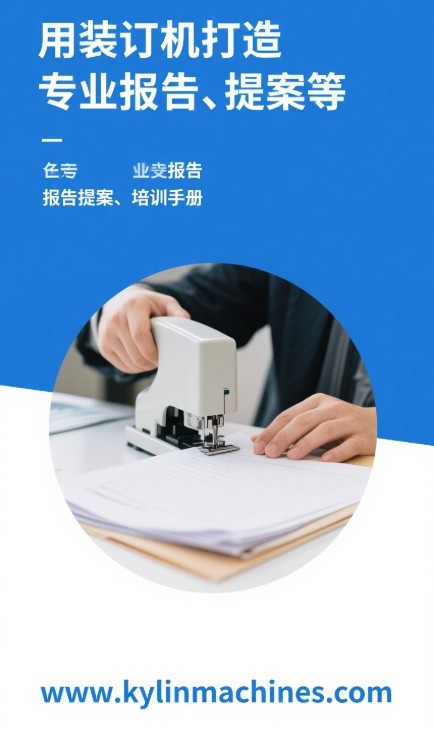
Creating a Polished Professional Image
First impressions count a lot in business. A binding machine helps you create documents that look professional. They also become much easier to handle. Think about client proposals, sales presentations, or important reports. When these are neatly bound, they show care and attention to detail. I’ve seen many businesses elevate their presentations simply by adopting a consistent binding style. This small step can significantly impact how clients perceive your work and your company's professionalism. It's about more than just holding pages together. It's about conveying competence and respect for the recipient. For businesses, this is a simple yet effective way to enhance their brand image with every document they share.
Streamlining Organization and Archiving
Beyond client-facing documents, binding machines are great for internal organization. You can bind training materials, procedure manuals, financial reports, or project documentation. This keeps important information tidy, accessible, and less likely to get lost or damaged. Archived documents also take up less space. They are easier to manage when bound compared to loose stacks of paper. Imagine searching for a specific page in a loose pile versus flipping through a neatly bound manual. The efficiency gain is clear. This principle of organization is something we at Kylin Machine understand deeply. Our equipment helps create highly organized and durable products for various industries, where easy access and longevity of information are key.
Beyond the Desktop: Binding in Professional Industries
While a desktop binder serves a small office well for the uses I mentioned above, the concept of "binding" takes on a much larger and more critical role in industries like graphic arts, paper converting, and bookbindery. Here, binding isn't just about office reports. It’s about manufacturing finished products. Our Kylin Machine customers use advanced machinery for tasks like creating high-quality rigid boxes for luxury goods, producing durable hard book covers for publishers, or crafting unique collapsible boxes for retail. These are complex processes requiring specialized technology for precise cutting, creasing, folding, gluing, and assembling. So, while the office use is about presentation and organization of information, in these B2B sectors, binding is a core manufacturing process for creating value-added products that are sold to consumers or other businesses. The principles of quality, durability, and aesthetic appeal are universal, though the scale and technology differ vastly.
Conclusion
Choosing the right binding machine improves professionalism and organization. For industrial-scale post-press solutions, Kylin Machine (www.kylinmachines.com) offers specialized machinery for businesses in packaging and printing.

发表回复