

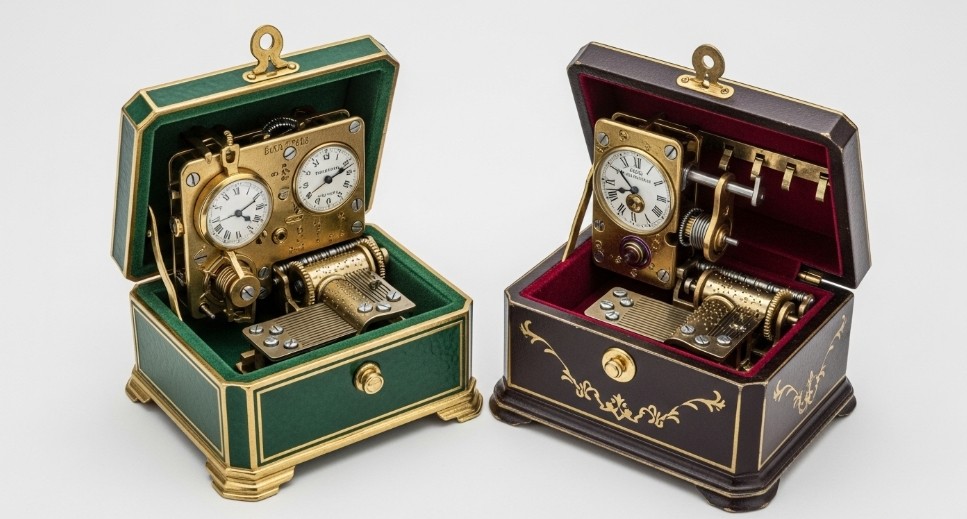
What is the Enticing History of Musical Jewelry Boxes?
Ever wondered about the story behind that tiny, twirling dancer? The simple magic of a musical jewelry box has a surprisingly rich history, often hidden away like a precious secret.
The history of musical jewelry boxes began with 18th-century Swiss watchmakers. Craftsmen like Antoine Favre-Salomon used their skills to miniaturize musical movements. They placed these mechanisms into small, ornate boxes, initially as luxury items for the wealthy before they became cherished keepsakes worldwide.

That's the quick summary. But the journey from a watchmaker's bench to a child's bedroom is full of amazing innovations and beautiful craftsmanship. The real story is in how these simple music players evolved over centuries. Let's dive deeper into where it all began, with the masters of tiny, precise mechanics.
How did Swiss watchmakers start it all?
Think watchmaking is just about time? This old craft had a secret musical side. Forgetting this link means you miss the birth of automated music. Let's see how tiny gears created melodies.
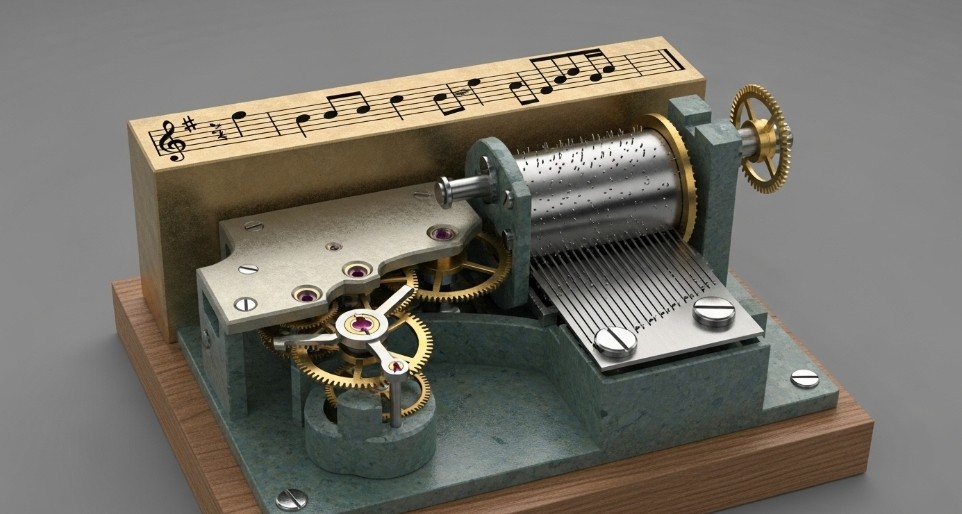
Swiss watchmakers in the late 1700s invented the cylinder music box. They used their miniaturization skills to create a pinned cylinder that plucked tuned steel teeth, producing a melody. This amazing innovation was the foundation for all musical boxes that followed.
It all started with a challenge. The watchmakers of Geneva were masters of making tiny, intricate things. I respect that deeply. In my own work at Kylin Machine, precision is everything. A millimeter off on a rigid box assembly can ruin the whole product. These craftsmen were working on an even smaller scale. They wanted to create music without musicians.
The Birth of the Cylinder
The big breakthrough was the musical cylinder. Imagine a tiny metal barrel with little pins sticking out. As this cylinder turned, the pins would catch and pluck the teeth of a steel comb. Each tooth was tuned to a different note. It was a simple, brilliant idea. Antoine Favre-Salomon presented his invention in 1796. He put a musical comb and a pinned cylinder into a small snuff box. It was a novelty, a toy for the rich. But it was the start of something big.
From Watches to Music Boxes
These early devices weren't jewelry boxes yet. They were put into all sorts of things, from snuff boxes to clocks and even watches. The goal was to show off incredible skill. We see this today in the packaging world. A beautifully crafted rigid box isn't just for protection. It’s a statement about the product inside. It shows care and quality. Those early watchmakers understood that perfectly. They were selling more than music; they were selling artistry.
| Feature | Early Musical Movement | Modern Musical Movement |
|---|---|---|
| Mechanism | Pinned Cylinder | Pinned Cylinder or Disc |
| Power Source | Key-wound spring | Key-wound or battery |
| Size | Large, often in furniture | Small, fits in a hand |
| Cost | Very expensive, for elite | Affordable, for everyone |
When did musical boxes become popular worldwide?
A luxury item for kings, but how did it reach everyone? The story of its global spread is about industry and smart ideas. Let's see how these boxes traveled from Switzerland to the world.
The 19th century was the golden age for musical boxes. Swiss and German makers improved production, making them cheaper. The invention of the disc music box by Paul Lochmann in Germany made them even more popular, as people could change the music.
The 19th century changed everything. The Industrial Revolution brought new machines and new ways of thinking. Suddenly, it was possible to make things faster and cheaper. This was a huge turning point for musical boxes. What was once a handmade luxury for a few could now be produced for many. In my business, we create machines that help companies scale up production. I see a direct parallel here. Automation and smart manufacturing open up markets. The Swiss were the first, but German and French companies soon joined in, competing to create better and more affordable musical boxes for a growing middle class.
The Disc Revolution
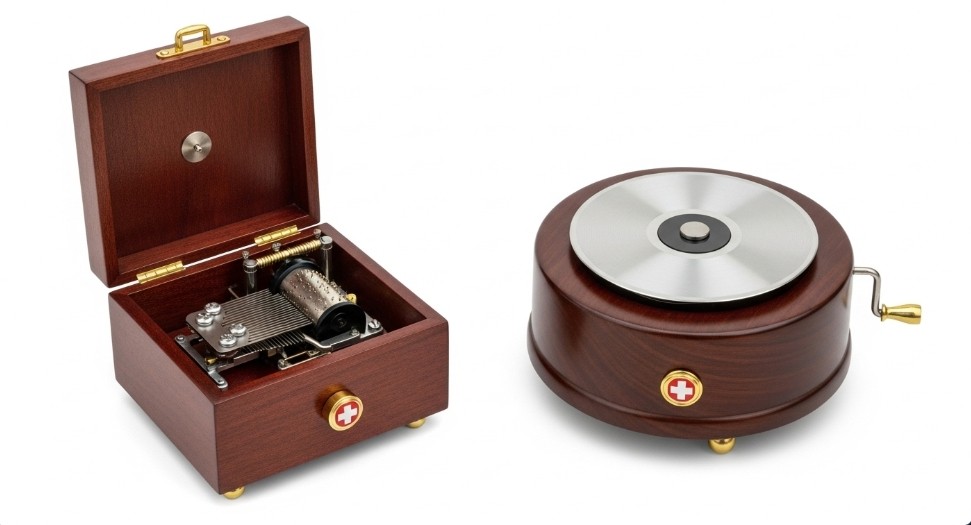
The cylinder music box was great, but it had one big problem: you were stuck with one song. In 1886, Paul Lochmann, a German inventor, changed the game. He created the disc music box. Instead of a cylinder with fixed pins, his machine used a flat, interchangeable metal disc. This meant you could buy new discs and listen to different tunes. It was like the world's first record player. This made musical boxes even more popular because they offered variety.
The American Market
Americans loved musical boxes. German immigrants brought the technology with them, and companies like Regina Music Box Company in New Jersey became huge. They made big, beautiful machines that became the centerpiece of a family's living room. They were a source of home entertainment before radios and televisions existed. The box itself had to be impressive. This reminds me of the rigid boxes my clients make for luxury goods. The packaging has to be as special as the product. A strong, perfectly wrapped box creates the first impression.
| Type | Cylinder Music Box | Disc Music Box |
|---|---|---|
| Music Format | Fixed on a metal cylinder | Interchangeable metal discs |
| Variety | One song or a few tunes | Unlimited with new discs |
| Era of Popularity | Early to mid-19th century | Late 19th to early 20th century |
| Key Advantage | Intricate, continuous sound | Musical variety, user choice |
How did Japan shape the modern musical jewelry box?
The ballerina box feels timeless, but its modern look has a clear origin. Without post-war innovation from Japan, this iconic design might not exist. Let's see how Japan redefined the musical box.
After World War II, Japan became a major producer of small, affordable musical movements. Companies like Sankyo Seiki combined these with jewelry boxes, often adding a twirling ballerina, creating the iconic product that is so popular today.
After the invention of the phonograph and radio, the big, expensive music boxes lost their appeal. For a while, it seemed like their time was over. But the story took another turn after World War II. Japan was rebuilding its economy, and it focused on manufacturing high-quality, miniaturized electronics and mechanics. I have a lot of respect for this period of innovation. At Kylin Machine, our research and development team is always working to make our machines more efficient and compact, like our Robotic Spotter technology. It’s about doing more with less.
The Rise of Japanese Manufacturing
Japanese companies, especially Sankyo Seiki, became masters of producing tiny, reliable musical movements. They made them smaller and much cheaper than the old Swiss versions. This was a critical step. They weren't trying to compete with the huge, ornate music boxes of the past. Instead, they created a new market. They put these tiny movements into all sorts of products, including toys, clocks, and, most importantly, jewelry boxes.
The Ballerina's Debut
The most famous innovation was adding a small figurine, usually a ballerina, on a spring. When you open the box lid, a little wire lifts, and the music starts. A small magnet on the rotating part of the movement makes the ballerina twirl as if by magic. This combination of music, motion, and storage was a brilliant idea. It transformed the musical box from just a music player into a magical keeper of secrets and treasures for children. It’s a perfect example of how combining different functions can create a product that people love for generations.
What makes a musical jewelry box a timeless gift?
It's more than just a box. It holds memories. In our digital world, physical keepsakes feel more special than ever. Let's explore why this simple object remains so powerful today.
A musical jewelry box is a timeless gift because it combines beauty, music, and function. It serves as a personal treasure chest, linking a specific melody to cherished memories and items, creating a deep and lasting emotional connection for the owner.

I believe some things never go out of style. A well-made object that serves a purpose and brings joy will always have value. In the packaging industry, we see this all the time. Our customers aren't just making disposable containers. They are using our rigid box machines to create beautiful, durable boxes for high-end electronics, perfumes, and luxury gifts. These boxes are part of the experience. They are often kept and reused. A musical jewelry box is the ultimate example of this. It’s a package that becomes a treasured possession in its own right.
The Craft of the Box Itself
We've talked a lot about the musical movement, but the box is just as important. It’s the first thing you see and touch. The quality of its construction matters. A box with sharp corners, smooth paper wrapping, and a sturdy hinge feels special. This is where my world connects directly to this history. The machines we build at Kylin Machine are designed to achieve that level of quality, but on a large scale. Whether it's a simple paper-wrapped box or a complex collapsible design, the goal is always a perfect finish. A musical jewelry box is a small, personal piece of art. The box is its frame.
A Vessel for Memories
Ultimately, the magic is in the combination. The box holds physical treasures—a first piece of jewelry, a lock of hair, a special note. The music holds emotional memories. The melody becomes linked to the person who gave the gift or the time in your life when you received it. Every time you open the lid, you don’t just hear a song; you feel a memory. It’s a simple, powerful technology that connects with us on a human level. That's why, even with all our digital gadgets, the musical jewelry box endures.
| Element | Contribution to Timelessness | Connection to Quality Packaging |
|---|---|---|
| The Music | Creates an emotional, nostalgic link to memories. | The "unboxing experience" sound—a satisfying click or rustle. |
| The Box | Protects treasures and provides a beautiful physical object. | Protects the product and communicates brand value. |
| The Motion | Adds a touch of magic and wonder (e.g., the ballerina). | Interactive elements, like magnetic closures or reveals. |
Conclusion
From Swiss precision to a beloved global keepsake, the musical box's history is rich. It combines engineering and art, a tradition we proudly continue in high-quality box-making today.

发表回复