

Are cereal boxes paper or cardboard?
Confusing paperboard with cardboard can lead to costly production errors. Using the wrong material wastes time and money. I'll help you understand the key differences for your business.
A cereal box is made from paperboard, which is a thick type of paper. It is not technically cardboard. "Cardboard" usually refers to the corrugated material used for shipping boxes. In the packaging industry, this distinction is very important for choosing the right materials and machinery.
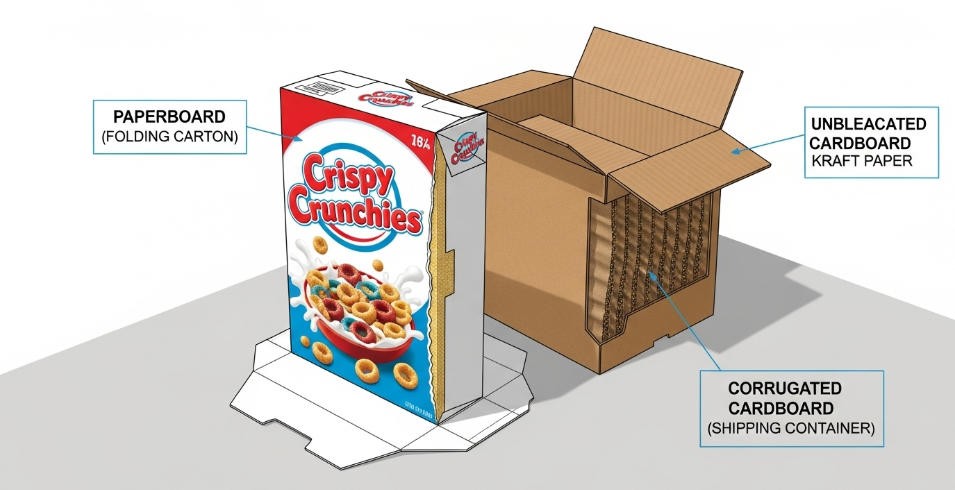
You now have the simple answer. But knowing the basics isn't enough to stay ahead in our competitive industry. To truly master your craft and maximize your profits, you need to understand the details behind these materials. Let's dive deeper and explore why these distinctions matter so much.
What type of box is a cereal box?
Are you calling every thin product box a "cardboard box"? This common mistake can confuse your suppliers and affect your final product quality. Let's fix this simple but important detail.
A cereal box is a specific type of package called a folding carton. It's made from a single layer of paperboard. The board is printed, cut, and creased so it can be shipped flat and easily folded into its final shape by the product manufacturer.
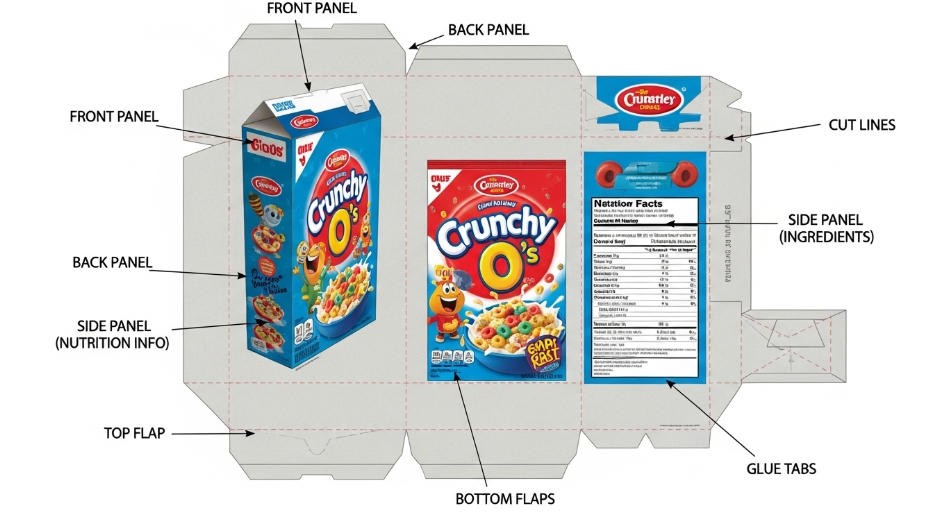
A folding carton is one of the most common types of retail packaging. Its main job is to look good on a shelf and hold the product. It’s different from other boxes we work with in the industry. For example, the luxury boxes for phones or jewelry are often rigid boxes. Those are made from thick chipboard and wrapped in decorative paper. They don't fold down. My company, Kylin Machine, specializes in the high-tech machinery needed to make these premium rigid boxes. Then you have corrugated boxes, which everyone calls "cardboard." Those are for shipping. They are strong but not pretty.
Understanding these categories is the first step to serving your clients better.
Box Types at a Glance
| Box Type | Primary Material | Construction Style | Common Use Case |
|---|---|---|---|
| Folding Carton | Paperboard | Single layer, ships flat, folds up | Cereal, cosmetics, medicine |
| Rigid Box | Chipboard + paper wrap | Sturdy, non-collapsible, premium | Luxury goods, electronics |
| Corrugated Box | Corrugated Fiberboard | 3+ layers with a wavy center | Shipping, e-commerce |
What type of board is used for cereal boxes?
Choosing the wrong paperboard can make your packaging look cheap or fail to protect the product. This choice directly impacts your client's brand. I will show you what to look for.
Cereal boxes are typically made from a grade of recycled paperboard called clay-coated news back (CCNB). Some premium brands might use solid bleached sulfate (SBS). The clay coating provides a smooth, white surface that is perfect for printing vibrant, high-quality graphics.
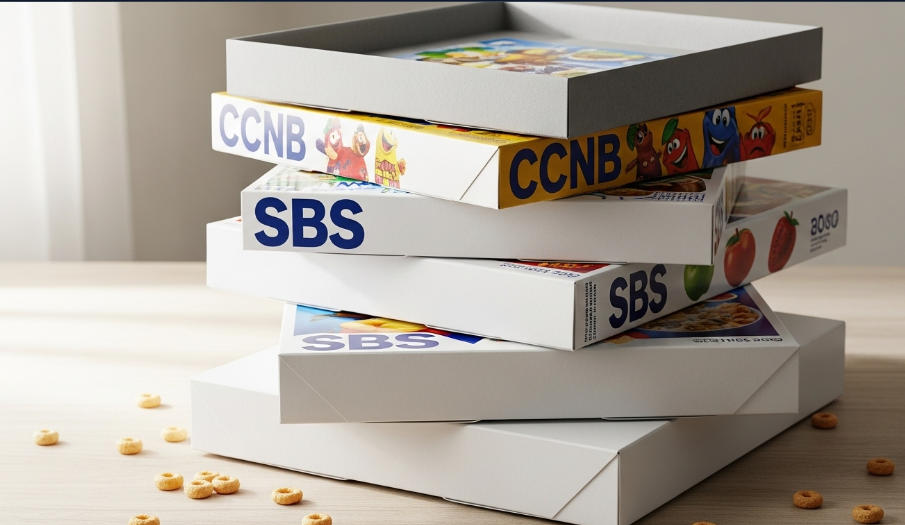
In my years of working with packaging producers, I’ve seen that the choice of board is critical. For most food products like cereal or pasta, CCNB is the go-to material. It's cost-effective because it uses recycled fibers. The inside of the box is usually grey or brown, which is perfectly fine for these products. For high-end industries like cosmetics or pharmaceuticals, clients demand a more premium feel. That's where Solid Bleached Sulfate (SBS) comes in. It's made from virgin wood pulp, so it is white all the way through and feels more luxurious. It’s also considered cleaner for direct food contact. Knowing which board to recommend can make you a more valuable partner to your clients.
Common Paperboard Grades
| Abbreviation | Full Name | Key Characteristics | Best For |
|---|---|---|---|
| CCNB | Clay Coated News Back | Recycled fibers, cost-effective, grey back | Cereal, tissues, toys |
| SBS | Solid Bleached Sulfate | Virgin fibers, premium feel, white core | Cosmetics, pharmaceuticals, frozen food |
| CUK | Coated Unbleached Kraft | Virgin fibers, very strong, brown color | Beverage carriers, hardware |
What kind of paper is a cereal box?
You hear "paper" and think of flimsy office sheets. You hear "cardboard" and think of heavy shipping boxes. Cereal boxes are neither. This confusion can stop you from truly understanding your materials.
The material is a specific category of paper known as paperboard. The main difference is thickness and stiffness. Generally, any paper with a thickness over 0.012 inches (or 12 points) is classified as paperboard. It is essentially a very thick and sturdy paper.
Think of it like this. Standard office paper is like a t-shirt. Paperboard is like a denim jacket. Both are made from the same basic fiber, but the weight and structure create completely different products with different uses. In our industry, we measure paperboard thickness in "points" or "caliper." One point is one-thousandth of an inch. A typical cereal box is around 16 to 24 points thick. This technical detail is extremely important when setting up machinery. Our machines at Kylin are engineered to handle specific ranges of paperboard thickness. If a customer tries to run a board that is too thick or too thin, it can cause jams, damage the machine, or result in poorly formed boxes. Precision is everything.
What is the difference between paper and cardboard boxes?
Using the terms "paper box" and "cardboard box" interchangeably can cause major miscommunication. This leads to ordering the wrong stock or producing the wrong product. Let's define these terms clearly.
The key difference is construction. A "paper box," like a cereal box, is a folding carton made from a single, solid layer of paperboard. A "cardboard box" is a shipping container made from corrugated fiberboard, which has at least three layers.
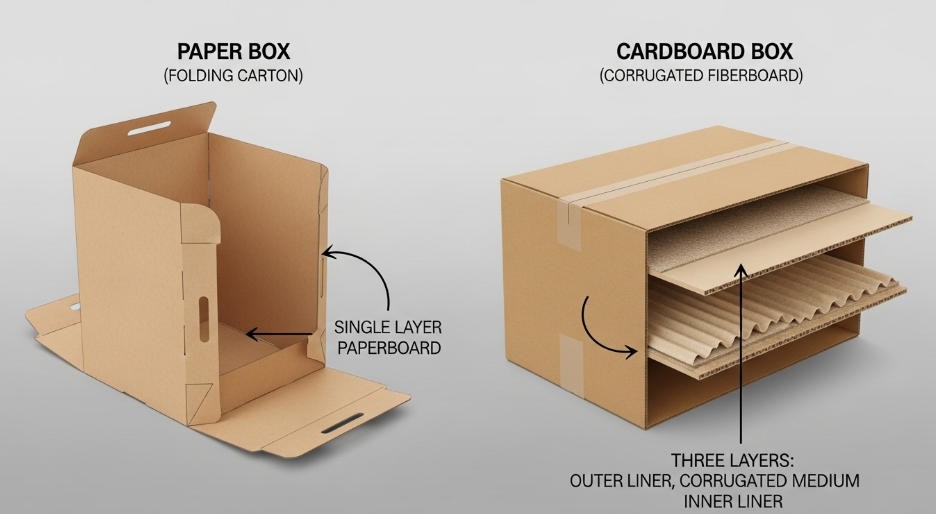
Let's break down the structure. Corrugated fiberboard has two flat sheets of linerboard with a wavy, fluted layer sandwiched between them. This S-shaped wave creates air pockets that provide cushioning and incredible strength. That's why it's used for shipping. You can stack heavy boxes on top of each other without crushing the contents. Paperboard, on the other hand, is a solid, dense sheet. Its main advantage is its super smooth surface, which is perfect for high-resolution printing. You can't print beautiful, detailed graphics directly onto the bumpy surface of a corrugated box. In my business at Kylin Machine, we help customers create beautiful rigid boxes and book covers—products where appearance is everything. They rely on the superior printability of paperboard.
Strength vs. Printability
| Feature | Paperboard Box (Folding Carton) | Corrugated Box ("Cardboard") |
|---|---|---|
| Material | Single, solid layer of paperboard | Multi-layer with a wavy flute |
| Primary Goal | Product marketing and display | Product protection and shipping |
| Key Advantage | Excellent, smooth printing surface | High stacking strength and cushioning |
| Common Name | "Paper box," folding carton | "Cardboard box," shipping carton |
Conclusion
Cereal boxes are made of paperboard, not cardboard. Understanding the difference between single-layer paperboard for retail and multi-layer corrugated for shipping is essential for success in the packaging industry.

发表回复