

How to save a wet book from water damage?
A wet book can warp, stain, and grow mold fast. I know how painful that feels when a valuable book or sample gets soaked and seems beyond saving.
Yes, I can often save a wet book if I act fast. I need to remove water, dry pages with airflow, keep the shape stable, and stop mold before it starts.
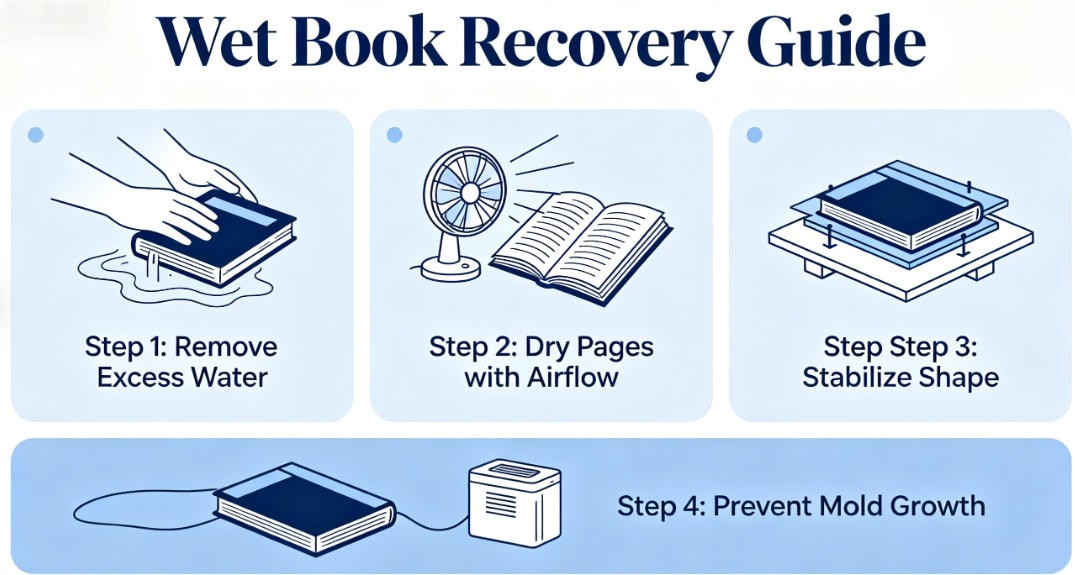
When I deal with water damage, I do not start with panic. I start with steps. I have learned that books can survive more than most people think. Still, time matters. A few early choices can decide if the book stays readable or turns stiff, wavy, and spotted.
How do you prevent a wet book from getting ruined?
When a book gets wet, the damage spreads fast. Pages swell, ink can move, and glue can weaken before I even decide what to do.
I prevent ruin by blotting water at once, standing the book in moving air, separating damp pages carefully, and avoiding heat, pressure, or rough handling.
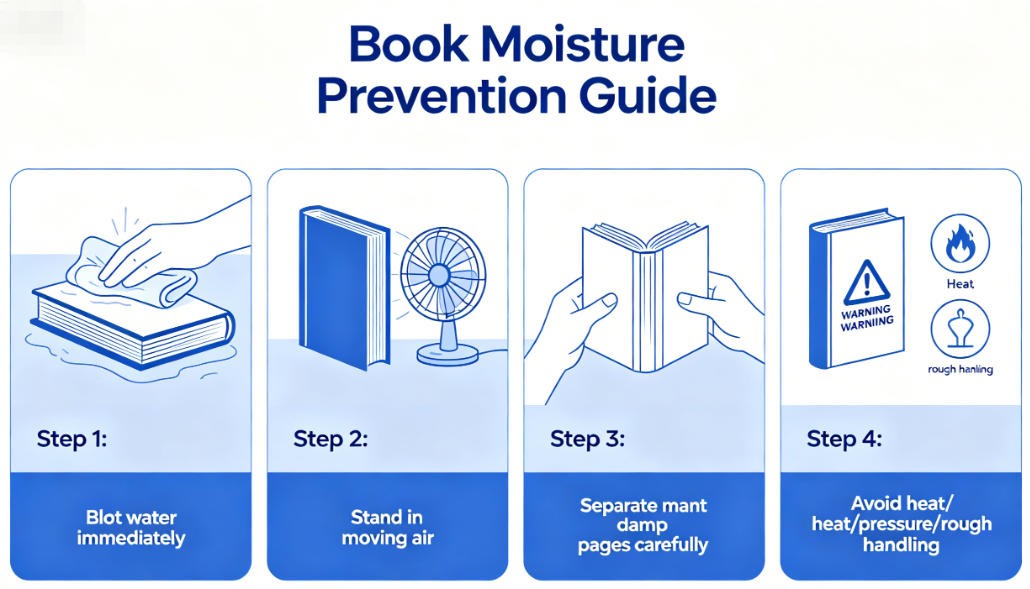
The first thing I do is check how wet the book is. If the cover is damp and the pages are only slightly wet, I stand the book upright on an absorbent towel. I fan the pages a little. I do not open the book too wide, because a wet spine can crack. If the book is very wet, I lay it flat first and blot the cover and page edges with plain paper towels or clean cloth. I press gently. I never rub. Rubbing can tear soft paper and spread ink.
Then I move to airflow. I use a fan nearby, not directly blasting the pages. Good air movement helps water leave the paper without harsh heat. I do not use a hair dryer, a heater, or direct sun. Heat can curl pages and fix stains deeper into the paper. If the book is coated paper, I act even faster because glossy pages can stick together. In that case, I place wax paper or clean absorbent sheets between small groups of pages and change them often.
I also think about the long term. If I work in a print shop, bindery, or packaging plant, I know that moisture control is not only about rescue. It is also about production quality. This is where strong book cover and binding equipment matters. When I want to produce durable covers, better glued parts, and stable hard cover work, I look at machines like these:
| Need I may have | Relevant product |
|---|---|
| Hard cover making for stable case production | Ky-380 Hard Cover Making Machine |
| Better glue application for book parts | Glue Spraying Assembly Machine |
| Pressing and creasing hard covers after assembly | Hard Cover Book Pressing & Creasing Machine |
When readers from printing and binding companies contact me, I usually ask for book size, paper type, cover material, and output target first. That helps me point them to the right machine faster.
Is a book ruined if it gets wet?
A soaked book looks hopeless at first. I have felt that same sinking feeling when pages buckle and the cover starts to pull away from the block.
No, a wet book is not always ruined. Many books can be saved if I dry them early, reshape them during drying, and stop mold from forming.
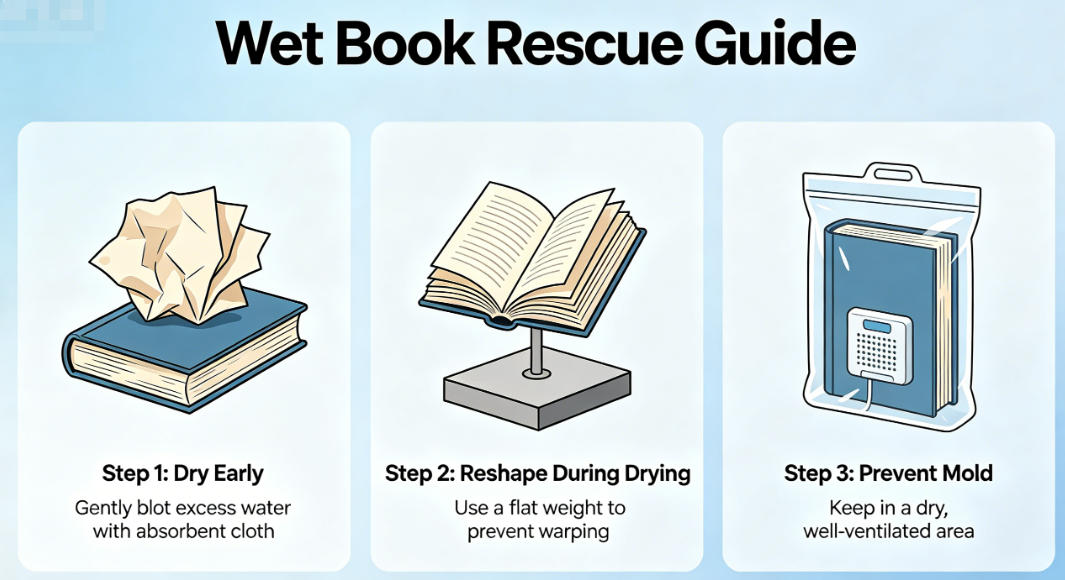
I do not treat every wet book the same way. A little splash is very different from full soaking. If only the edges are damp, the book often recovers well. It may still have some waviness, but it can stay usable and readable. If the book is fully soaked, I look at three things: paper type, binding type, and how long it stayed wet. Hardcover books with strong sewing often survive better than cheap glued paperbacks, though the cover boards may warp. Coated art books are harder because wet glossy pages like to stick together. If that happens and I wait too long, page surfaces can tear when I separate them.
I also think about value. If the book is rare, signed, or legally important, I do not experiment too much. I contact a conservator. For normal working books, manuals, or shop references, I focus on function first. I want the book dry, openable, and free from mold. Perfect looks come second.
In my own work life, I have seen another side of this question. Some readers are not only trying to save one damaged book. They are trying to stop losses in a whole production line. A weak cover, poor glue spread, or uneven pressure can make moisture problems worse later during storage and shipping. That is why equipment choice matters for B2B buyers. I usually suggest looking at solutions that improve alignment, gluing, and cover quality from the start.
| Production concern | Helpful machine |
|---|---|
| Lay-flat book assembly | KY-G-400 Automatic Photo Book Lay Flat Binder |
| Accurate positioning for book or box work | Dual-Purpose Positioning Machine |
| Small-batch glue work | Desktop Glue Painting Machine |
If you run a bindery or packaging business and want help choosing the right setup, I would ask you to send your product photos, size range, speed target, and your contact details so I can suggest matching machines.
How to protect books from moisture?
Moisture damage often starts before I notice it. A room can feel normal, yet books still absorb damp air and slowly bend, smell, and weaken.
I protect books from moisture by controlling humidity, improving air flow, storing books off the floor, and using dry, stable materials in both storage and production.
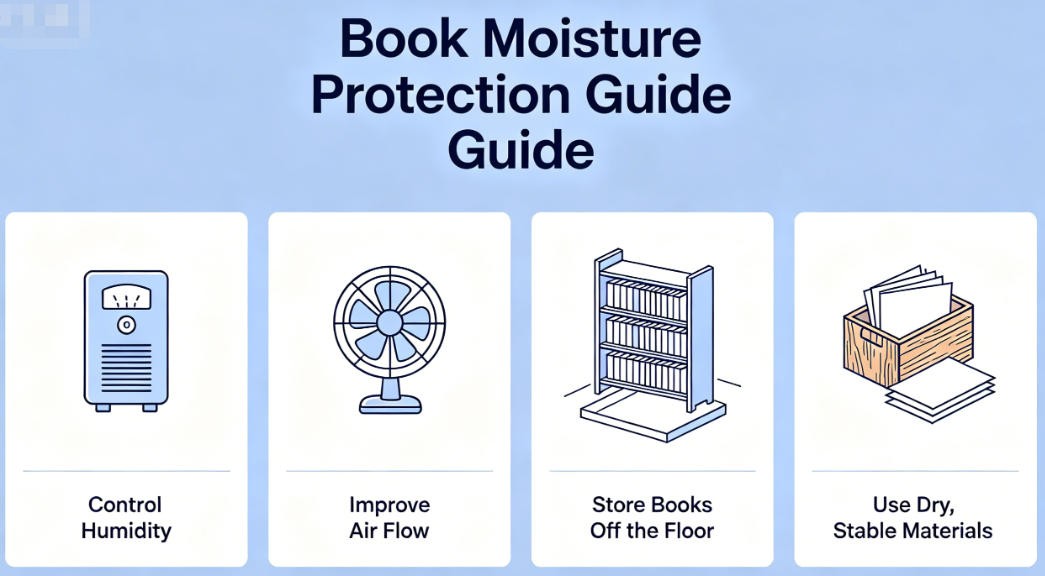
When I want to protect books, I think first about the room, not the shelf. Books react to the air around them every day. If humidity stays high, pages absorb water from the air. Covers start to wave. Glue joints can soften. Mold spores get a chance to grow. So I keep storage spaces clean, dry, and well ventilated. I aim for stable conditions, not sudden shifts. A dehumidifier helps in humid climates. Air conditioning helps too when it also removes moisture. I avoid placing books against cold outside walls, under leaking pipes, or near windows where condensation forms.
I also change how books sit. I keep them upright, supported, and not packed so tight that air cannot move. I store cartons on pallets or shelves, never directly on the floor. In a factory or warehouse, I use moisture checks as part of normal quality control. I look at paper stock, board stock, glue area, and finished goods storage. If even one step stays damp, later problems grow.
This topic is where my business readers often want practical options. If I make hard covers, rigid boxes, or book parts, I want machines that support clean glue work, stable pressing, and repeatable quality. Here are useful pages from my site that readers may want to review:
| What I may want to improve | Product link |
|---|---|
| Hard cover production quality | Ky-380 Hard Cover Making Machine |
| Glue control for books and boxes | Glue Spraying Assembly Machine |
| Cover shaping after assembly | Hard Cover Book Pressing & Creasing Machine |
| Full product range for books and boxes | Machine Catalog |
If you are planning a new line, I suggest that you leave your company name, product type, WhatsApp or email, and expected capacity. I can use that information to point you to the most useful machine pages faster.
How do you prevent mold on wet books?
Mold is the part I fear most after water damage. A book can look only damp today and smell musty tomorrow if I move too slowly.
I prevent mold on wet books by drying them within 24 to 48 hours, increasing air flow, lowering humidity, separating damp pages, and isolating affected books from dry ones.
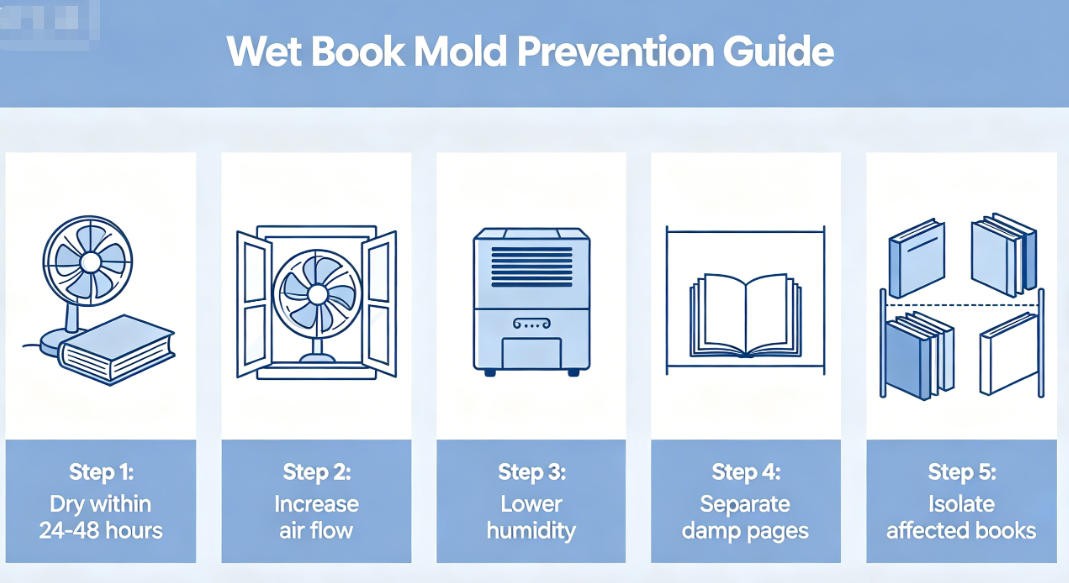
Mold prevention is a race against time. Once a book gets wet, I do not leave it in a closed pile or a plastic bag unless I am freezing it for later treatment. If I cannot dry the book right away, freezing is better than letting it sit warm and damp. Freezing pauses damage and gives me time. When I am ready, I thaw and dry the book with care. That one step can save books that would otherwise turn moldy.
If I can act at once, I spread books out with space between them. I use fans to move air through the room. I lower the humidity if possible. I change blotting sheets often. I check for odor because smell can be an early warning sign. If I see fuzzy spots or staining that spreads, I isolate the book. I do not want spores moving to nearby stock.
For business readers, mold control is not only a home care issue. It is a warehouse issue, a shipping issue, and a production issue. If I produce book covers, rigid boxes, or bound products, I need consistent glue, stable pressing, and good storage practice. That is why readers who care about product quality often review machine options along with moisture control methods.
| Business need linked to mold prevention | Relevant product |
|---|---|
| Consistent book component handling | Book Block Head Band Machine |
| Strong cover finishing workflow | Hard Cover Book Pressing & Creasing Machine |
| Broader book machine options | For Books Category |
If you make books, hard covers, or premium packaging and want fewer moisture-related losses, send me your product sample details and contact information. I can help you review the right machines from Kylin Machine for your workflow.
Conclusion
I save wet books by acting fast, drying with care, and controlling moisture early. I also reduce future risk with better storage, better process control, and the right machines.

发表回复