

What Is a Folding Carton?
A lot of buyers mix up folding cartons, rigid boxes, and corrugated boxes. That mistake can lead to bad packaging choices, wasted budget, and weak shelf impact.
A folding carton is a paperboard box that ships flat, gets folded into shape, and is widely used for retail packaging. It is light, printable, cost-effective, and best for products that need branding more than heavy-duty protection.
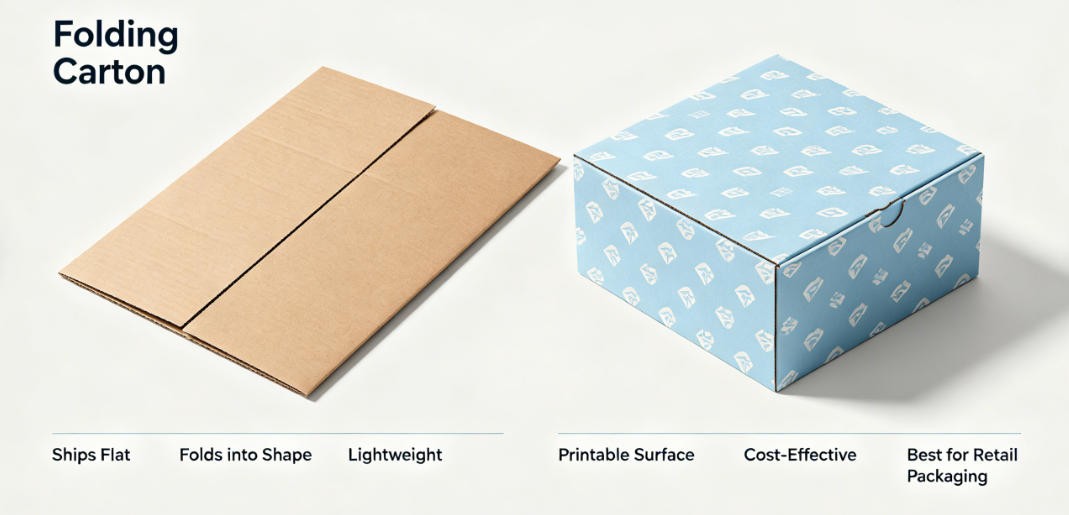
When I talk with packaging buyers, I often start here because this one term changes many decisions later. If I choose the wrong box type at the start, I can end up with the wrong material, wrong machine plan, and wrong cost target. So I want to break it down in a simple way and help you see where folding cartons fit, where rigid boxes fit, and when each one makes more sense.
What is the use of printed folding cartons?
Printed folding cartons are easy to ignore until a product has to win on a shelf. A plain box may protect the item, but it often does not help the brand sell.
Printed folding cartons are used to pack, display, protect, and promote products. I see them used most for food, cosmetics, medicine, electronics accessories, and retail goods because they print well, fold flat, and keep packaging costs under control.
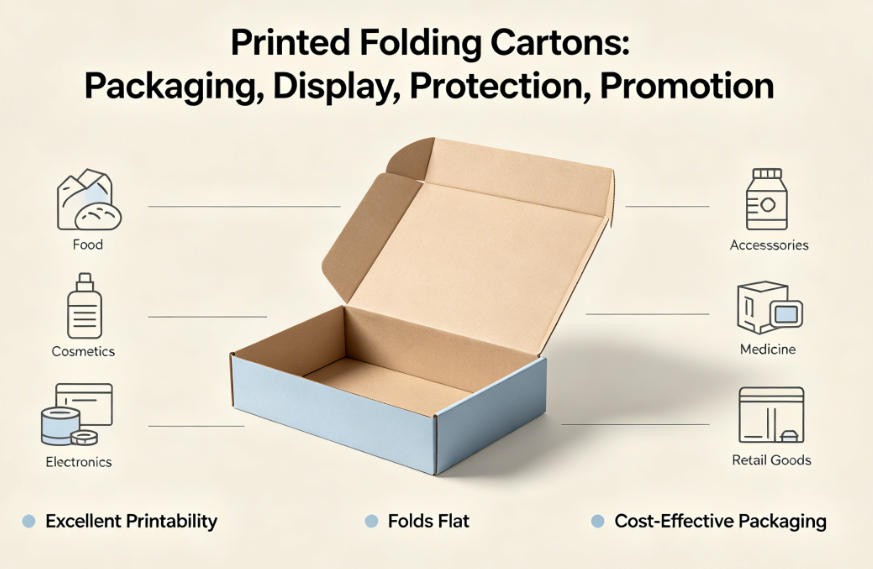
Where I see printed folding cartons work best
When I visit packaging plants or speak with brand teams, I notice that printed folding cartons do more than hold a product. They act like a silent salesperson. They carry color, logo, claims, instructions, and legal text in one neat format. That matters in busy retail spaces. A folding carton can also be coated, embossed, foil stamped, or window patched, so it can look simple or premium without becoming as heavy or costly as a rigid box.
I usually explain the value in a structured way:
| Use | What it does | Why it matters |
|---|---|---|
| Product protection | Holds shape and shields from dust and light handling | Reduces minor damage |
| Brand display | Shows printing, color, logo, and story | Helps shelf impact |
| Information carrier | Adds ingredients, barcodes, instructions, and warnings | Supports retail and compliance |
| Cost control | Ships flat and uses less material than rigid boxes | Saves storage and freight |
| Faster line work | Works well in high-volume carton filling lines | Improves output |
If I am working with a buyer who wants a stronger luxury feel, I usually point them to rigid box equipment instead of folding carton lines. On Kylin’s site, I would ask them to look at products like Fully Automatic Box Folding Machine, Auto rigid box machine, and Fully Auto rigid box machine 2024. If you want me to suggest which one fits your work, I would ask you to send your box size, paper weight, target speed, and contact details through Kylin Machine or WhatsApp +86-13809820550.
What are cartons used for?
Many people use the word "carton" for any paper box. That sounds simple, but it can confuse a real buying decision very fast.
Cartons are used for retail packaging, shipping support, product grouping, point-of-sale display, and brand communication. I see folding cartons used more for unit packaging, while corrugated cartons are used more for transport, and rigid cartons are used more for premium presentation.
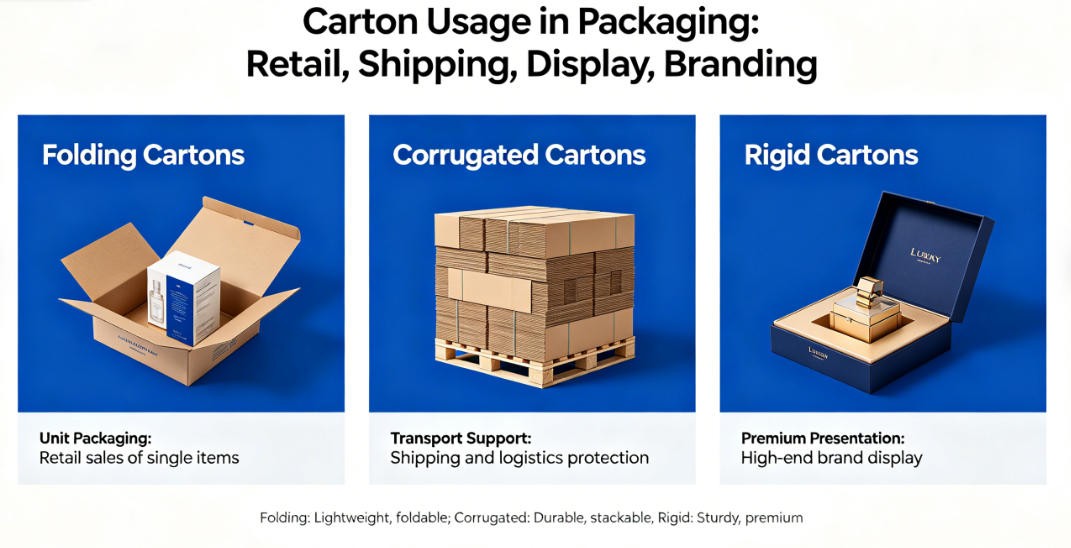
How I sort carton use in real projects
I like to split cartons by job, not just by name. That keeps the discussion practical. If I am packing toothpaste, perfume, tea, skincare, or small electronics, I may choose a folding carton because it gives me strong print value at a reasonable cost. If I am packing a gift set, watch, phone accessory, or jewelry line, I may move to a rigid box because the box itself becomes part of the product experience. If I am stacking goods for warehouse and transport, I move to corrugated.
This is the simple map I often use:
| Carton type | Main use | Common products | Strength level |
|---|---|---|---|
| Folding carton | Retail unit pack | Cosmetics, pharma, food, electronics accessories | Medium |
| Rigid carton / rigid box | Premium retail and gift pack | Jewelry, perfume, phone box, luxury goods | High |
| Corrugated carton | Shipping and transport | Bulk goods, e-commerce packs, master cartons | Very high |
I also tell buyers that machinery choice follows box choice. If I need luxury lid-and-base boxes, I will look at Connected box machine, Fully auto magnet closure box machine, and Dual-Purpose Positioning Machine. If I am making a premium package and want clean board preparation before wrapping, I would also review the Manual groove machine with corner cutter page and Kylin’s box-making solutions. In my experience, buyers save time when they decide the end use first, then the material, then the machine.
How big is the folding carton market?
Some buyers think folding cartons are a narrow packaging niche. I do not see it that way at all.
The folding carton market is very large and still growing. I see recent market estimates place it at roughly USD 180 billion to USD 200 billion around 2025, depending on how each report defines the category, with steady growth driven by food, healthcare, cosmetics, and sustainable packaging demand.
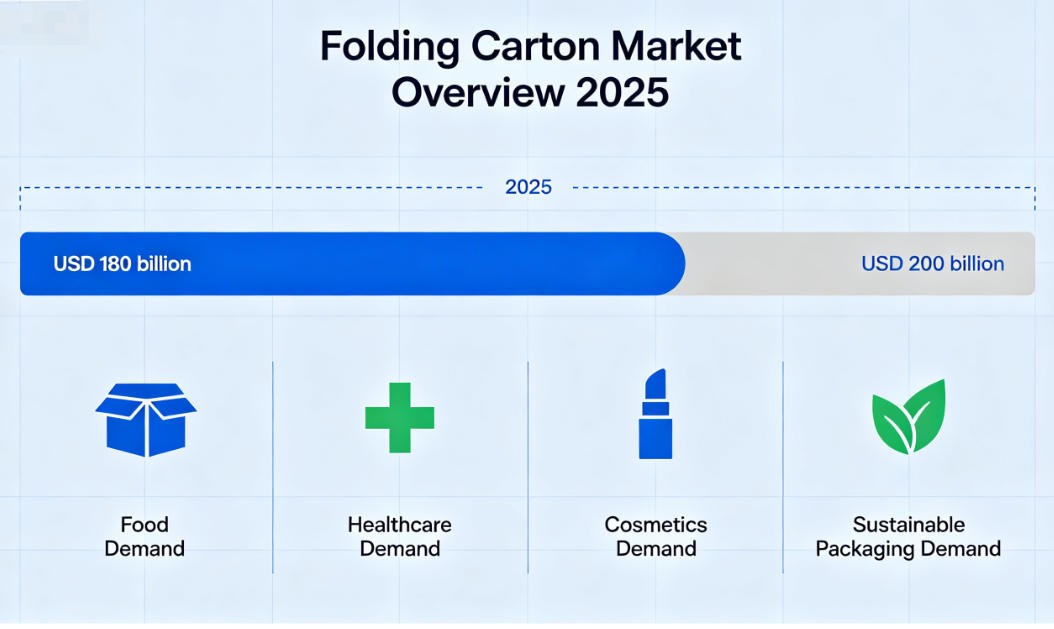
Why I believe this market keeps growing
When I look at packaging demand, I do not just watch one report number. I watch what keeps pulling demand forward. Folding cartons sit in a strong place because they are printable, recyclable, light, and familiar to brand owners. Food brands need them. Healthcare brands need them. Beauty brands need them. Online retail also pushes brands to improve presentation and control shipping cost at the same time. That is where folding cartons stay useful.
I also think it helps to read market size with care. Different reports count different things. Some include only paperboard folding cartons. Some include broader printed carton segments. So I prefer a range, not one fixed number.
| Market point I watch | What it tells me |
|---|---|
| Large global value | Folding cartons are not a niche format |
| Stable growth | Demand is not short-term only |
| Food and healthcare share | Essential sectors support volume |
| Sustainability push | Paperboard gains over plastic in many uses |
| Premium print demand | Brands still pay for visual impact |
From where I stand, this means converters and packaging groups still need better equipment, better speed, and better finish quality. That is also why Kylin’s machine pages matter to readers who are not just learning terms but planning production. If I were building or upgrading a line for premium box work around this market, I would review Auto rigid box machine, Fully Auto rigid box machine 2024, and Fully Automatic Box Folding Machine. If you are comparing options now, leave me your company name, box style, monthly volume, and email so I can point you to the right machine page faster.
What is the difference between rigid and folding cartons?
This is where many packaging talks get stuck. Two boxes can look similar in a photo, but they behave very differently in cost, feel, and production.
The main difference is structure. A folding carton is made from thinner paperboard and ships flat, while a rigid carton uses thick board, keeps its shape, and feels more premium. I choose folding cartons for efficiency and rigid boxes for presentation, strength, and luxury value.
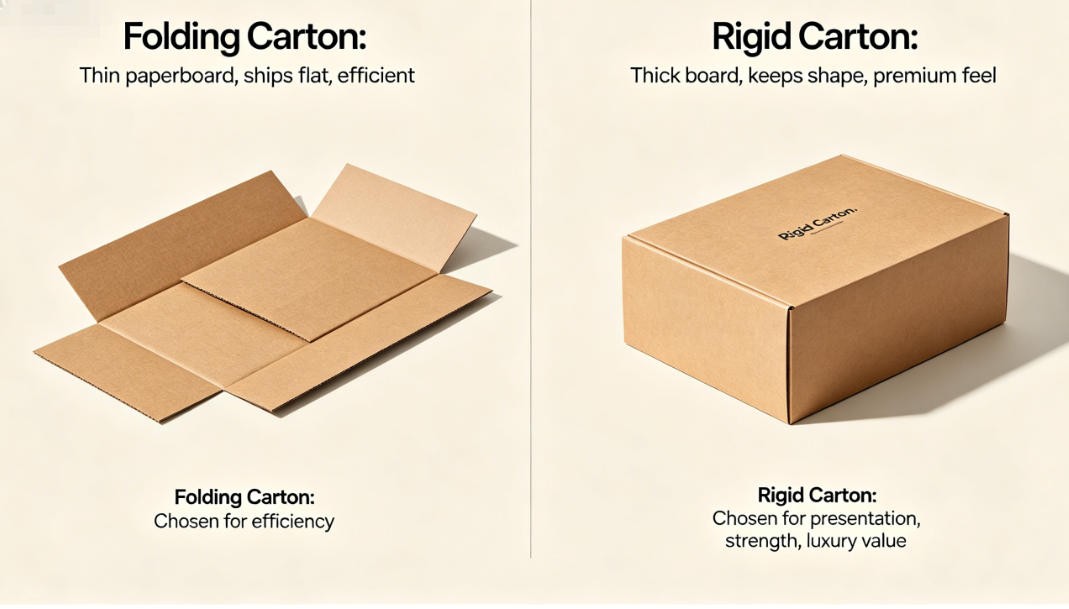
How I explain the difference to buyers
I usually say this in one plain sentence: folding cartons are built to be efficient, and rigid boxes are built to impress. That is not the whole story, but it is a very good start. Folding cartons save on storage and freight because they travel flat. They also run well in high-volume retail packaging. Rigid boxes cost more, but they give a stronger hand feel, better shape retention, and a premium opening experience. That is why I see rigid boxes used for watches, jewelry, high-end cosmetics, mobile phones, and gift packaging.
Here is the comparison I use most often:
| Feature | Folding carton | Rigid carton |
|---|---|---|
| Material | Thin paperboard | Thick greyboard with wrap |
| Shipping form | Flat | Pre-formed |
| Cost | Lower | Higher |
| Print impact | Strong | Strong, often more premium |
| Protection | Moderate | Better structure |
| Best use | Fast retail packaging | Luxury and gift packaging |
| If I need a luxury box line, I would guide readers to these Kylin pages: | Need | Product link |
|---|---|---|
| Premium rigid box production | Auto rigid box machine | |
| Higher-output rigid box work | Fully Auto rigid box machine 2024 | |
| Magnetic gift box projects | Fully auto magnet closure box machine | |
| Special connected box styles | Connected box machine | |
| Main product center | All machine pages |
When I help buyers compare these paths, I ask for four things first: box style, box size range, daily output target, and contact details. That makes the machine suggestion much more accurate and much faster.
Conclusion
I see folding cartons as the smart choice for efficient retail packaging, while rigid cartons are the better choice when I need stronger structure, higher value feel, and a premium brand result.

发表回复