

What are the different types of packaging boxes?
I often see good products lose value because the wrong box crushes, leaks, or confuses buyers. That mistake costs money very fast.
I group packaging boxes into corrugated shipping boxes, rigid boxes, collapsible boxes, and special shape boxes. I choose each one by part weight, surface finish, oil risk, transit distance, and how the buyer will open and store the box.
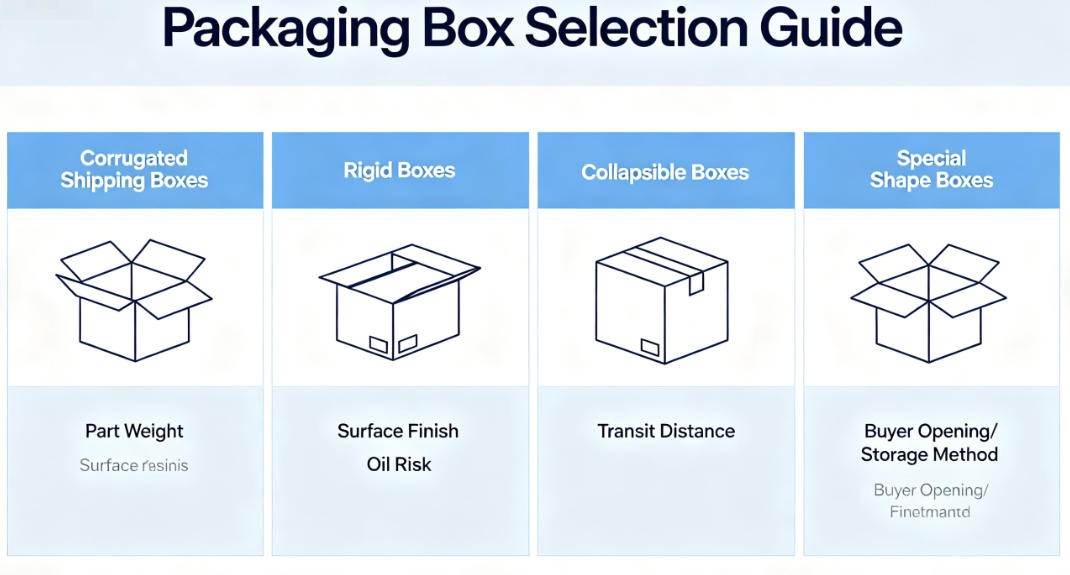
When I talk with packaging buyers, I do not start with box style first. I start with the part. I ask what can break, what can rust, what can scratch, and what must look premium. Then I match the box to that job. That is why I want to keep going here, because one small box choice can change freight cost, damage rate, and how serious your brand looks.
Which type of boxes are best for the packaging of auto parts?
I know auto parts can scratch, rust, leak, and get mixed up. A weak box can turn one shipment into a claim, a return, and a lost customer.
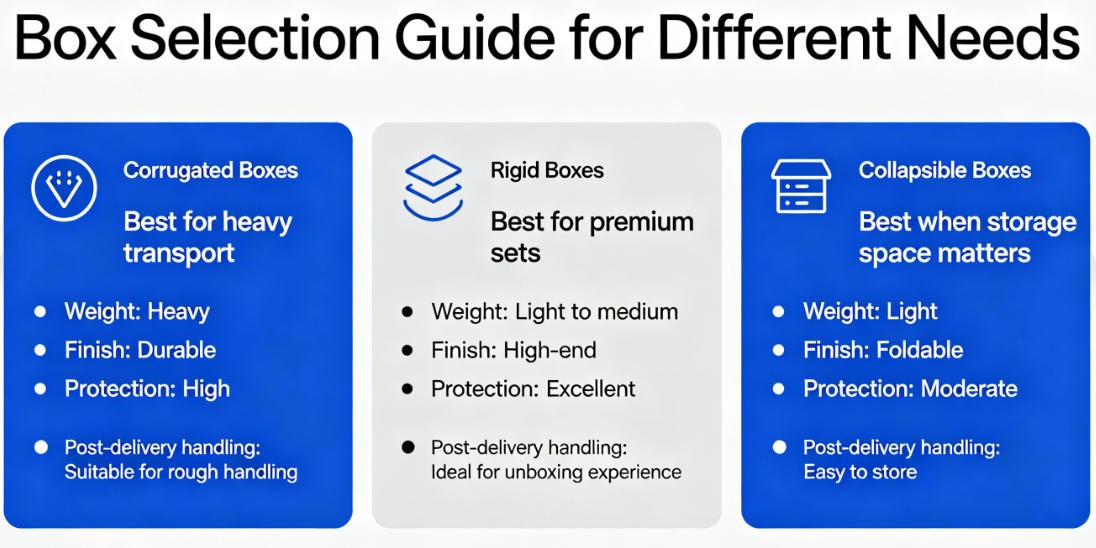
I find corrugated boxes best for heavy transport, rigid boxes best for premium sets, and collapsible boxes best when storage space matters. I choose by weight, finish, protection level, and how the buyer will handle the box after delivery.
What I choose first
When I review auto parts packaging, I first check if the part is heavy, sharp, oily, painted, or easy to lose. I use corrugated shipping boxes for rough transport. I use rigid boxes when I want the part to arrive in a neat, stable, high-value pack. I use collapsible boxes when the buyer wants lower storage volume before filling. I also look at inserts, bagging, and labels, because the outer box alone never solves the whole problem. I once helped sort a packaging plan for a boxed spare-part set. The part itself was strong, but the finish was easy to scratch. I found that a rigid box with a fixed insert gave a cleaner result than a simple folding carton. In other cases, a collapsible style made more sense because the customer shipped flat materials and saved warehouse space.
| Packaging need I see | Box type I prefer | Why I prefer it | Related Kylin product |
|---|---|---|---|
| Heavy parts for shipment | Corrugated outer box with inner support | I get better stacking and lower transport risk | Rigid box and case maker |
| Premium spare-part kits | Rigid box | I get shape stability and better presentation | Auto rigid boxes machine 2025 version |
| Flat-packed supply plans | Collapsible box | I save storage space before box forming | Collapsible boxes machine |
| Hinged or one-piece gift sets | Connected box | I reduce extra parts and keep a clean opening experience | Connected box machine |
When I guide a buyer, I do not say one box is always best. I say the best box is the one that protects the part, fits the budget, and matches the sales goal. If you sell service parts in bulk, I usually lean to strong transit packaging. If you sell branded kits to dealers or end brands, I often lean to rigid or connected boxes.
How to package car parts?
I have seen strong parts arrive in bad shape because people packed them in a hurry. Dirt, moisture, loose movement, and weak labels can ruin a simple order.
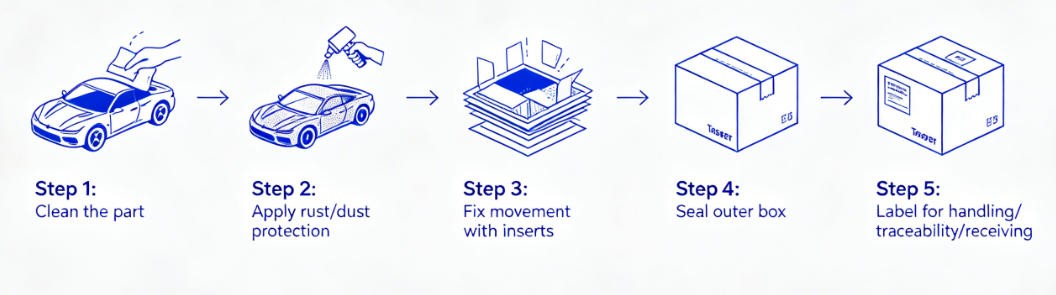
I package car parts by cleaning the part, adding rust or dust protection, fixing movement with inserts, sealing the outer box, and labeling clearly for handling, traceability, and fast receiving.
How I do it step by step
When I package car parts, I treat the process like risk control. I do not trust the box alone. I start by cleaning the part, because dust, oil, and loose metal bits can damage the finish and make the pack look careless. Then I use a bag, film, rust-proof paper, or foam, based on the material. After that, I stop movement inside the pack. That part is key. If the part can move, the part can rub, and then the box becomes a shaking machine. I use die-cut inserts, partitions, or molded support when the item is heavy or shaped in an odd way. I seal the inner and outer pack well, and I print simple labels that show part number, quantity, direction marks, and handling notes. I also think about how the buyer opens the box. In B2B work, that opening step matters because warehouse teams want speed and accuracy.
| Step I follow | What I do | Why I do it |
|---|---|---|
| Clean | I remove oil, dust, and loose debris | I reduce stain, rust risk, and dirty presentation |
| Wrap | I add bagging, film, VCI, or foam | I protect surfaces and reduce moisture risk |
| Fix | I use inserts or partitions | I stop impact and part-to-part rubbing |
| Box | I choose the right outer pack strength | I keep stacking and transit safe |
| Seal | I tape or strap as needed | I keep the load closed and stable |
| Label | I mark part data and handling rules | I help receiving teams work faster |
If I build a premium auto part set, I may move from a plain shipping carton to a rigid inner box made on Semi auto rigid box machine. If I need a one-machine line for rigid box making and case making, I look at Automatic Robotic spotter machine for rigid box making and case making. I always match the machine plan to the packing method, not the other way around.
What are the three types of boxes?
I hear this question a lot, and I know the simple answer can be too simple. Buyers need a clear start, but they also need the right use case.
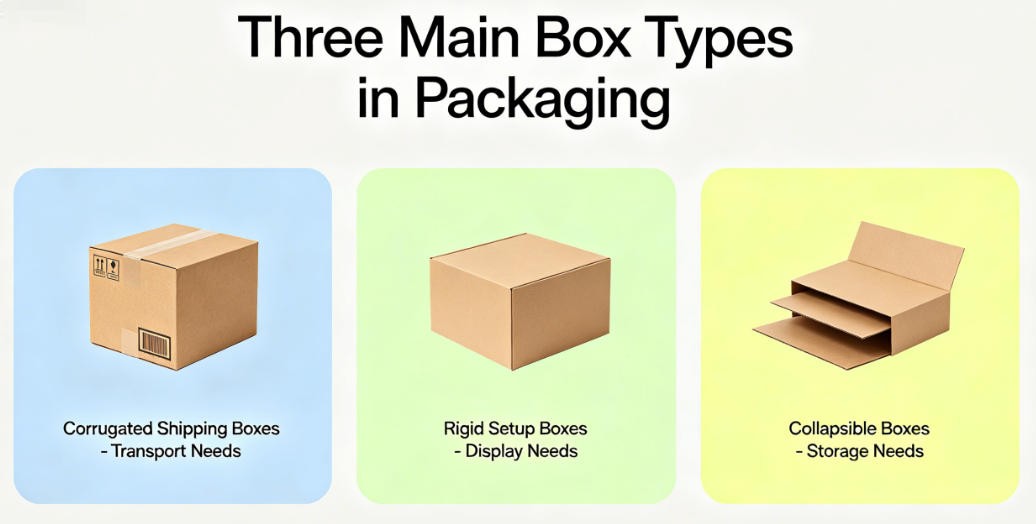
I usually group the three main box types as corrugated shipping boxes, rigid setup boxes, and collapsible boxes. I use these three groups because they cover most transport, display, and storage needs in packaging work.
How I explain the three groups
When I explain box types to customers, I start with the three groups that matter most in real business. First, I name corrugated shipping boxes. I use them for transport, stacking, and cost control. Second, I name rigid setup boxes. I use them when I need shape, feel, and better product value. Third, I name collapsible boxes. I use them when I want a premium look but still want to save space before use. This simple model helps buyers make faster decisions. Still, I do not stop there. I also tell them that some jobs need special shapes, like round boxes or connected boxes. Those are not my first answer, but they are important when the product story or the opening style matters. I like this way of teaching because it stays simple and still leaves room for real-world detail.
| Box type I use | Main job | Strength I get | Limits I watch |
|---|---|---|---|
| Corrugated shipping box | Transit and storage | Low cost and strong stacking | Lower premium feel |
| Rigid setup box | Presentation and protection | Good shape and strong branding | Higher unit cost |
| Collapsible box | Premium look with space saving | Better storage efficiency | More process planning |
| Special shape box | Marketing and custom fit | Strong shelf effect | Less common for standard parts |
When I want to show buyers what special formats can do, I often point them to Cylindrical paper round boxes machine and Connected box machine. I do that not because every auto part needs those shapes, but because some branded kits, accessories, and dealer sets do benefit from them.
What is packaging in automotive?
I think many people treat automotive packaging as just a box. I do not. I see it as protection, control, speed, and brand trust working together.
I define automotive packaging as the full system that protects parts, supports handling, gives clear identification, and helps storage and shipping from factory to warehouse to end user.
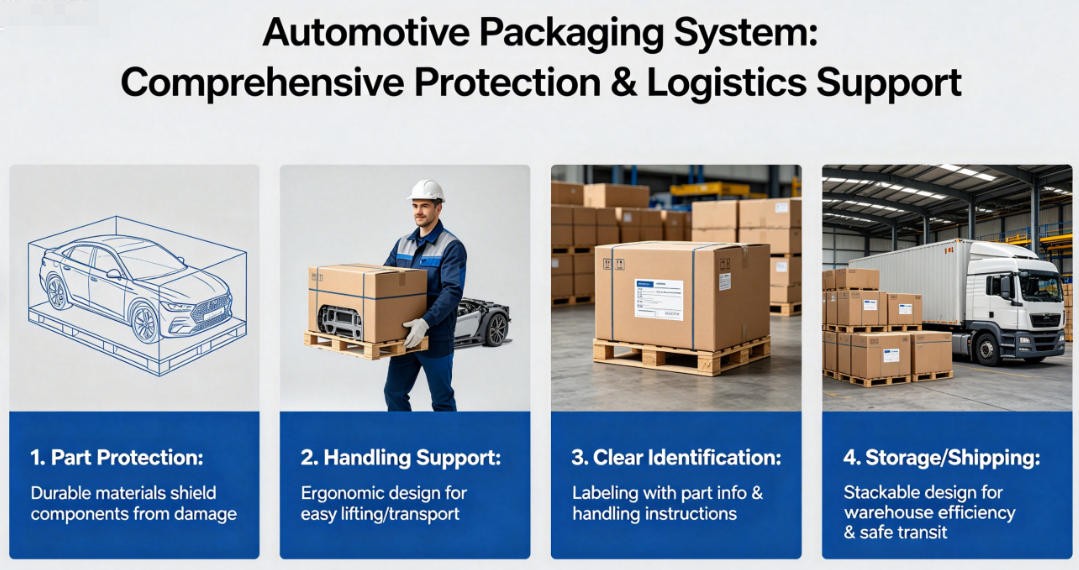
What packaging means to me in this field
When I work in automotive packaging, I think beyond paper and board. I think about part safety, worker speed, barcodes, returns, dealer shelves, and freight damage. I see packaging as a working system. A good automotive pack protects against shock, rust, dust, and mix-ups. It also helps people count faster, pick faster, and open faster. In B2B trade, this matters a lot, because one wrong label or one damaged finish can delay a line or upset a distributor. I also care about the message the box sends. If the part is premium, the pack should show that. If the part is a bulk service item, the pack should focus on protection and handling. I use machine choice to support that goal. For rigid and premium formats, I look at Auto rigid boxes machine 2025 version and Semi auto rigid box machine. For space-saving structures, I look at Collapsible boxes machine. For advanced one-line production, I look at Rigid box and case maker.
| What I want from automotive packaging | What the packaging must do |
|---|---|
| Product protection | Stop rust, shock, scratches, and leakage |
| Warehouse speed | Make picking, scanning, and counting easy |
| Shipping safety | Hold shape and survive stacking and movement |
| Brand value | Match the market level of the product |
| Cost control | Use the right material and process, not waste |
| User experience | Open cleanly and show the right part fast |
If you want me to help you choose the right machine or box style, I ask you to send me your part size, weight, target box size, annual volume, and your email or WhatsApp. You can also contact me at Kylin Machine, email sales@kylinmachines.com, or phone +86-13809820550. I can then point you to the best product page and the right box route for your job.
Conclusion
I believe the right packaging box protects the part, fits the brand, controls cost, and makes your buyer trust you from the first touch.

发表回复