

How to bind a large book at home?
I once held a 400-page manuscript in my hands with no spine, no cover, and no idea what to do next. The local print shop wanted more money than I could afford. You may be facing the same panic right now.
You can bind a large book at home using simple tools like glue, thread, or wire, and it costs far less than you think. From perfect binding to saddle stitching, there are 4 proven methods that work for books with hundreds of pages.
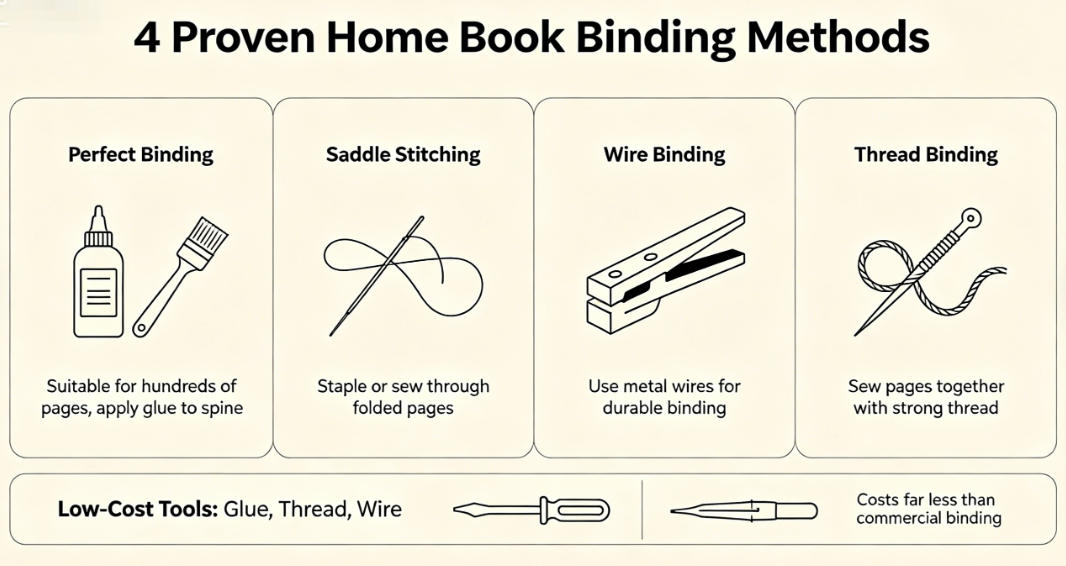
I spent years in the post-press machinery business helping printers and binderies find the right equipment. But here is the truth. You do not need a factory to bind one book. You just need the right method and a little patience.
Which is better, Shutterfly or Snapfish?
I uploaded the same photo book project to both platforms last year. Shutterfly gave me more layout options. Snapfish was cheaper. But both left me feeling like I had no real control over my book.
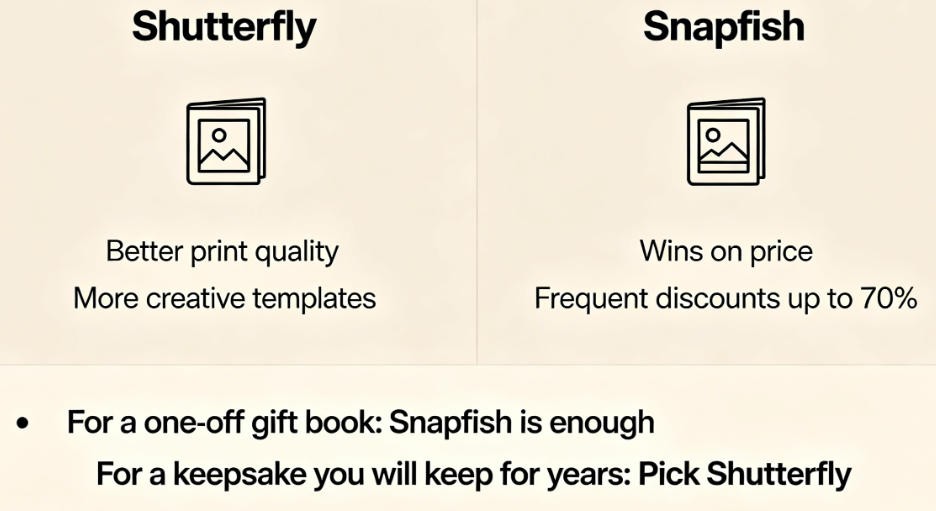
Shutterfly offers better print quality and more creative templates for photo books. Snapfish wins on price, with frequent discounts up to 70%. For a one-off gift book, Snapfish is enough. For a keepsake you will keep for years, pick Shutterfly.
I learned that comparing these two services depends on what you value most. Let me break it down for you.
| Factor | Shutterfly | Snapfish |
|---|---|---|
| Print quality | Higher resolution, richer colors | Good but slightly less sharp |
| Paper options | 5 types including layflat | 3 types, standard finish |
| Cover choices | Hardcover, softcover, leather | Hardcover and softcover |
| Typical price (8×8, 20 pages) | $25–$40 | $15–$25 |
| Shipping speed | 5–10 business days | 7–14 business days |
| Binding type | Perfect bound, layflat | Perfect bound only |
| Custom layout freedom | Full control with custom paths | Limited to preset templates |
You should know that neither service gives you true handmade book quality. I have worked with layflat binding machines like the KY-G-400 that professional binderies use. The pages open completely flat. No gutter loss. Snapfish cannot do that. Shutterfly offers a layflat option but at a higher cost. If you want real craftsmanship, doing it yourself or using a local bindery with proper equipment makes a real difference. My customers who run small binderies often use our desktop glue painting machine to create photo books that outlast anything from these online services.
Can I finish a 500 page book in one day?
I tried to read "War and Peace" in a single Sunday last winter. I made it to page 200 before my eyes gave up. But binding a 500-page book in one day? That is a different challenge.
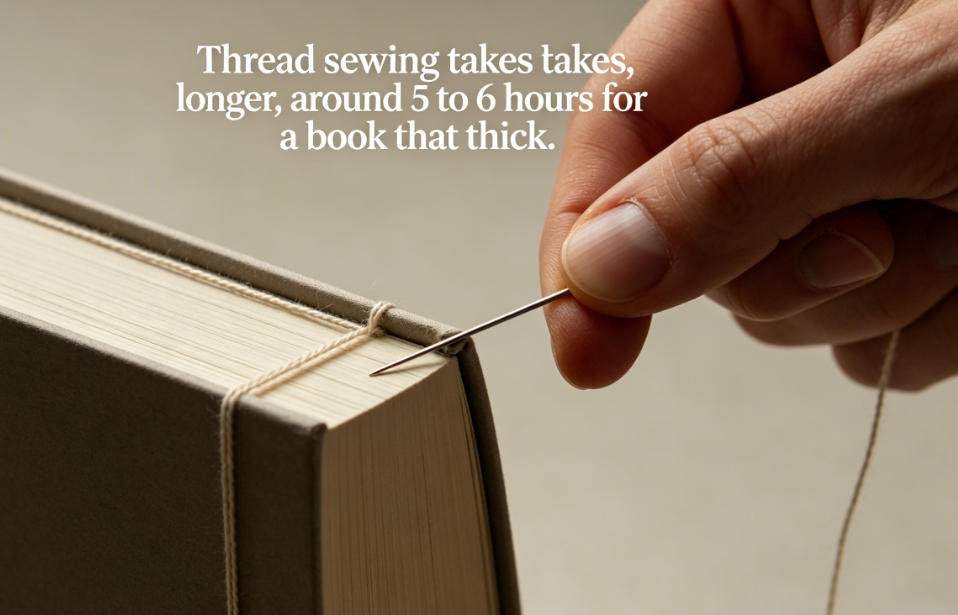
Yes, you can bind a 500-page book in one day if you use perfect binding with PVA glue. The process takes about 2 to 3 hours from start to finish. Thread sewing takes longer, around 5 to 6 hours for a book that thick.
The speed of your binding work depends on the method you choose. I want to show you what works and what does not.
| Binding Method | Time for 500 Pages | Skill Level | Durability |
|---|---|---|---|
| Perfect binding (glue) | 2–3 hours | Beginner | Medium |
| Double wire binding | 1–2 hours | Beginner | High |
| Thread sewing (signatures) | 5–6 hours | Intermediate | Very high |
| Japanese stab binding | 4–5 hours | Intermediate | Medium |
| Comb/spiral binding | 1–1.5 hours | Beginner | Low |
I have helped hundreds of small binderies speed up their workflow. The secret is not rushing. It is using the right machine for the job. For perfect binding on thick books, you need even glue coverage and enough pressing time. A glue spraying assembly machine applies adhesive with no gaps and no overflow. That alone cuts your cleanup time by half. For wire binding, our auto double wire binding machine punches and closes the wire in one smooth step. What takes an hour by hand takes 5 minutes. If you are serious about making books regularly, the tool matters as much as the skill.
How to bind a book back together?
My daughter once dropped her favorite hardcover storybook in the bathtub. The pages separated from the spine like wet leaves. I thought it was gone forever. It was not.
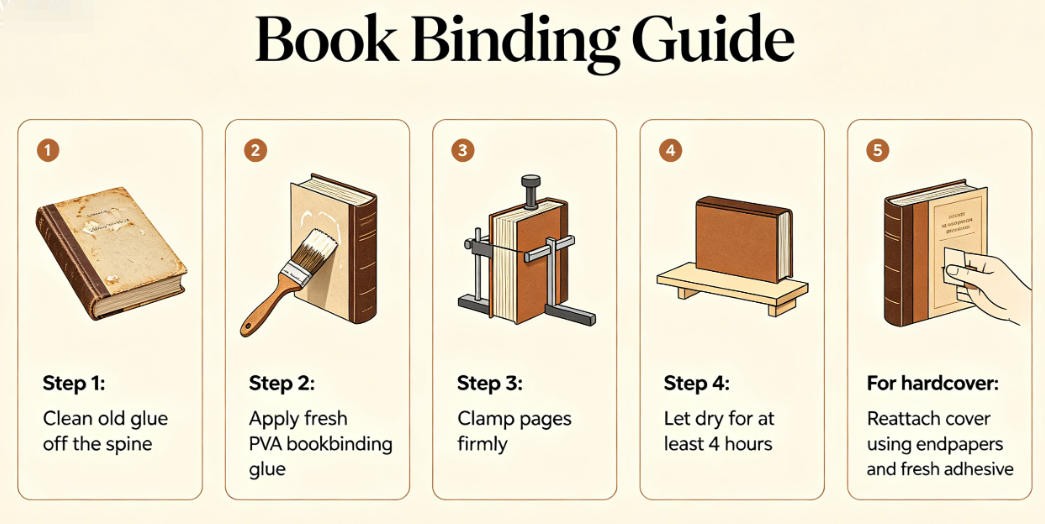
To bind a book back together, clean the old glue off the spine, apply a fresh layer of PVA bookbinding glue, clamp the pages firmly, and let it dry for at least 4 hours. For hardcover books, reattach the cover using endpapers and fresh adhesive.
Repairing a book is not the same as making one from scratch. You are working with existing materials. Here is what I have learned from fixing dozens of broken books.
| Repair Problem | Tool Needed | Time to Fix |
|---|---|---|
| Loose pages (perfect bound) | PVA glue, brush, clamp | 1 hour + 4 hours drying |
| Broken spine (hardcover) | PVA glue, endpaper, bone folder | 2 hours + 6 hours drying |
| Torn cover corner | Book cloth tape, scissors | 15 minutes |
| Detached cover completely | Hard cover pressing machine, new endpapers | 3–4 hours |
| Worn head and tail bands | Book block cloth head machine, glue | 30 minutes |
The biggest mistake people make is using the wrong glue. White school glue dries brittle and cracks. Hot glue guns create lumps. You need flexible PVA glue made for bookbinding. It stays slightly flexible after drying. That lets the spine bend without breaking again. For professional repair work, I recommend the Ky-380 hard cover making machine. It makes a new case for your book in under 10 minutes. The folding and pressing are all done in one station. If you run a small repair shop, this machine pays for itself faster than you think.
What is the cheapest way to bind a book at home?
I bound my first book with dental floss and a sewing needle I borrowed from my grandmother. The total cost was zero. It held together for three years.
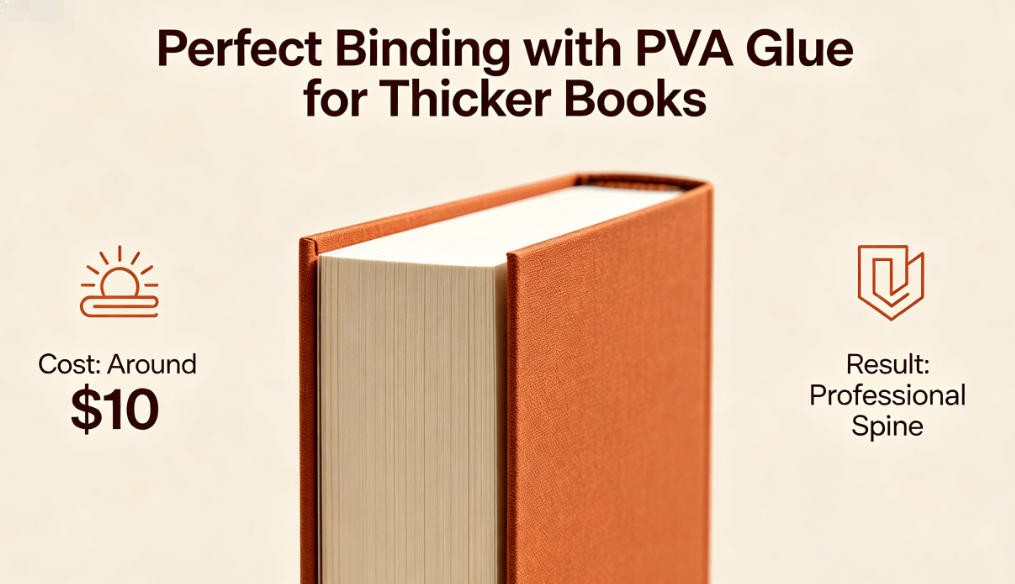
The cheapest way to bind a book at home is Japanese stab binding. It needs only a needle, thread, and an awl. Total material cost is under $5. For thicker books, perfect binding with PVA glue costs around $10 and gives a professional spine.
Cheap does not mean bad. Some of the most beautiful books I have seen were made with almost nothing. Let me show you the real costs.
| Budget Binding Method | Materials | Total Cost | Best For |
|---|---|---|---|
| Japanese stab binding | Needle, waxed thread, awl | $3–$5 | Thin to medium books, notebooks |
| Perfect binding (DIY) | PVA glue, brush, scrap wood | $5–$10 | Thick books, paperbacks |
| Saddle stitch (stapled) | Long-reach stapler | $8–$15 | Booklets under 80 pages |
| Spiral/comb binding | Binding machine rental, combs | $15–$30 | Workbooks, manuals |
| Screw post binding | Screw posts, drill | $10–$15 | Portfolios, swatch books |
I tell my customers this all the time. Start cheap. Learn what you like. Then invest. A mini handheld hot glue machine costs very little but speeds up your work a lot. For cutting covers and pages to size, a digital die cutting machine saves you from buying pre-cut materials over and over. The money you save by doing it yourself adds up fast. One of my customers in the UK started with a $10 glue kit. Now he runs a small bindery with a full set of Kylin machines. He still says the best binding he ever made was his first one.
Conclusion
Binding a large book at home is simple, cheap, and deeply satisfying once you know the right method.

发表回复