
What Is Hard Cover Binding?
You have a stack of printed pages. You want them to look like a real book. But soft covers tear too easily and look cheap. Here is the answer.
Hard cover binding is a way to make books with stiff, strong covers, using board wrapped in cloth, leather, or printed paper. It protects the pages inside and gives the book a high-quality look that lasts for many years.
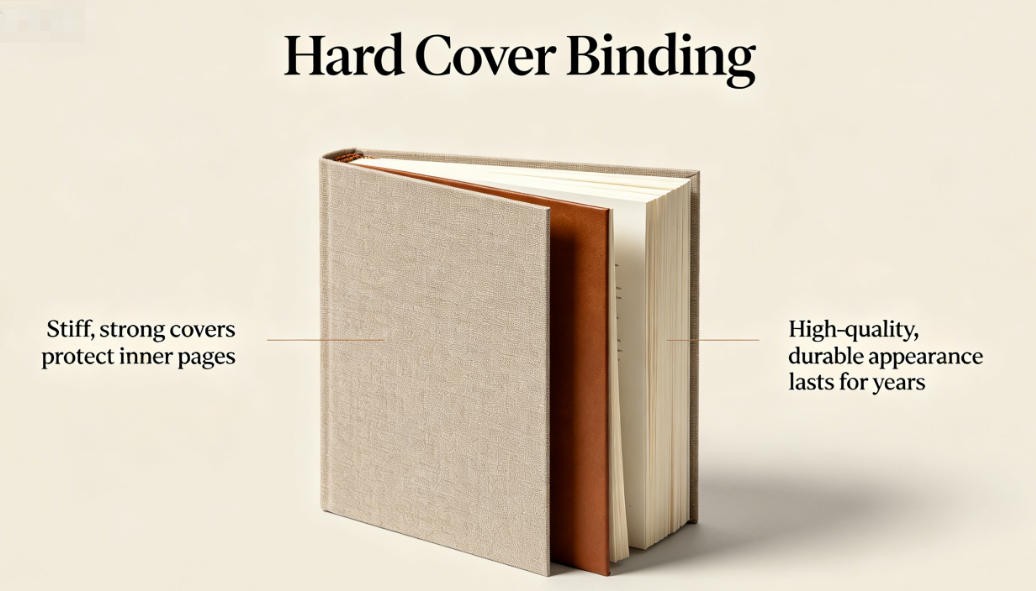
I remember the first time I held a hardcover book I made myself. It felt different from anything I had bought in a store. The weight was right. The cover did not bend. I knew then that this was something I wanted to do more of. But making a hardcover book by hand takes time. A lot of time. That is why I started looking into machines. And that is when everything changed for me.
What Are the Different Types of Binding Machines?
You walk into a print shop and see rows of machines. They all look different. You do not know which one does what. I have been there too.
There are several types of binding machines. Case makers build the hard cover. Book pressing machines fold and crease the cover edges. Glue machines apply adhesive to the spine. Wire binding machines use metal loops. Lay flat binders make photo books that open flat.
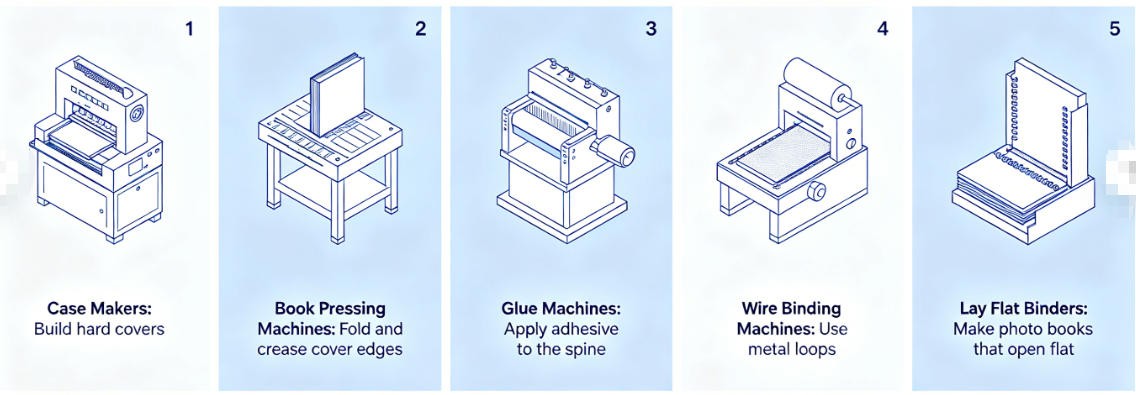
I have worked with many types of binding machines over the years in my factory in Dongguan. Let me break them down for you.
The Case Making Machine
First, there is the Ky-380 Hard Cover Making Machine. This is the all-in-one workhorse. It takes grey board, glue, and cover paper. It puts them together into a finished hard cover. It does the corner cutting. It does the edge folding. It does the pressing. All in one go. When I first saw it work, I could not believe how fast it was.
The Pressing and Creasing Machine
Second, there is the Hard Cover Book Pressing & Creasing Machine. After the cover is made, you need to join it with the book block. This machine does that job. It presses the cover onto the block. It creases the hinge so the book opens smoothly. Without this step, your book will crack at the spine the first time someone opens it.
The Photo Book Lay Flat Binder
Third, there is the KY-G-400 Automatic Photo Book Lay Flat Binder. This one is special. It makes books that open completely flat. Think of a wedding album or a coffee table book. Every page lies flat. No gutter shadow. No lost images in the center crease. I have customers in the UK and Italy who use this machine every day. They tell me it pays for itself in months.
The Glue Machines
Fourth, you have glue machines. The Glue Spraying Assembly Machine is for big jobs. The Desktop Glue Painting Machine is for small workshops. Both apply glue evenly. No more hand brushing and getting glue on your clothes. I know that pain well.
The Wire Binding Machine
The Auto Double Wire Binding Machine is for a different style. It uses metal wire loops. You see this in notebooks and calendars. It is not a hard cover in the classic sense. But it is a binding method that many customers ask for.
Each machine has its own job. And in a good production line, they all work together.
Is a Binding Machine Worth It?
You look at the price tag and your heart sinks. It looks like a lot of money. You wonder if you will ever sell enough books to pay it back.
Yes, a binding machine is worth it if you make books often. It cuts labor time by more than half. It makes every cover look the same. No crooked edges. No wrinkled corners. You can take bigger orders and deliver faster than your competitors.
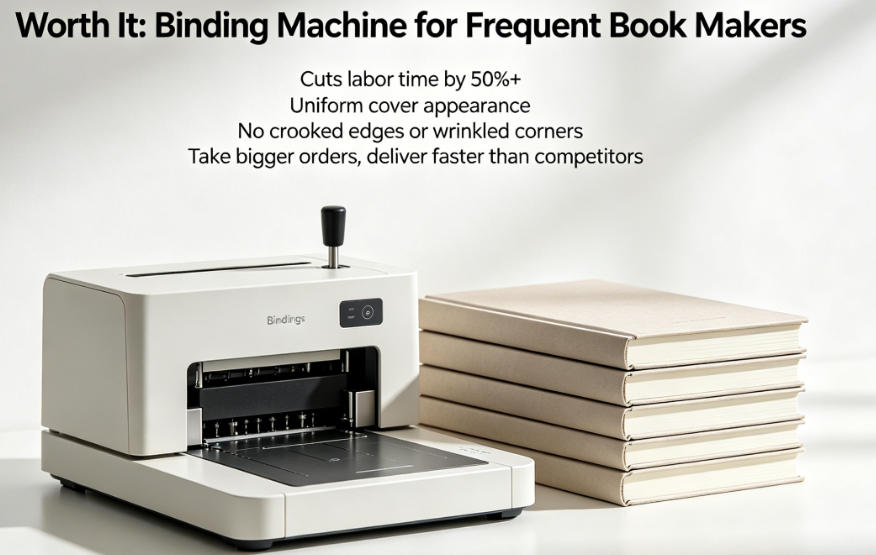
I get asked this question all the time. And I always say the same thing. Look at your hands.
If you are making five books a month by hand, you do not need a machine. Your hands can do the job. It will take you a few hours per book. But the quality will be good enough.
If you are making fifty books a month, your hands are not enough. You will get tired. Your fingers will hurt. The last book of the day will not look as good as the first one. That is when a machine becomes worth it.
I remember a customer from India who started with our Ky-380 Hard Cover Making Machine. Before the machine, he and two workers made thirty covers a day. After the machine, one worker made eighty covers in the same time. He doubled his output. He cut his labor cost. He told me the machine paid for itself in four months.
Another customer from Turkey bought the Dual-Purpose Positioning Machine. It helps place the cover material exactly on the board. Before the machine, he wasted a lot of material because of mistakes. After the machine, his waste dropped to almost zero. That alone saved him hundreds of dollars every month.
The math is simple. A machine that costs you money once saves you money every day. It saves you time. It saves you material. It saves you from fixing mistakes. And it lets you take orders you could never handle before.
But there is one more thing. A machine gives you something that hand work cannot give. Consistency. Every book looks the same. Your brand builds trust. Your customers come back. And that is the real value.
How Do I Bind My Own Hardcover Book?
You have a story to tell. You have the pages ready. But the thought of putting it all together feels like a puzzle you cannot solve.
To bind your own hardcover book, you need a book block, grey board, glue, and cover material. First make the cover with a case maker. Then glue the book block spine. Press the cover onto the block. Crease the hinges. Let it dry. Done.
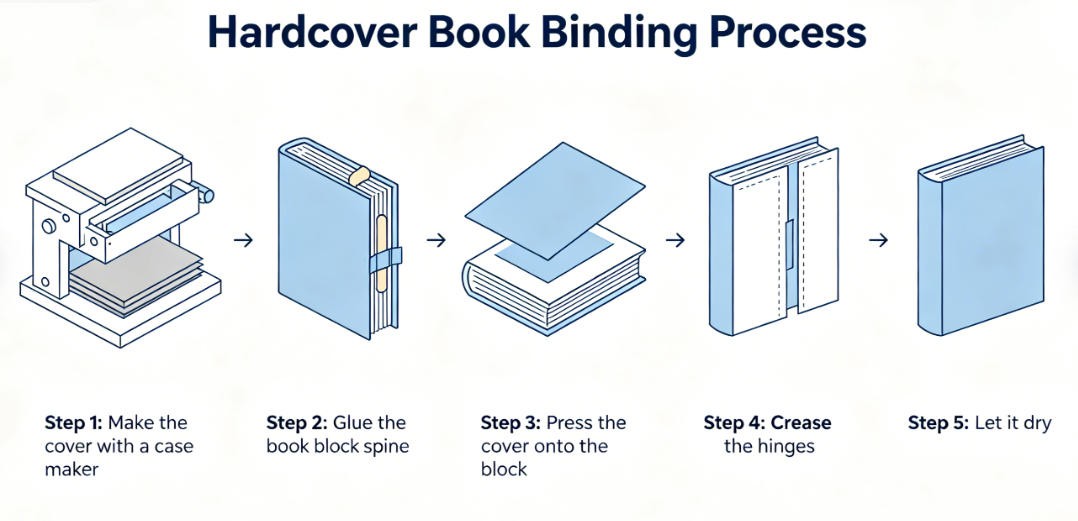
I will walk you through the steps I use in my own workshop. This is the simple way.
Step One: Prepare the Book Block
Print your pages and gather them into a book block. Make sure the edges are flush. Trim them if you need to. A clean edge makes a clean book.
Step Two: Make the Hard Cover
This is where the Ky-380 Hard Cover Making Machine shines. You feed it the grey board. You feed it the cover paper or cloth. It cuts the corners. It folds the edges. It presses everything flat. What comes out is a perfect hard cover. If you do not have a case maker, you can do this by hand. But it will take you twenty minutes per cover. And your fingers will hate you.
Step Three: Glue the Spine
Apply glue to the spine of the book block. I use the Desktop Glue Painting Machine for this. It spreads glue evenly across the spine. No lumps. No dry spots. Then you attach the endpapers. These are the pages that stick the book block to the cover.
Step Four: Position the Book Block
Position the book block inside the cover. The Dual-Purpose Positioning Machine helps here. It makes sure the margins are even on all sides. The top, bottom, and fore-edge margins all match. This is the step where most beginners make mistakes. If your book block is off-center, the whole book looks wrong.
Step Five: Press and Crease
Press the book. The Hard Cover Book Pressing & Creasing Machine does two jobs. It presses the cover onto the book block so the glue bonds tight. And it creases the hinge. The hinge is the groove near the spine that lets the book open. Without a good crease, the book will fight you every time you try to open it.
Step Six: Let It Dry
I know you want to open it right away. Do not do it. Let the glue set for at least two hours. Overnight is better. The glue needs time to form a strong bond. If you rush this step, your cover may come loose after a few weeks.
Step Seven: Add Final Touches
You can add head bands at the top and bottom of the spine. The Book Block Head Band Machine makes this job easy. You can add a ribbon bookmark. The Automatic Notebook Ribbon Machine places it perfectly every time. These small details turn a homemade book into something that looks like it came from a store.
That is the process. It sounds like a lot of steps. But with the right machines, it becomes fast and easy. And the result is a book you can be proud of.
Conclusion
Hard cover binding turns loose pages into lasting books. The right machine makes it fast, consistent, and worth every dollar you spend on it.
Ready to start your hard cover binding journey? Browse our full range of machines at Kylin Machine. Have questions? Fill in the form below and our team will get back to you with a quote within 24 hours.

发表回复