

What Are Corrugated Boxes? A Complete Guide for Packaging Professionals
I remember the first time I walked into a packaging factory. Stacks of boxes lined every wall. Some looked thick and sturdy. Others felt thin and light. I asked the factory manager, "Why do some boxes have those wavy lines inside?" He smiled and spent the next hour teaching me everything about corrugated packaging. That conversation changed how I see every shipping box I touch.
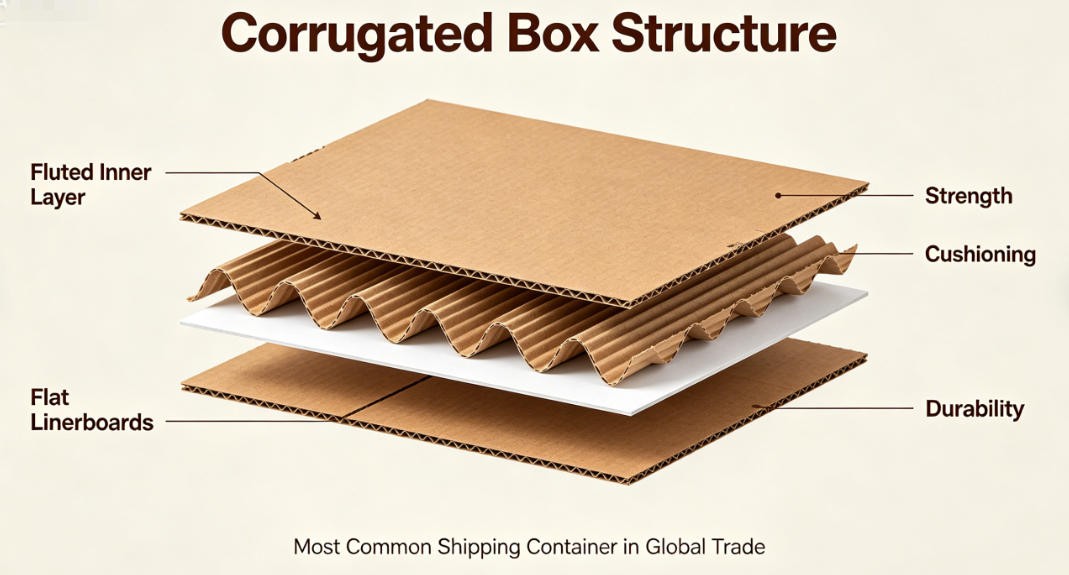
A corrugated box has a fluted inner layer sandwiched between two flat linerboards. This structure gives it strength, cushioning, and durability. It is the most common shipping container used in global trade today.
I want to share what I learned that day in the factory. If you work in packaging, printing, or bookbinding, you deal with boxes every day. You know the difference matters. But many people still mix up terms. Let me break it down for you in a way that helps your business make better choices.
What Is a Corrugated Box?
I once watched a new employee at our workshop wrap a fragile machine part in a flat paperboard box and ship it. The box arrived crushed. The part was broken. The problem was simple: he did not know what a corrugated box was.
A corrugated box is a container made from corrugated fiberboard. It has at least one fluted sheet glued between two flat linerboards. The flutes create air columns that absorb impact and add rigidity.
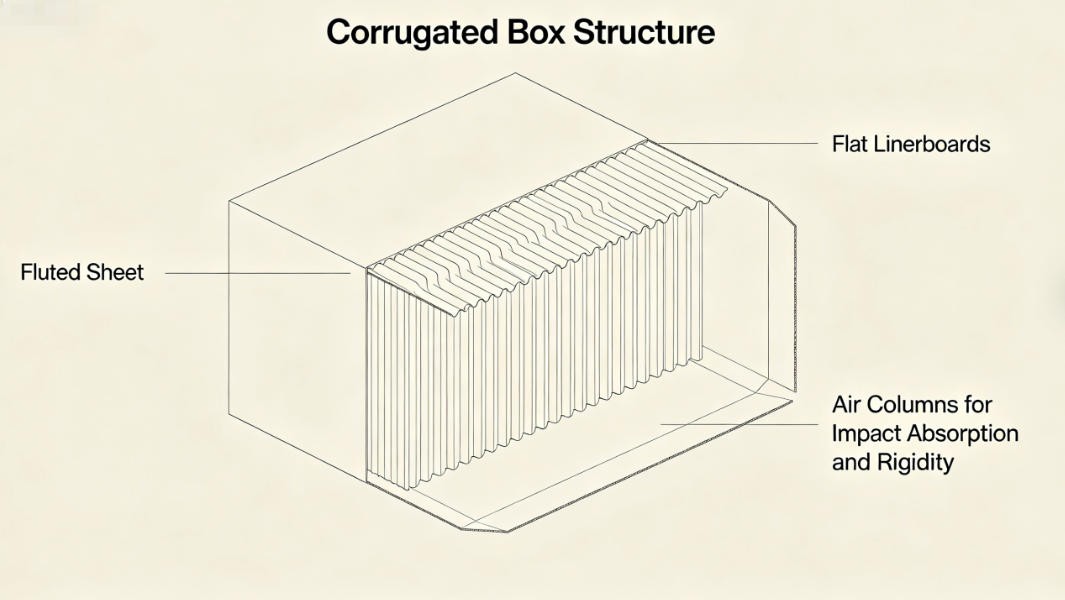
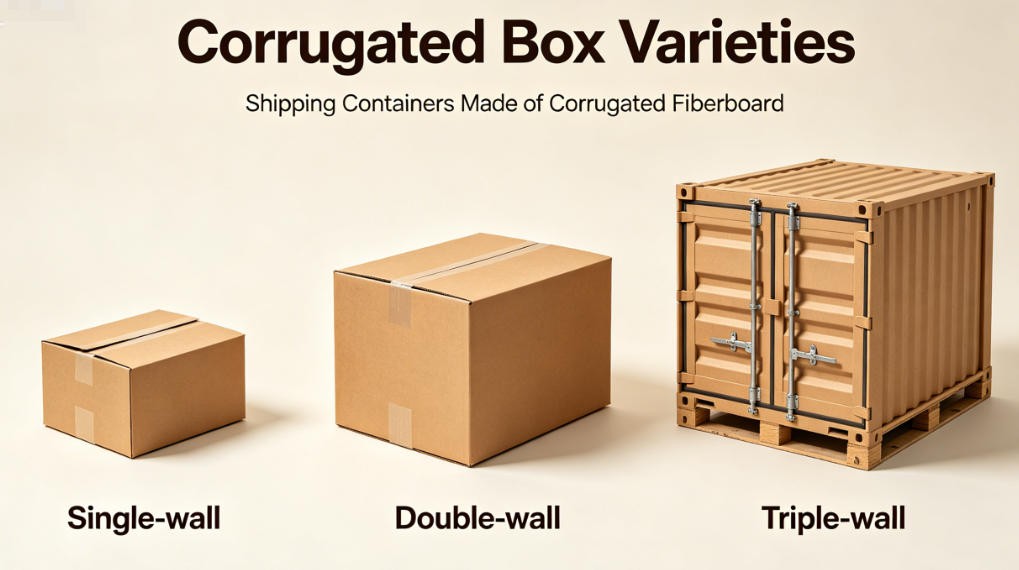
This might sound technical. But the idea is simple. Think of the fluted middle layer as tiny arches inside the wall of the box. Arches in bridges hold heavy weight. Arches in corrugated board hold your products safe during shipping. A single-wall corrugated box has one fluted layer and two liners. A double-wall box has two fluted layers and three liners. A triple-wall box has three fluted layers and four liners. Each added layer makes the box stronger. I have seen triple-wall boxes hold machine parts weighing over 100 kilograms without bending.
The flute types also matter. Flutes come in different heights. A-flute is the tallest, at about 4.7 millimeters. It gives the best cushioning. B-flute is about 2.5 millimeters tall and gives better flat crush resistance. C-flute sits in the middle at about 3.6 millimeters and is the most common type. E-flute is thin, about 1.2 millimeters, and is used for retail packaging that needs good print quality. F-flute is even thinner, at about 0.8 millimeters, for premium small boxes. When I worked with a cosmetics brand last year, they chose E-flute because their logo needed sharp printing on the box surface. When I worked with a machinery exporter, they picked BC-flute double-wall for maximum protection. The choice depends on what you ship.
| Flute Type | Height (mm) | Flutes per Meter | Best Use Case |
|---|---|---|---|
| A-Flute | 4.7 | 105-125 | Heavy cushioning, fragile items |
| B-Flute | 2.5 | 150-185 | Die-cut boxes, canned goods |
| C-Flute | 3.6 | 120-145 | General shipping, most common |
| E-Flute | 1.2 | 290-320 | Retail displays, printed boxes |
| F-Flute | 0.8 | 400-440 | Premium small packaging |
What Are Corrugated Boxes?
I get this question a lot at trade shows. People see stacks of boxes and ask, "So what exactly are these things?" The answer is broader than most think.
Corrugated boxes are shipping containers made of corrugated fiberboard. They come in single-wall, double-wall, and triple-wall varieties. They range from small mailer boxes to large industrial shipping crates.
Corrugated boxes are not one product. They are a whole category of packaging. I have seen them in every shape and size. The most common style is the regular slotted container, or RSC. All four flaps on top and bottom are the same length. The outer flaps meet in the middle. These boxes cover about 70% of all corrugated shipments. Then there are half-slotted containers with no top flaps, used as tray-style boxes. Full-overlap boxes have flaps that fully overlap each other, giving extra top and bottom protection. Die-cut boxes are custom-shaped for specific products. Telescope boxes have a separate lid that slides over the bottom tray.
I worked on a project with a furniture company that needed corrugated boxes for flat-pack chairs. The box had to be long, narrow, and crush-resistant. We used a die-cut design with BC-flute double-wall board. The box held a 15-kilogram chair and survived a 2-meter drop test. That is the kind of performance corrugated boxes deliver when you choose the right type. If your business needs custom box solutions, you might want to check our box-making machines. While we focus on rigid box and hardcover machines at Kylin Machinery, the packaging principles we use apply across the board. Our Glue Spraying Assembly Machine delivers ±0.1mm precision for box assembly, a level of accuracy that matters whether you make corrugated shipping boxes or premium rigid gift boxes.
What Are Corrugated Boxes Used For?
I once visited a customer who ran a bookbinding workshop. His shelves held hardcover books wrapped in corrugated mailers. His floor held pallets of corrugated boxes filled with paper stock. Everything relied on corrugated packaging.
Corrugated boxes are used for shipping, storage, product display, and protective packaging. They carry everything from fresh produce to heavy machinery. Over 90% of goods in global trade travel in corrugated boxes.
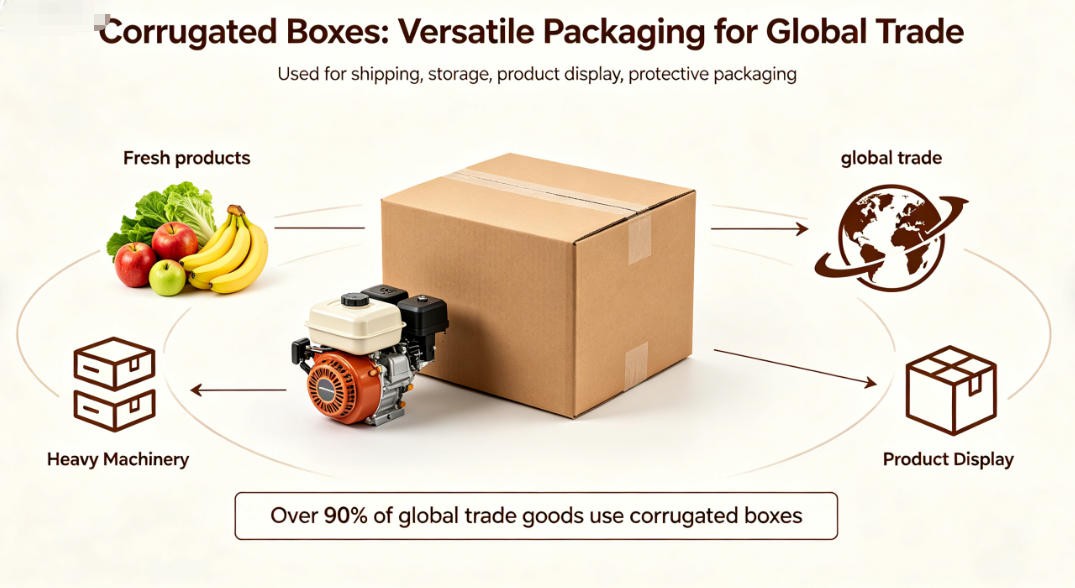
The uses are everywhere once you start looking. E-commerce companies ship millions of corrugated boxes every day. Food producers pack fruits and vegetables in corrugated trays with ventilation holes. Electronics manufacturers use anti-static corrugated boxes for circuit boards. Automotive parts suppliers ship heavy metal components in triple-wall boxes. Furniture companies use large flat corrugated sheets as pallet liners and protective wraps. Even the bookbinding industry, which is close to my heart, uses corrugated boxes for shipping finished hardcover books to bookstores and libraries.
I saw a creative use last month. A cosmetics brand used a corrugated box with custom printing as both shipping container and gift box. The outside was kraft brown with a simple logo. The inside had a printed pattern. The customer opened the shipping box and found it was also the gift box. No extra packaging inside. That kind of thinking saves money and reduces waste. At Kylin Machinery, we make machines like the Ky-380 Hard Cover Making Machine that produce the premium hard covers for books. Those book covers often ship to publishers inside corrugated boxes. The whole packaging chain connects. Corrugated boxes move raw materials to the factory. They ship the finished products to customers. They are the backbone of logistics.
What Is the Difference Between a Cardboard Box and a Corrugated Box?
My neighbor runs a small online gift shop. She once told me she used "cardboard boxes" for shipping. When her packages started arriving damaged, she asked me to help. I opened her supply closet and saw the problem immediately. She was using paperboard boxes, not corrugated boxes.
A cardboard box is made from thick paper stock or paperboard, like a cereal box. A corrugated box has a fluted inner layer between two liners. Corrugated boxes are stronger, lighter for their strength, and designed for shipping.
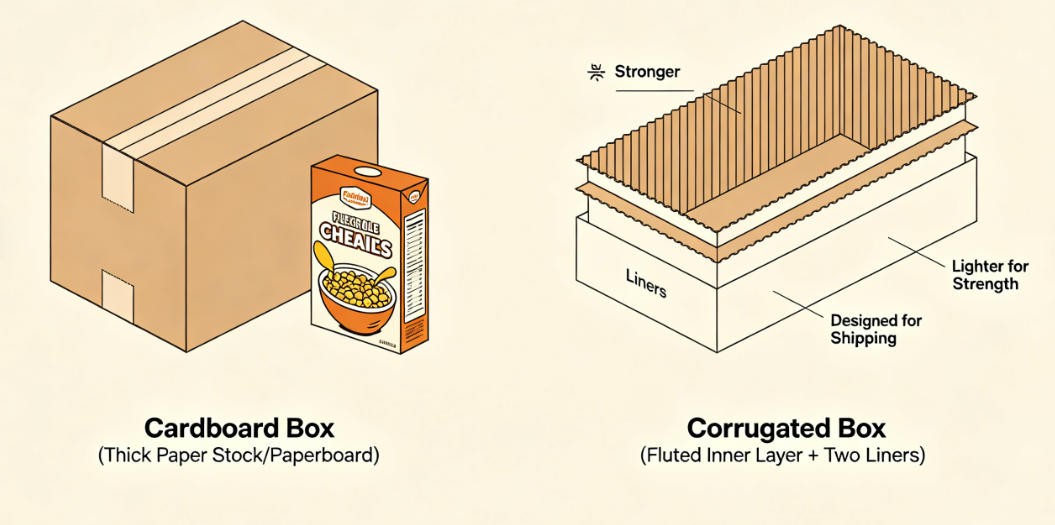
People use the word "cardboard" for everything. I did the same before I worked in packaging. But the difference matters for your business. Paperboard, often called cardboard, is a single thick sheet of paper pulp. Think of a shoebox or a cereal box. It is smooth, thin, and easy to print on. It works for light items on store shelves. But it crushes easily under weight. It has no cushioning. It cannot handle stacking in a warehouse or rough handling by a courier.
Corrugated fiberboard is engineered for strength. The fluted middle layer creates I-beam structures inside the board. When you stack boxes on a pallet, the flutes carry the weight vertically. When you drop a box, the flutes compress and absorb the shock. Paperboard cannot do either. I tested this once with two identical 5-kilogram weights. I placed each on a paperboard sheet and a single-wall corrugated sheet. The paperboard sagged within hours. The corrugated sheet held firm for weeks. The strength-to-weight ratio of corrugated board is why it dominates shipping. You get more protection per gram of material.
Here is a simple rule I use. If you ship it, use corrugated. If you display it on a shelf and the customer carries it home, paperboard might work. But for any product traveling through courier networks, corrugated is the only safe choice. If your business produces rigid boxes or book covers that need protection during shipping, our Auto Double Wire Binding Machine and Ky-380 Hard Cover Making Machine create products that deserve the best protection. Pair quality production with quality packaging.
What Is an Example of a Corrugated Box?
Last week I stood in my factory receiving area. A delivery truck dropped off a shipment of glue. The boxes had a stamp on the bottom: "BC-Flute Double-Wall, ECT 44." That stamp told me everything about the box before I opened it.
A standard Amazon shipping box is the most common example of a corrugated box. Other examples include pizza boxes (E-flute), moving boxes (C-flute), appliance boxes (BC double-wall), and fruit tray boxes (B-flute with ventilation).
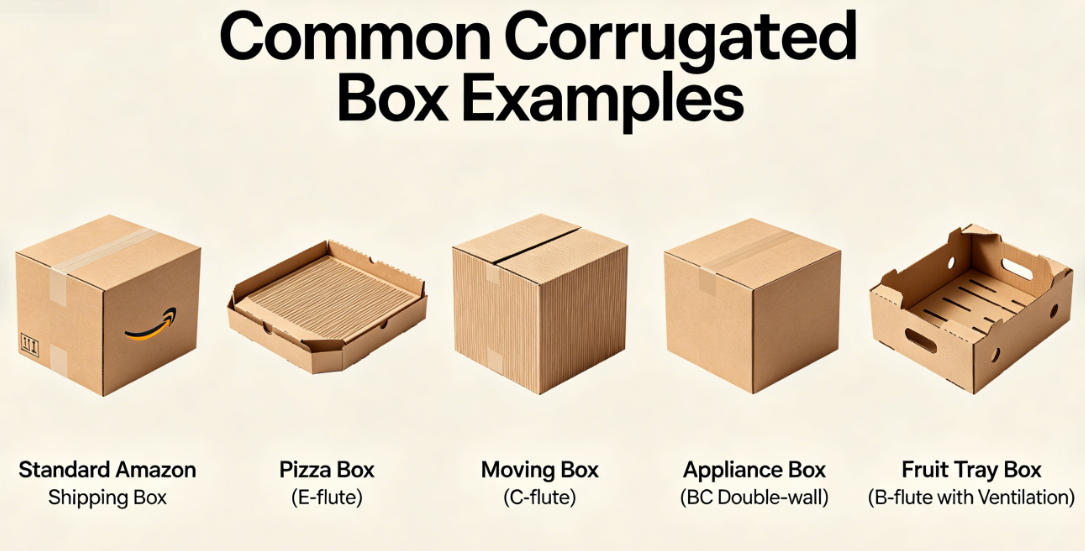
Examples of corrugated boxes are all around you. Walk into your kitchen. The box your new toaster came in. The box your vegetables arrived in at the grocery store. The pizza box from last night. They are all corrugated. Walk into any factory. The large Gaylord bins holding bulk parts. The die-cut inserts protecting delicate components. The dividers separating glass bottles. All corrugated.
I keep a collection of corrugated box samples in my office. It helps me explain to customers what different packaging options look like. I have a tiny F-flute box designed for a smartphone accessory. It fits in the palm of my hand. The printing is sharp and colorful. I have an A-flute box from a machinery shipment. It weighs 3 kilograms empty and can hold 120 kilograms. I have a die-cut box with foam inserts for a camera. Every curve and corner is precisely cut to cradle the product.
The most common example you see every day is the e-commerce shipping box. It is usually C-flute single-wall with a regular slotted container design. The brown kraft surface takes printing well. The box folds flat for storage and assembles in seconds. The flaps tape shut on top and bottom. These boxes handle drops, stacking, and moisture exposure during delivery. They are the workhorse of modern logistics. If you want to learn more about packaging machines that increase your production efficiency, explore our full range at Kylin Machinery. We serve over 2,500 users in more than 20 countries with advanced packaging solutions.
Conclusion
Corrugated boxes are the strongest, most versatile shipping containers in global trade, and choosing the right flute type and wall construction makes all the difference for your products.
About Me
My name is Jacob. I run Kylin Machinery, a post-press equipment manufacturer based in Dongguan, China. Since 2003, my team and I have designed and built machines for making rigid boxes, hard book covers, and packaging solutions. We serve over 2,500 users across more than 20 countries. I write about packaging because I believe good information helps businesses make better decisions. If you need post-press machines that deliver precision and reliability, contact us for a quote.

发表回复