

What are the different types of food boxes?
I often see food brands lose sales with weak, plain, or crushed boxes. I get better results when I match the box to the food, the shelf, and the trip.
I group food boxes into folding cartons, corrugated takeout boxes, rigid gift boxes, tray packs, sleeve packs, round boxes, and bakery display boxes. I choose each one by food weight, grease, freshness, display need, and shipping risk.
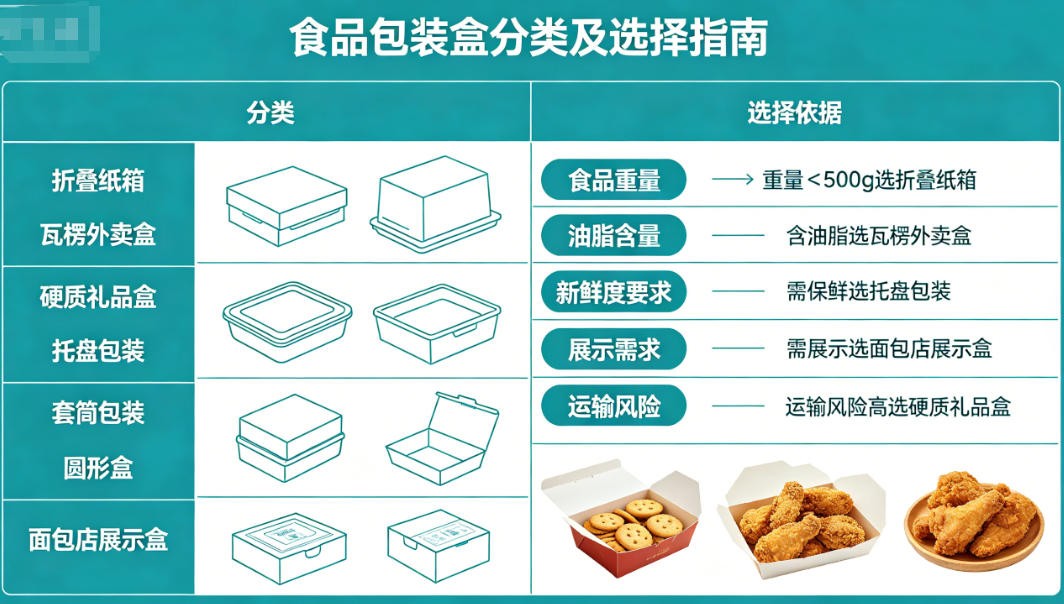
When I sort food boxes this way, I stop guessing. I can see which style protects the product, which style lifts the brand, and which machine fits premium box production, so I keep reading with a clear plan.
What are the different types of boxes for food?
I see many sellers use one box style for every product. I find that this hurts freshness, shelf appeal, and profit at the same time.
I usually divide food boxes into takeaway boxes, folding cartons, corrugated shippers, rigid gift boxes, tray-and-sleeve packs, round boxes, and bakery boxes with or without windows. Each type solves a different food problem.
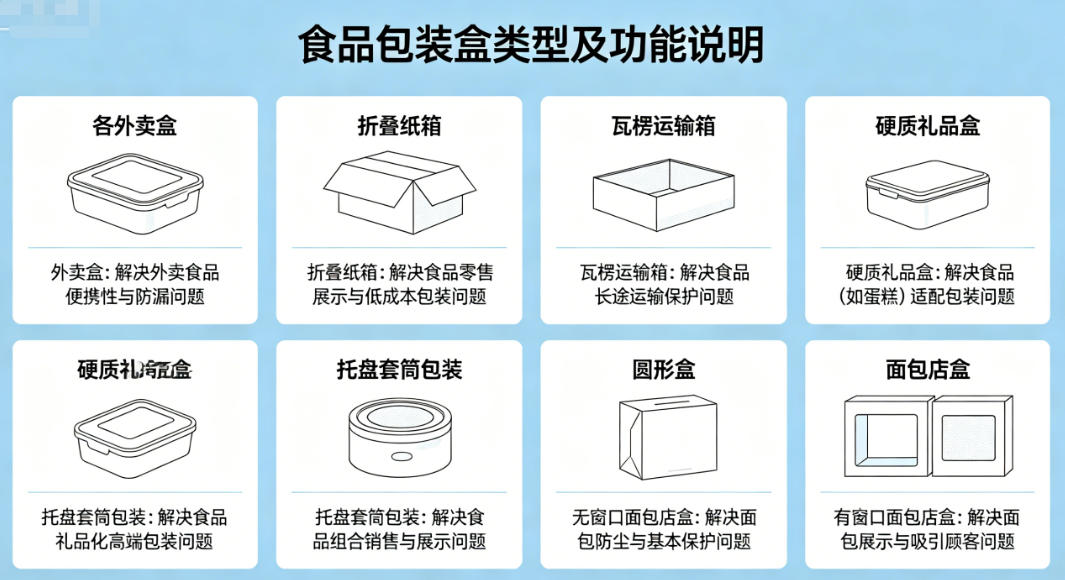
When I work on food packaging, I first separate direct food contact from outer presentation. I do this because the inner wrap, liner, or tray handles food safety, while the outer box handles branding, stacking, and transport. That makes my choice much easier. For sandwiches, snacks, and light dry goods, I usually use folding cartons. For takeaway meals, I look at leak resistance and heat. For shipping, I move to corrugated. For premium foods like chocolates, mooncakes, cookies, tea, and holiday sweets, I often prefer rigid boxes because they look strong and feel valuable in hand. I also like round boxes for tea, cookies, and gift assortments because they stand out on the shelf. If I need a pack that stores flat before use, I look at collapsible styles. In my B2B work, I treat the outer box as part of the sales pitch, not just a container.
| Food use I target | Box type I choose | Why I choose it | Relevant Kylin product |
|---|---|---|---|
| Chocolates, mooncakes, premium cookies | Rigid lid and base box | I get stronger presentation and gift value | Semi auto rigid box machine |
| Tea, candy, gift snacks | Round paper box | I get a distinct shelf shape and premium look | Cylindrical paper round boxes machine |
| Seasonal food gift sets | Collapsible box | I save storage space before assembly | Collapsible boxes machine |
| Premium food box finishing | Bubble-free rigid box pressing | I improve final surface quality | Large box pressing machine |
What are the 7 types of packaging?
I notice that many buyers mix packaging material with packaging function. I keep the list simple so I can make faster business decisions.
When I need a practical list, I use seven types: bags and pouches, boxes and cartons, bottles and jars, cans, trays and clamshells, wraps and films, and corrugated shipping packs. This framework helps me compare cost, protection, and shelf effect.
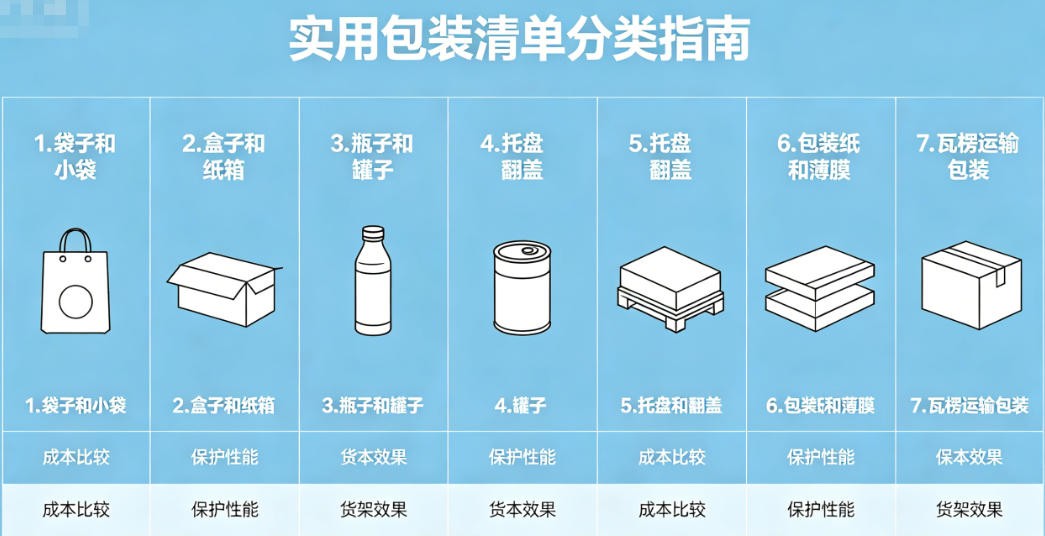
I use these seven types because they cover most real packaging jobs without turning the topic into theory. Bags and pouches work well when I need low weight and low shipping cost. Boxes and cartons work when I need print area, structure, and stackability. Bottles and jars help when the product is liquid, semi-liquid, or high value. Cans fit long shelf life. Trays and clamshells help me show the product clearly. Wraps and films help me protect, bundle, or seal. Corrugated shipping packs help me move goods safely through storage and transport. In food packaging, I often combine more than one type. A cookie set may sit in a tray, go into a printed rigid box, and then move in a corrugated shipper. That is why I do not look at food boxes in isolation. I look at the full pack system. For premium food and bakery projects, my main focus is usually the secondary box and the outer gift presentation because that is where brand value becomes visible.
| Packaging type I use | Main job it does | Where I see it in food packaging |
|---|---|---|
| Bags and pouches | Light barrier pack | Snacks, powder mixes, dried fruit |
| Boxes and cartons | Structure and branding | Cereals, cookies, confectionery |
| Bottles and jars | Containment and reuse | Sauces, honey, spreads |
| Cans | Shelf life and sealing | Tea, candy, preserved foods |
| Trays and clamshells | Product display and portion control | Pastries, fruit, ready meals |
| Wraps and films | Seal and bundle | Bakery wraps, bar wraps, overwrap |
| Corrugated shipping packs | Transport protection | Case packs for wholesale delivery |
What are the different types of custom boxes?
I lose premium buyers when the pack looks standard. I win more interest when the box shape, fit, and finish match the product story.
I define custom boxes by size, shape, structure, insert, closure, and finish. The main custom box types I use are rigid boxes, magnetic boxes, collapsible boxes, round boxes, drawer boxes, shoulder-neck boxes, and window boxes.
When I say a box is custom, I do not only mean printed artwork. I mean the whole structure can change. I can change the depth, the corner style, the insert, the opening feel, the wrap paper, the board thickness, and the final texture. That is why custom boxes matter so much in food gifting and branded bakery lines. A chocolate brand may need a rigid lid and base box with a tray insert. A tea brand may want a round box to break away from the usual square shelf look. A holiday sweets brand may want a collapsible box so storage stays easy before peak season. A premium cookie set may need exact board positioning so the wrap stays sharp and the corners stay clean. In my experience, custom box value comes from fit, repeatability, and finish. If the finish fails, the brand promise fails too.
| Custom box type I use | Best fit in my view | Relevant Kylin product |
|---|---|---|
| Rigid lid and base box | Chocolate, tea, cookie gift sets | Semi auto rigid box machine |
| Round rigid box | Tea, candy, premium snack gifts | Cylindrical paper round boxes machine |
| Collapsible rigid box | Seasonal gift projects and flat storage | Collapsible boxes machine |
| Precision rigid setup box | High-end custom box runs | Automatic robotic spotter machine |
| Fast folding paperboard box | Premium paperboard box lines | Fully automatic box folding machine |
| Final quality improvement | Bubble-free box surfaces | Large box pressing machine |
In my wholesale work, I also try to make the next step easy for serious buyers. I usually ask them to send the box size, product photo, target output, and board or paper range. I also ask for their country, company name, email, and WhatsApp so I can reply with a real machine suggestion instead of a vague quote. I direct them to Kylin Machine and the contact page because that gives me enough detail to move from browsing to a real factory discussion.
What are the different types of bakery boxes?
I see bakery packaging fail when steam softens the board, icing touches the lid, or the pack collapses on delivery. A nice print alone does not save the product.
I usually group bakery boxes into cake boxes, pastry boxes, cupcake boxes, macaron boxes, cookie gift boxes, window boxes, takeaway bakery cartons, and corrugated transport boxes. I choose by height, grease, fragility, and display need.
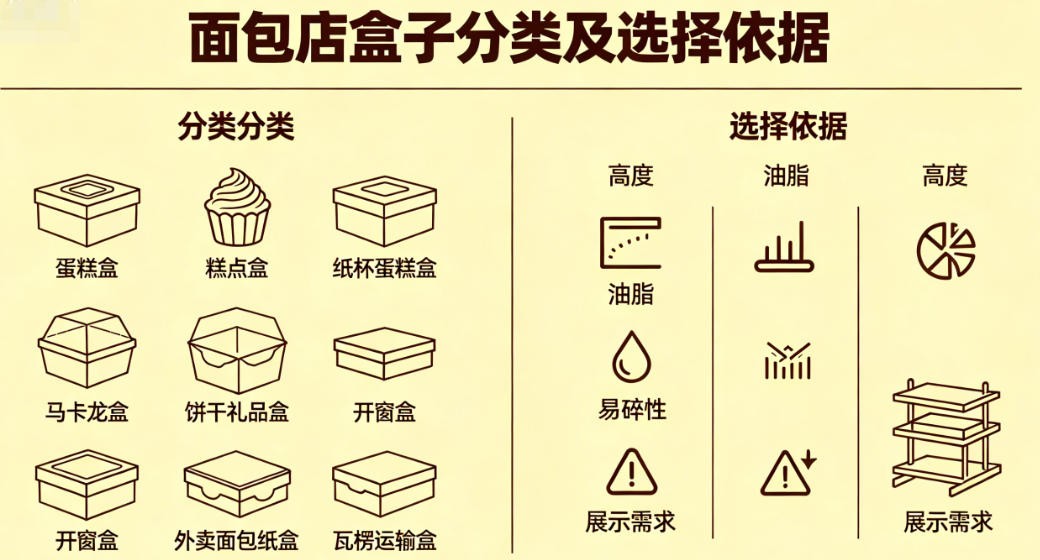
When I plan bakery packaging, I start with the bakery item itself. Cakes need height and support. Pastries need clean presentation and enough room so toppings do not smear. Cupcakes need inserts. Macarons need protection from movement. Cookies can go into simple cartons for daily sales, but they can also move into rigid gift boxes for holiday campaigns and premium retail. I also watch moisture and heat. Fresh bakery items often need airflow or inner wraps, while dry bakery gifts can use more decorative outer packs. This matters because bakery packaging often has two jobs at once. It protects a delicate product, and it sells emotion on the shelf. That is where premium outer boxes can make a difference. For cookie hampers, mooncake-style bakery gifts, and festive sweet boxes, I often lean toward rigid or round presentation boxes. For faster paperboard forming, I look at automatic folding. For cleaner rigid finishing, I look at pressing and accurate positioning.
| Bakery item I think about | Box style I choose | Why I choose it | Relevant Kylin product |
|---|---|---|---|
| Daily pastry or donut packs | Paperboard folding box | I get speed and clear retail presentation | Fully automatic box folding machine |
| Premium cookie or brownie gift set | Rigid setup box | I get stronger gifting value and structure | Semi auto rigid box machine |
| Tea biscuits or candy bakery gifts | Round rigid box | I get a unique shelf look | Cylindrical paper round boxes machine |
| Holiday bakery gift boxes | Collapsible rigid box | I save storage space before the rush season | Collapsible boxes machine |
| Premium finished bakery gift box | Bubble-free rigid box surface | I improve the final appearance | Large box pressing machine |
When I write for bakery buyers, I try to speak plainly. I say that not every bakery box must be rigid, and not every rigid box should touch the food directly. I prefer to use food-safe inner contact packaging where needed, then use the outer box to build the brand story. This helps me stay practical and still sell a premium result. If I am speaking to a serious B2B buyer, I ask for sample dimensions, daily capacity, and contact details through Contact Us. That turns interest into a useful machine conversation.
Conclusion
I choose food boxes by product, pack role, and shipping risk. For premium B2B food and bakery packaging, I match the box style to the right machine and contact path.

发表回复