

How much does it cost to get a custom box made?
I know the shock. I ask for a custom box quote, and the price can feel far above a plain carton. That gap can stop a good packaging idea fast.
When I quote a custom box, I usually see prices from a few cents to several dollars per unit. I look at style, order size, print, finish, inserts, labor, and shipping.
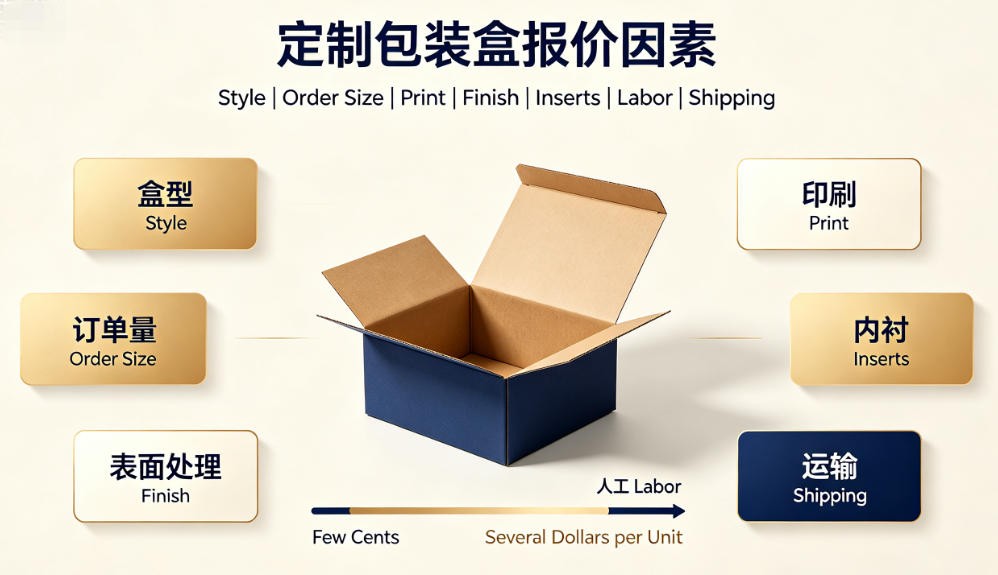
When I talk with buyers, I see the same problem again and again. They want a better box, but they do not know what really drives the price. I work backward from the box style, the run size, and the machine process. That is the only way I know to make the cost feel clear. If you keep reading, I will show you how I break it down and how I guide buyers to the right machine pages on my website.
How much do custom printed, retail boxes cost?
I often see buyers compare a luxury retail box with a plain shipper. That is where confusion starts, and that is where budgets go off track.
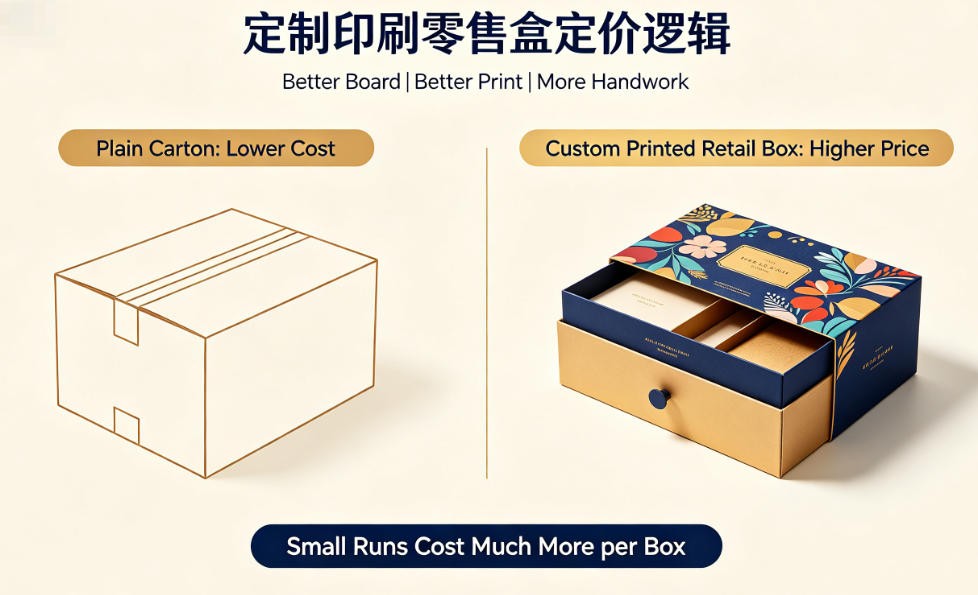
When I quote custom printed retail boxes, I price them above plain cartons because they need better board, better print, and more handwork. I also see small runs cost much more per box.
The price bands I start with
When I price custom printed retail boxes, I never start with one fixed number. I start with the box type. A simple folding carton sits at the low end. A rigid setup box sits much higher. A magnet gift box, a box with foam insert, or a box with foil stamping moves up again. I also look at quantity right away. A short run can feel expensive because setup is spread over too few pieces. A larger wholesale run usually brings the unit cost down fast. I have seen this many times when a buyer moves from samples to real production. The box itself may not change much, but the cost per unit changes a lot.
| Order stage | Range I often see | What pushes it there |
|---|---|---|
| Sample or prototype | $1.50 to $10.00+ per box | Manual work, sample setup, low quantity |
| Small retail run | $0.80 to $3.50 per box | Print setup, rigid board, higher waste |
| Mid to large run | $0.30 to $1.80 per box | Better scale, lower setup per unit |
| Premium rigid gift box | Higher than baseline | Magnets, foil, emboss, inserts, wrap paper |
When I quote a jewelry box, perfume box, or phone box, I also look at surface finish. Matte lamination, soft touch film, spot UV, foil, and embossing all add value, but they all add cost too. So when I answer this question, I do not say custom boxes are expensive by default. I say the right custom box costs what the design asks it to cost.
Why are custom boxes so expensive?
Many buyers think suppliers add a huge margin for no reason. I get that feeling. The hard part is that the costly parts are often hidden.
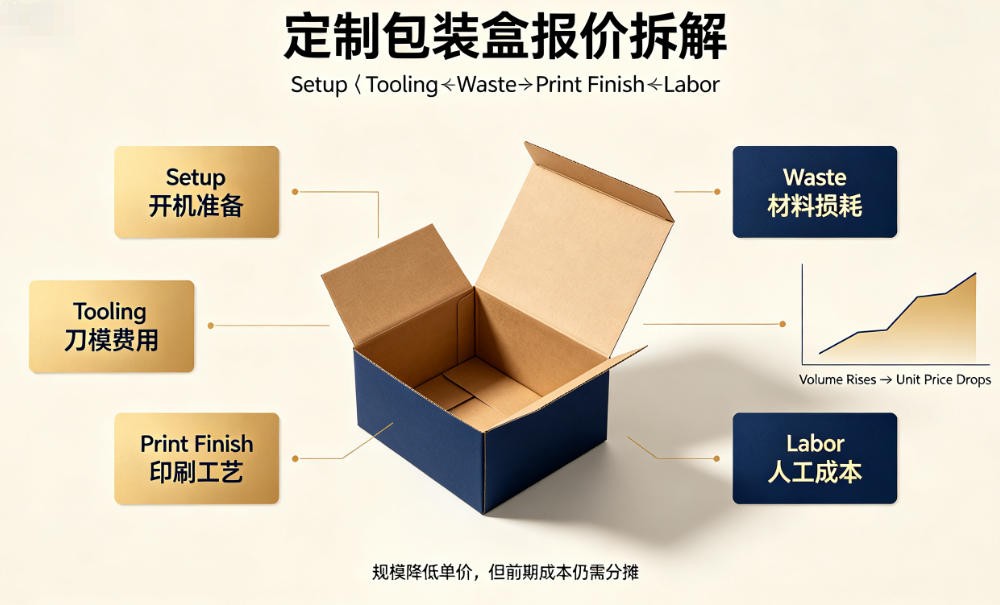
When I break down a custom box quote, I see setup, tooling, waste, print finish, and labor loaded in early. I also see scale lower the price only after volume rises.
Where I see the money go
When I explain pricing to a buyer, I usually say this first: the final box is only the visible part of the cost. The hidden part sits in setup, board cutting, wrap paper control, glue, labor time, quality checks, and freight. Rigid boxes cost more because they are not just folded once and sent out. They need more steps. They need better alignment. They also need better appearance. If the print registration is off, if the wrap bubbles, or if the edges do not close cleanly, the box loses its value at once. That means I must count waste and QC in the price.
| Cost driver | What I see in real quotes | Why it matters |
|---|---|---|
| Board and paper | Better grade costs more | The box must stay rigid and look clean |
| Printing and finish | Foil, emboss, UV, lamination add up | Buyers want shelf impact |
| Tooling and setup | Paid before scale helps | Small runs carry this cost harder |
| Inserts and magnets | Add material and labor | Premium boxes need more parts |
| Labor and QC | More steps mean more cost | Luxury boxes need tighter control |
| Shipping | Heavy boxes cost more to move | Rigid boxes take space and weight |
I also tell buyers that waste is real. The nicer the finish, the less room I have for mistakes. That is why a good-looking custom box is not only a paper product. It is a controlled process. That process is where much of the price lives.
How much does a box cost to make?
I hear this question in two ways. Some buyers ask about unit cost. Others ask what it costs to build boxes in-house with a machine.
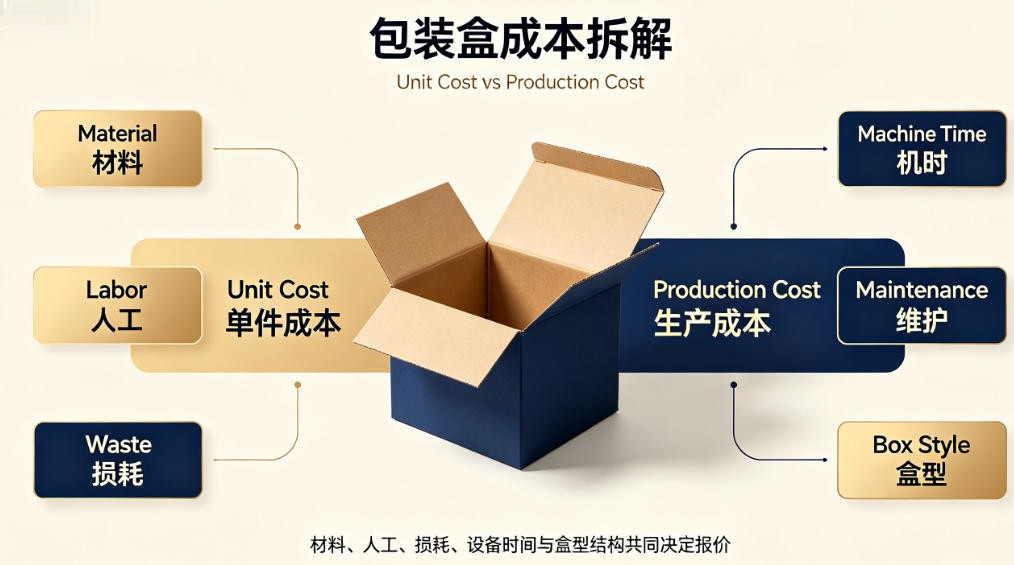
When I calculate box cost, I split it into unit cost and production cost. I count material, labor, waste, machine time, maintenance, and the box style itself.
How I separate unit cost from machine cost
When I look at cost to make a box, I first split the question in two. If I buy finished boxes, I care about the unit quote. If I make boxes in my own factory, I care about material, labor hours, output speed, machine uptime, and maintenance. That second view matters a lot for B2B buyers. A machine can lower labor and stabilize quality, but only if the box style and order volume fit the machine well. On my website, I usually tell buyers to start with these pages because each one speaks to a different need.
| What I need to make | Product page I would open first | What I notice there |
|---|---|---|
| Standard rigid boxes | Auto rigid box machine | Good for rigid box production with AI robot spotter |
| Wider range and higher automation | Fully Auto rigid box machine 2024 | Vision positioning, robotic arm, 20-30 pcs/min |
| Magnet closure gift boxes | Fully auto magnet closure box machine | Magnet inserting, 25-40 pcs/min, double path option |
| Hard cover and corner work | Hard cover machine with round corner | Useful for book covers and round-corner jobs |
| Full machine range | Products page | Best place to compare box and book solutions |
When I compare manual work with automated work, I usually see one simple truth. Higher output lowers cost per box over time. That is why I care so much about box style, daily target, and labor availability before I talk about investment.
Are custom shipping boxes worth it?
I have seen plain shippers do the job. I have also seen branded shipping boxes turn one delivery into a repeat order.
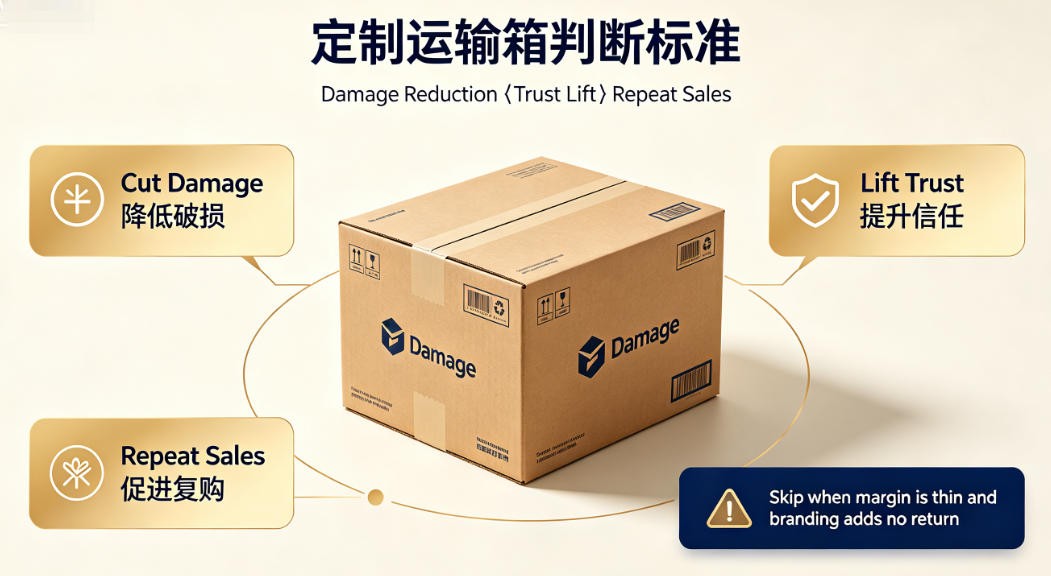
When I judge custom shipping boxes, I ask if they cut damage, lift trust, and help repeat sales. I skip them when the margin is thin and branding adds no return.
When I say yes, and when I say no
When I judge whether custom shipping boxes are worth it, I do not start with looks. I start with return. If the box protects the product better, lowers damage, packs faster, and makes the brand feel stronger, I usually say yes. If the product is low margin, price driven, and easy to replace, I may say no or not yet. I have seen both cases. A luxury gift brand often wins from a better box. A commodity seller may only need a clean plain shipper. So I match the box to the business model.
| Business case | My view | Why I say that |
|---|---|---|
| Luxury retail or gift brand | Yes | Better unboxing, stronger value feel |
| Fragile ecommerce product | Yes | Less damage, fewer complaints |
| Mid-market branded goods | Maybe | Works if repeat orders matter |
| Low-margin commodity | Often no | Cost can eat margin too fast |
When a buyer wants a fast answer from me, I ask for six things: box photo, box size, quantity, material idea, daily output target, and country. I also ask for an email or WhatsApp number. That helps me point them to the right pages on my site and reply with a more useful suggestion. If I were you, I would open the machine links above, compare the box types, and leave those contact details so I can narrow the choice fast.
Conclusion
I see custom box cost as a mix of design, volume, and process. When I match the right box and machine, the price starts to make sense.

发表回复