

Precision Colour Printing Admins Leave the Site This Week: Is Your Post-Press Line Safe?
A 40-year-old Telford printer collapsed into administration, and this week its administrators walk away. Around 180 jobs hang in the balance. You may wonder if your own shop is next.
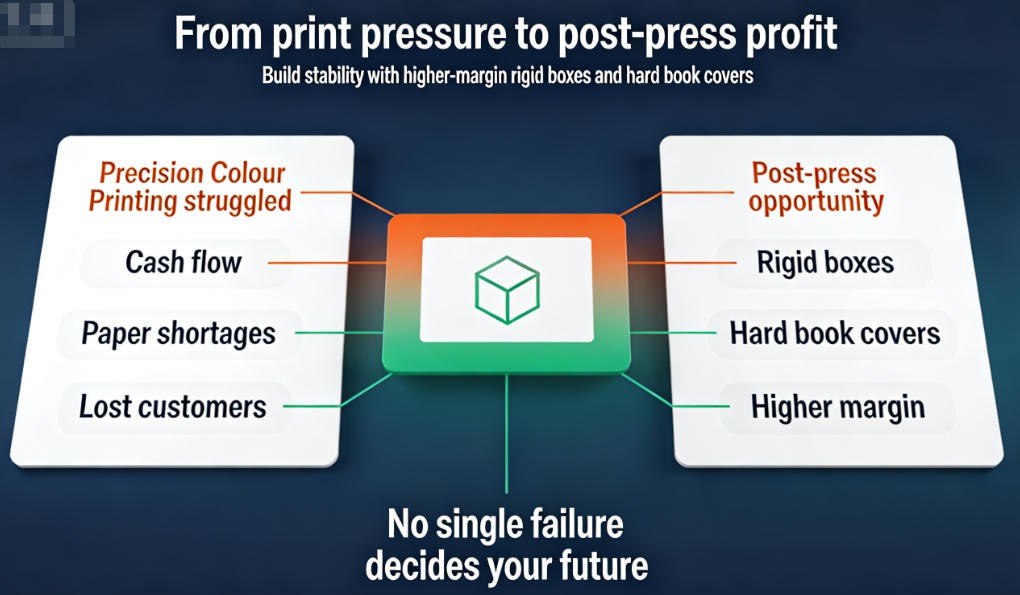
No single failure decides your future. Precision Colour Printing struggled with cash flow, paper shortages, and lost customers. The shops that survive this market are the ones that move into higher-margin post-press work, like rigid boxes and hard book covers.
I am Jacob, and I run Kylin Machine in Dongguan, China. We have supplied post-press machines to more than 10,000 users in over 20 countries for more than twenty years. When I read the Precision Colour Printing news, I did not feel shock. I felt a warning. Let me walk you through what happened, and what it means for your bindery and box-making line.
Why Did a Printer With 400 Magazine Clients Still Fail?
The numbers looked fine on paper. Turnover was £27.9 million. Then the cash ran out, and customers moved their work elsewhere. Nobody saw it coming fast enough.
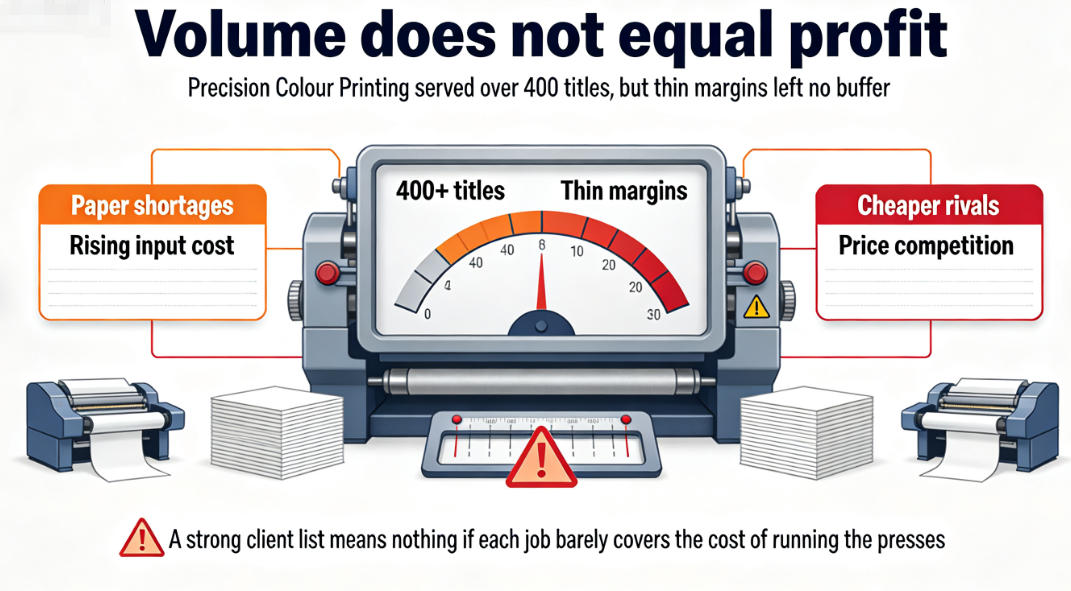
Precision Colour Printing served more than 400 titles, but thin margins left no buffer. Paper shortages and cheaper rivals pushed it into administration. A strong client list means nothing if each job barely covers the cost of running the presses.
The Margin Problem
Precision Colour Printing ran three web presses and a sheetfed line. It also offered wrapping and mailing. That is a lot of volume with very little margin. Magazine and catalogue work is price-driven. Publishers shop around every year. One cheaper quote can take a whole account away.
Volume Alone Is Not Profit
The company reported £27.9 million in turnover and only £278,819 in profit. That is less than one percent. A small delay in payment or a paper price spike can wipe that out. That is exactly what happened.
| Factor | Magazine / Catalogue Printing | Rigid Box & Book Cover Work |
|---|---|---|
| Margin per job | Thin, price-driven | Higher, value-driven |
| Customer loyalty | Low, easy to switch | Higher, tied to finish quality |
| Automation benefit | Limited | Strong with robotic spotting |
| Cash buffer | Small | Healthier |
I have seen this pattern many times. Shops that only print stay at risk. Shops that also finish boxes and covers earn better margins.
Where Do Publishers Send Their Post-Press Work Now?
When a big printer fails, the work does not disappear. It moves fast to other shops, and only the ready shops can catch it. Are you ready?
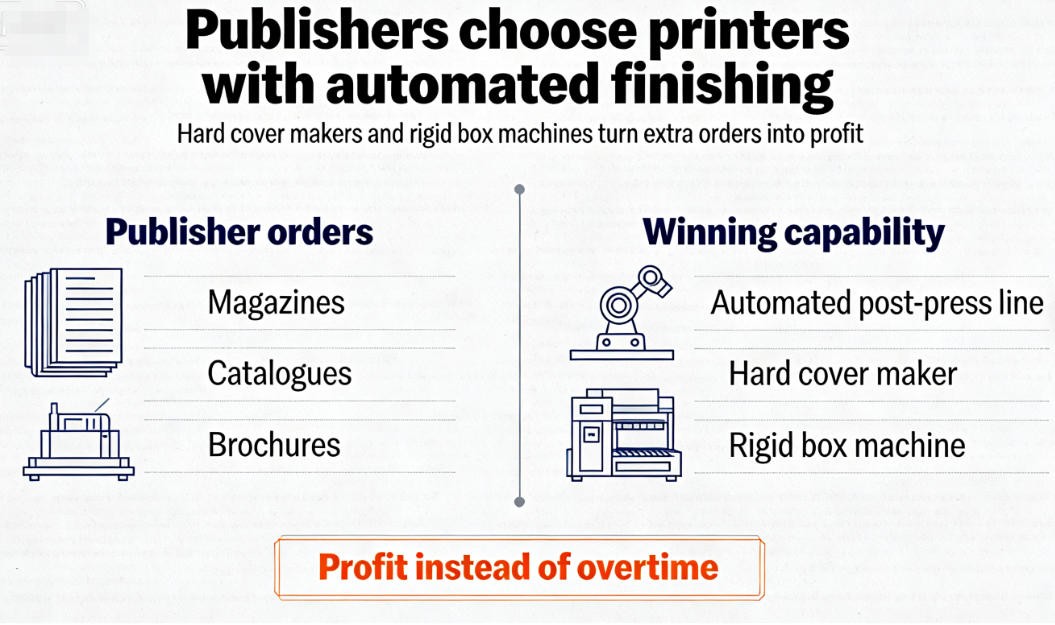
Publishers shift their magazines, catalogues, and brochures to other printers at once. The shops that win this work are the ones with automated post-press lines. A hard cover maker or rigid box machine turns extra orders into profit instead of overtime.
Filling the Gap
When a printer like Precision Colour Printing fails, publishers do not stop printing. They move their work to other shops fast. That opens a door for your business. But you can only step through if your post-press line is ready.
The Machines That Let You Say Yes
A hard cover maker like the Ky-380 Hard Cover Making Machine does the gluing, wrapping, and turning in one pass. One operator can run it. That is how you take book cover jobs without a large team.
For luxury packaging, the Auto Rigid Boxes Machine builds strong boxes on its own. It adds value that thin-margin printing cannot. Quality control matters too. The CCD Visual Anti-Mixing Detection Equipment checks each box so mixed batches never reach the client.
I built my whole factory around this idea. We make machines for rigid boxes, round boxes, and book covers, not for cheap print runs.
How Can Your Shop Dodge the Same Cash-Flow Trap?
Precision Colour Printing fell because it had no buffer. If you run on thin print margins, the same risk sits inside your business today.
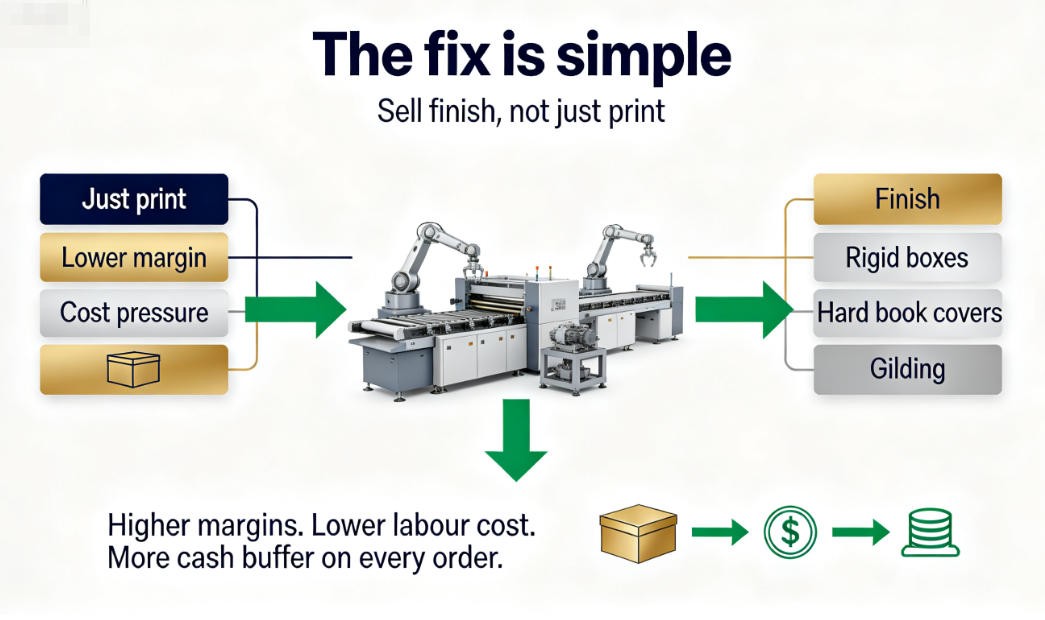
The fix is simple. Sell finish, not just print. Add rigid boxes, hard book covers, and gilding to your line. These jobs carry higher margins, and automation keeps your labour cost low so every order leaves a cash buffer behind.
Stop Competing on Price
The lesson is simple. If your only offer is price, someone will always be cheaper. Precision Colour Printing lost work to cheaper rivals. You can break that cycle by selling finish, not just print.
Automate the High-Margin Steps
Automation is the answer. Our robotic spotter and hybrid systems handle the hard steps of rigid box and book cover work. Fewer hands mean fewer mistakes and a lower cost per piece. The Glue Spraying Assembly Machine applies glue evenly on every job. This keeps quality steady and waste low.
| Step | Manual Shop | Automated Shop |
|---|---|---|
| Labour cost | High | Low |
| Error rate | Higher | Lower |
| Output per shift | Low | High |
| Cash per job | Thin | Thicker |
That is how a shop builds a buffer. A buffer is what Precision Colour Printing did not have.
Conclusion
Precision Colour Printing fell because its margins were too thin. The safer path is higher-margin post-press work. Automate it, and your shop outlasts the market.

发表回复