

Sublistar Launches Highly Automated, High-Volume DTF Heat Transfer System
Every print shop wants more output. But manual steps slow you down and eat your profit. Automation fixes that problem fast.
A highly automated, high-volume DTF system speeds up heat transfer work. It cuts labor and hand mistakes. It keeps quality even across long runs, so you make more good pieces per hour.
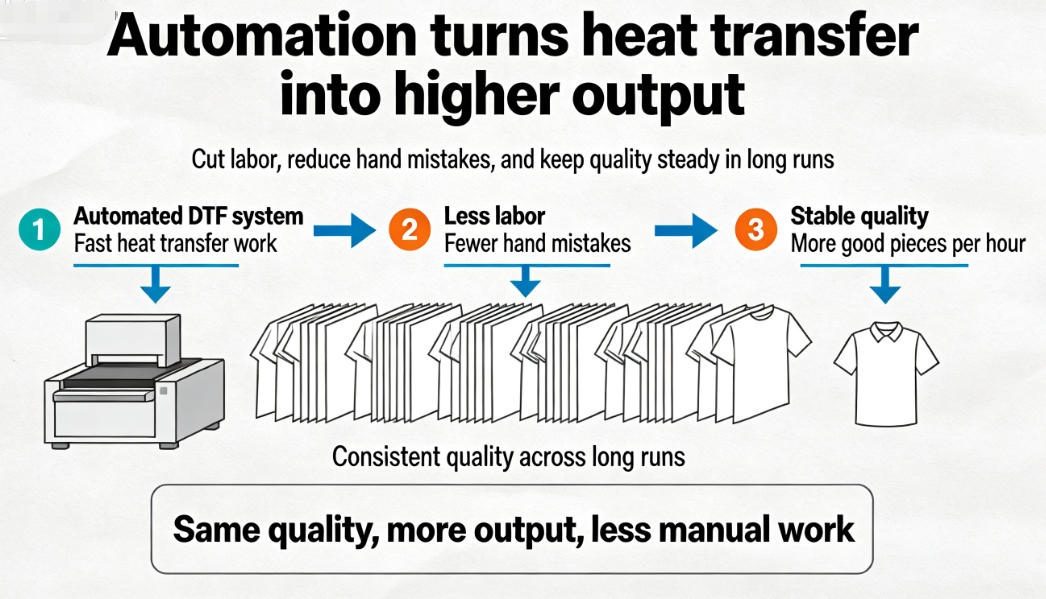
I run a post-press machinery factory in China. I have watched this same shift for twenty years. Automation wins every time. Now let me show you why this matters for your shop.
Why Does High Automation Matter for High-Volume Printing?
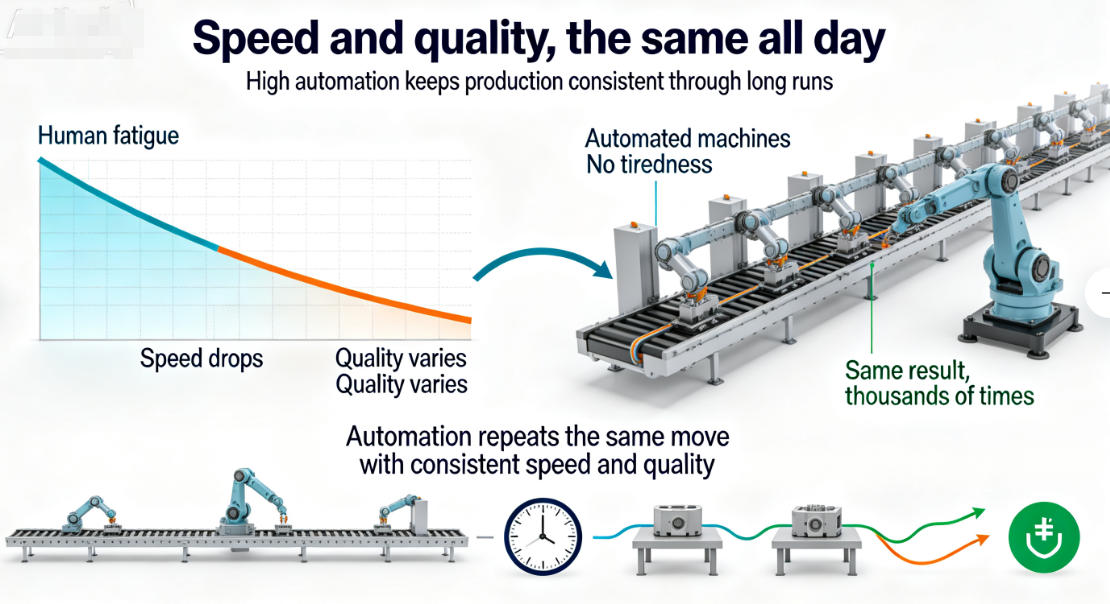
Long runs break manual teams. Workers get tired and output drops. Automation keeps the pace steady from the first sheet to the last.
High automation matters because it keeps speed and quality the same all day. Machines do not get tired. They repeat the same move thousands of times with the same result.
Automation changes three things
Let me break this down. I have spent twenty years inside box making and book cover plants. The same rule shows up in every shop. Automation changes three things. First, it raises output. A machine runs at a fixed speed. It does not slow down as the day goes on. Second, it cuts labor cost. One operator can watch several stations. That frees up hands for other work. Third, it makes quality even. Every piece comes out the same. Here is how it looks in a table.
| Factor | Manual line | Automated line |
|---|---|---|
| Output | drops as workers tire | steady all shift |
| Labor | many hands | few operators |
| Quality | changes piece to piece | same every time |
These three gains are why I push automation in my own machines. Take our auto rigid box machine. It turns flat sheets into finished boxes with little hand work. The same idea drives a DTF system. It prints fast and even. It frees your team for higher-value tasks. That is the whole point of automation.
How Does a DTF System Cut Waste and Raise Output?
Waste kills your margin. Bad prints and rework add up fast. A smart system stops that loss at the source.
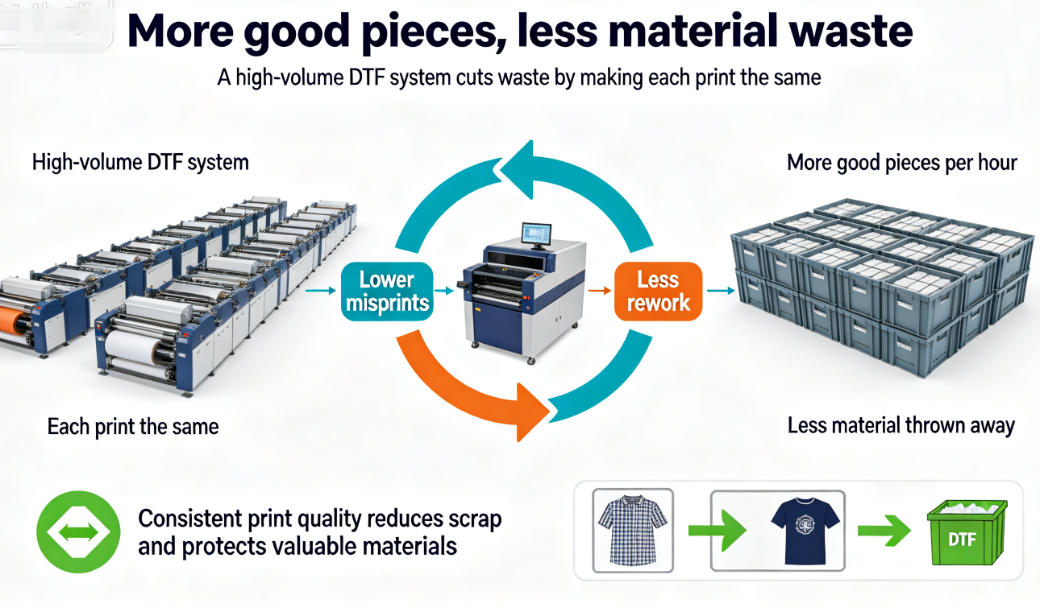
A high-volume DTF system cuts waste by making each print the same. It lowers misprints and rework. That means more good pieces per hour and less material thrown away.
Waste shows up in small ways
Let me explain how waste shows up. On a manual line, you lose money in small ways. One worker sets the film a little off. Another moves too slow. Misprints pile up. Rework eats your time. A high-volume DTF system fixes this. It controls the feed, the heat, and the timing. So every print lands in the same spot. Here is what changes.
| Cost | Manual | Automated DTF |
|---|---|---|
| Misprints | common | rare |
| Rework time | high | low |
| Good pieces per hour | uneven | steady |
I saw this same shift in box making. Years ago, workers wrapped boxes by hand. Now our machines do it with glue and pressure set by computer. You can see it in our glue spraying assembly machine. The glue goes only where it should. Nothing is wasted. The same rule holds for heat transfer. Control the process and you cut the waste.
What Should You Check Before You Buy a High-Volume Line?
Buying the wrong machine is costly. You lose money and time. A few simple checks protect you.
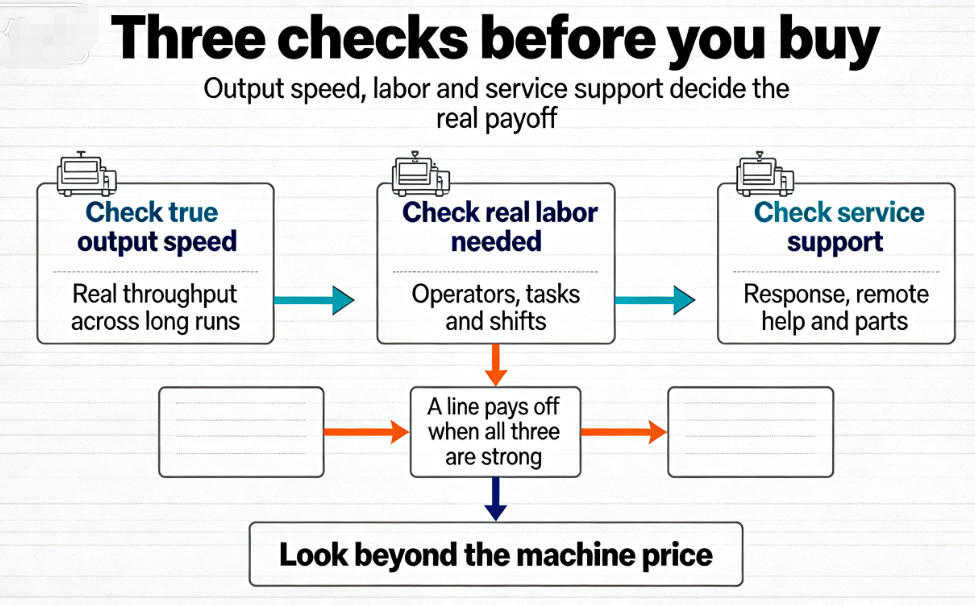
Before you buy, check the true output speed, the real labor needed, and the service support. These three points decide if a line pays off.
Check before you spend
Buying a machine is a big decision. I have seen shops buy the wrong one. Then they lose months of profit. So check a few things first. One, look at the true output speed. Do not trust the top number in the ad. Ask what it makes in a full eight-hour day. Two, count the real labor. Some lines still need many hands. The whole point is to need fewer. Three, check the service support. Every machine needs parts and help someday. Here is a quick list.
| Check | Why it matters |
|---|---|
| Real daily output | top speed is not real speed |
| Labor needed | fewer hands means lower cost |
| Service support | downtime costs more than parts |
I use these same checks with my own customers. Our hard cover making machine and CCD detection equipment come with real numbers and real support. Ask the seller the same hard questions. A good line pays for itself. A bad one does not.
Conclusion
Automation is not a trend. It is how good shops survive. Pick machines that are fast, even, and backed by real support.

发表回复