

Northend upgraded with a new Canon press — so what happens to your post-press line?
Shops keep adding faster Canon digital presses. But a faster press only helps if your finishing keeps pace. When it lags, the whole job stalls and money leaks out.
Northend, a UK printer founded in 1889, runs a Canon imagePRESS C10010VP and a Canon Colorado 1650. The extra print volume made finishing the bottleneck. They cleared it with automation, and that is the lesson for every box and book maker.
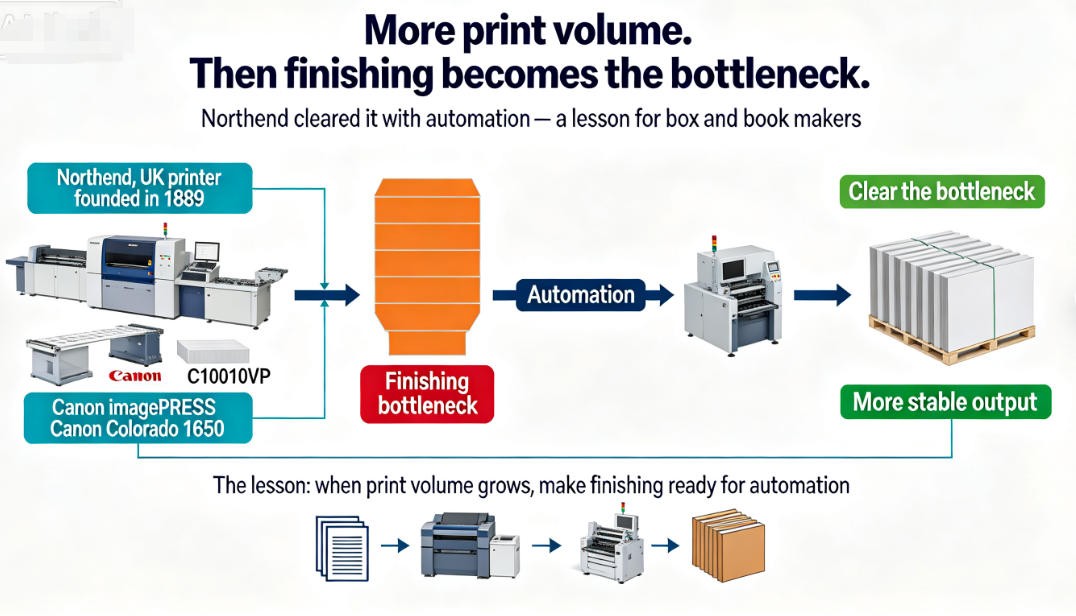
When I read about Northend, I saw my own customers. They print fast, then hit a wall at cutting, gluing, and case making. That wall is what I help them remove every day. I want you to see the same thing before it costs you a client.
Why does a new Canon press make finishing your biggest problem?
You print more sheets per hour after you upgrade. But boxes and covers still need cutting, gluing, and wrapping by hand. The fast press just piles up work faster.
A Canon imagePRESS C10010VP pushes out thousands of sheets an hour. If your finishing line is manual, that volume backs up in hours. Northend saw this and automated slitting, cutting, and creasing to stop the pile-up.
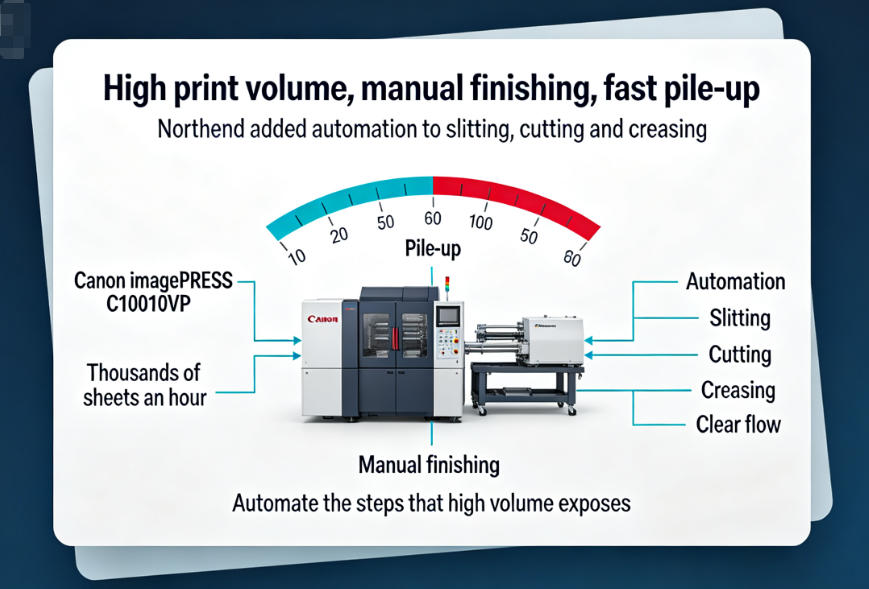
Print speed outruns finishing speed
A digital press like the Canon imagePRESS C10010VP prints thousands of sheets an hour. But one person can only cut, crease, and glue a few covers in that same hour. This gap is the real problem. The press does not stop while your team catches up. It keeps printing. So the queue grows. Jobs that should ship in one day now take three days. Customers notice. They call for updates. They start to look elsewhere.
I saw this with a customer in the Middle East. He bought a fast digital press to win more short-run work. Three months later, his finishing room was the hold-up. He had sheets stacked everywhere. His staff worked late every night. The new press did not help his profit. It just made the bottleneck easier to see.
The fix is simple. Match your finishing speed to your print speed.
| Step | Manual speed | Automated speed |
|---|---|---|
| Cutting and creasing | A few hundred sheets an hour | Thousands an hour |
| Hard cover case making | 30 to 50 cases an hour | 200 to 400 cases an hour |
| Rigid box wrapping | One box at a time | Several boxes a minute |
Which post-press machines clear the bottleneck fastest?
Every shop has one main job type. But many owners buy the wrong machine first. They waste money on tools that do not fix their real delay.
Start with the machine that binds your main job. A book printer needs a hard cover machine. A packaging shop needs a rigid box machine. A stationery shop needs a binding machine.
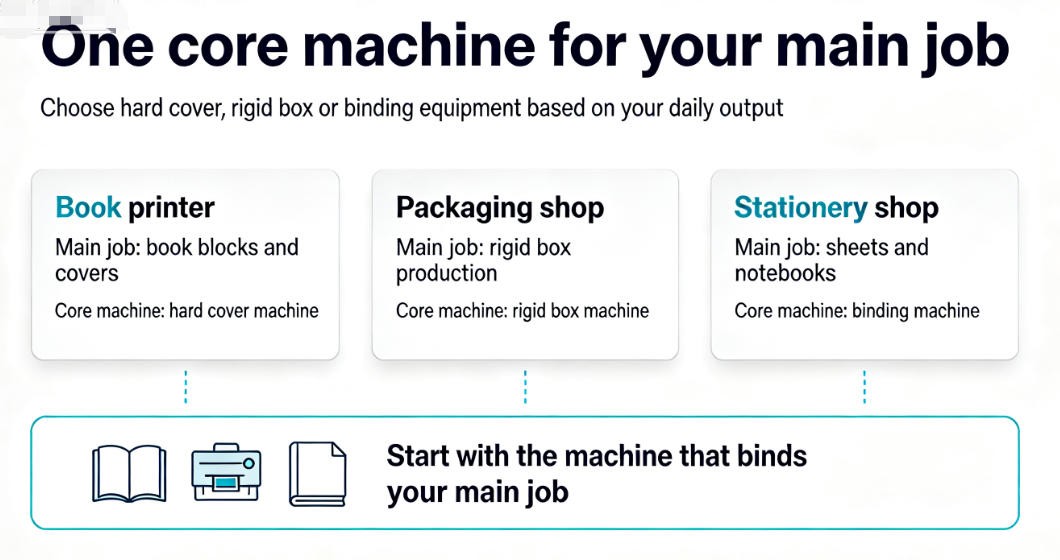
Start with the machine that binds your main job
Your main job type tells you which machine to buy first. At Kylin, we make machines for these exact jobs. The Ky-380 Hard Cover Making Machine turns boards, paper, and glue into a finished case in one pass. The Auto Rigid Boxes Machine wraps a box blank in seconds. The Glue Spraying Assembly Machine handles the gluing that slows so many lines.
I tell my customers one thing. Do not buy the fanciest machine first. Buy the machine that removes your worst delay. That single change pays for itself the fastest.
| Your main job | The machine that helps most |
|---|---|
| Hard books and covers | Ky-380 Hard Cover Making Machine |
| Luxury rigid boxes | Auto Rigid Boxes Machine |
| Mixed gluing work | Glue Spraying Assembly Machine |
| Short-run box work | Semi Auto Polygon Rigid Box Wrapper |
Should you bring hard cover and rigid box making in house?
Outsourcing finishing feels safe. You send the job out and the problem is gone for a while. But that comfort has a hidden price.
Bringing the work in house changes your offer. You control the date. You keep the margin. You can promise next-day delivery instead of waiting on another company's timeline.
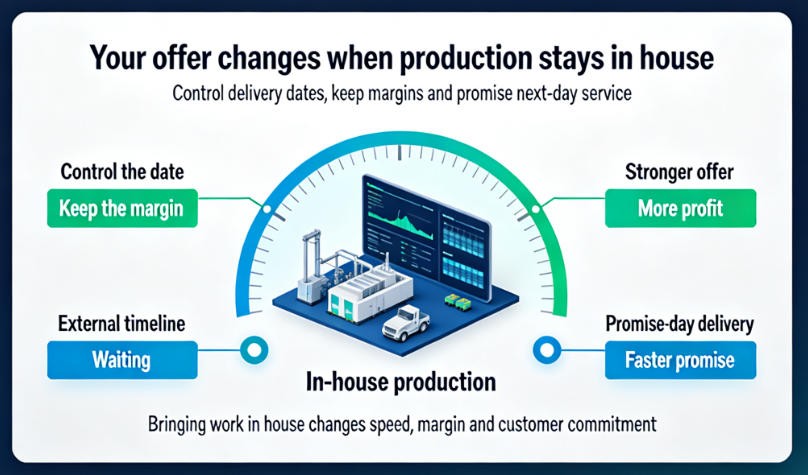
Outsourcing costs more than you think
A customer in Turkey told me this story. He outsourced his hard cover cases for two years. Every month he lost about 15 percent of his margin to the outside shop. When that shop got busy, his jobs waited. He lost a big client because one delivery ran late. Then he bought one hard cover machine from us. In six months, the machine paid for itself.
When you make the work yourself, you keep the money and the schedule. You also show customers a skill they can not get elsewhere.
| Outsourcing | In house with a Kylin machine |
|---|---|
| You lose margin | You keep margin |
| You wait on their schedule | You set your own schedule |
| You hide your capacity | You show your capacity |
| Quality depends on them | Quality is your standard |
Conclusion
Faster printing only helps when finishing keeps up. Match your post-press speed to your press, and you turn volume into profit, not backlog.

发表回复