

BPIF Hits 125 Years: What Does the Future of Print Mean for Your Business
The British Printing Industries Federation just turned 125. Its leaders say print adapts and finds a way to thrive through every crisis. But what comes next for your shop? BPIF's 125th year points to four key trends through 2030: technology, regulation, sustainability, and creativity. Businesses that automate, stay compliant, go green, and stay creative will win. 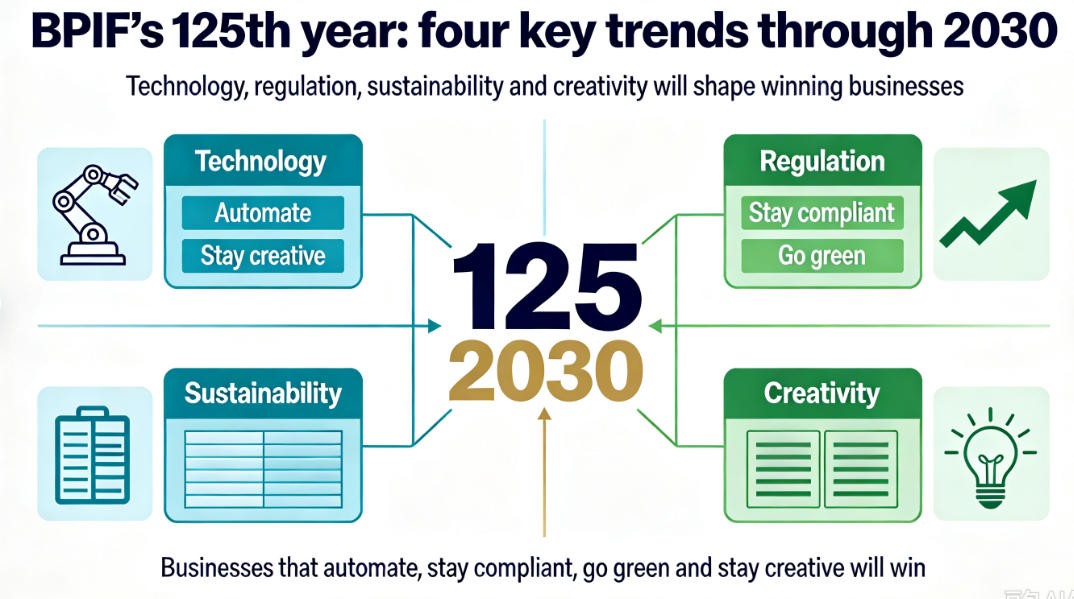
I have been in the post-press machinery business for more than 20 years. I have watched the printing and packaging world change fast. When I read that the BPIF hit 125 years, I stopped to think. What can a 125-year-old federation tell a box maker or a book binder today? The answer is simple. Print survives because it changes. Your business must change too. Let me walk through the four trends the BPIF says will shape our work from 2025 to 2030. I will also show you the machines my team builds to help you ride each wave. ## What four trends will shape the print industry from 2025 to 2030? You feel the pressure every day. Costs rise, rules change, customers want more for less. The BPIF asked its economist, Kyle Jardine, to map what comes next.
Jardine named four trends: technology, regulatory, sustainability, and creativity. These are not guesses. They come from data the BPIF collects from hundreds of UK print firms every quarter.
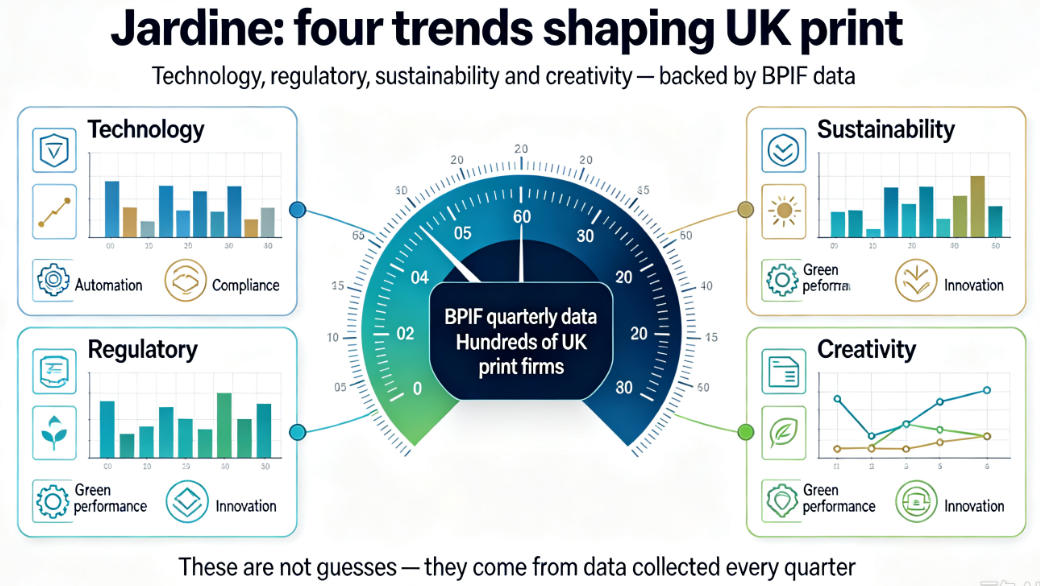
The BPIF has run a quarterly Printing Outlook report for years. It tracks orders, costs, and confidence across the trade. Jardine used this data to pull out four forces that will hit every print and packaging shop. Let me lay them out in a table so you can check your own business.
| Trend | What it means | Risk if you ignore it | |
|---|---|---|---|
| Technology | AI, robotics, and automation take over repeat tasks | You lose speed, quality, and skilled workers | |
| Regulatory | New rules on safety, environment, and data | Fines, stoppages, and lost contracts | |
| Sustainability | Buyers demand recyclable, low-waste packaging | Customers switch to greener suppliers | |
| Creativity | Print must stand out from digital noise | Your boxes and books look generic | ### One trend you can start today The easiest place to start is technology. Even one automatic machine can change your output. At Kylin Machine, we build a fully automatic rigid box line that uses an AI robot spotter to place boards with no human hand. The Auto rigid box machine Ky-430A runs 15 to 20 boxes per minute, with no bubbles and perfect registration. This is exactly the kind of automation the BPIF is talking about. ## How can robotic automation help your print business grow? Your best workers are tired. They repeat the same hand moves all day. Mistakes creep in. Output drops. The BPIF panel said automation is how you grow, not shrink. |
Robotic arms and AI spotters take over the dull, repeat jobs. Your people move to quality checks, setup, and customer work. Output goes up and labor cost goes down.
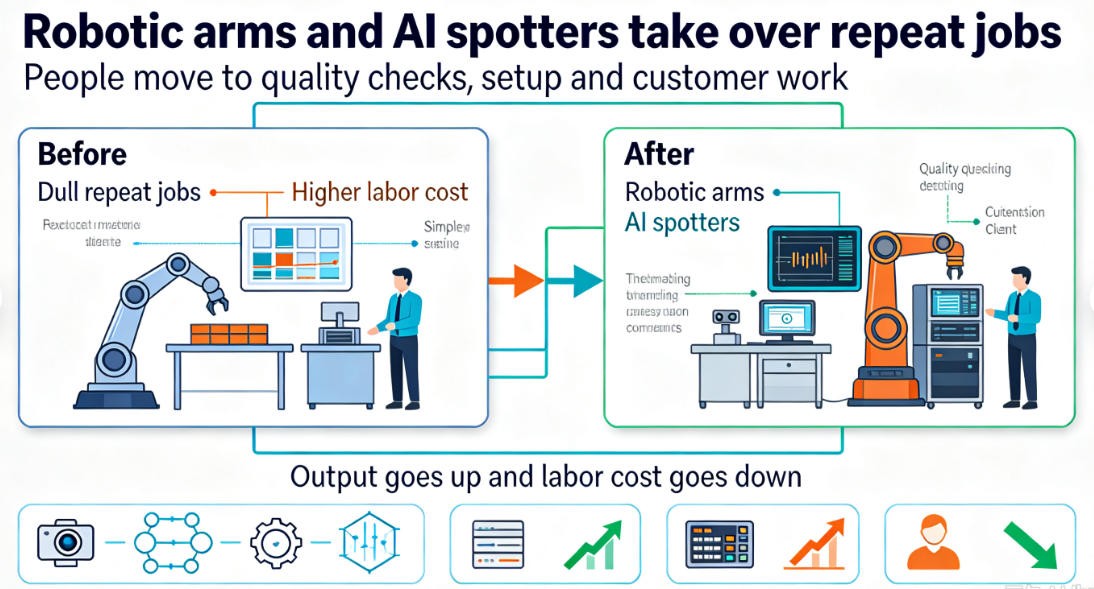
The BPIF Members' Day panel on the future of print spent a lot of time on artificial intelligence and robotics. Aaron Leishman from Bluetree Group and Anthony Rowell from Tradeprint both said the same thing. Use robots to grow your company, not to cut jobs. I agree. I have seen this work in hundreds of factories. ### The robotic spotter that changes everything Our flagship Automatic Robotic Spotter Machine is a hybrid model. It makes both rigid boxes and book covers on the same machine. A Yamaha robotic arm picks and places each board with perfect accuracy. Then an auto 4-side turning-in unit finishes the cover, or an auto box former shapes the rigid box. One machine replaces two or three old stations.
| Feature | Manual work | Robotic spotter | |
|---|---|---|---|
| Placement speed | Slow, depends on worker | 15-20 pcs/min, steady | |
| Accuracy | Drifts over the day | Always exact | |
| Labor | 2-3 people per line | 1 operator | |
| Defect rate | High | Near zero | ### A real story A client in Turkey used to make 800 gift boxes a day by hand. He often missed delivery dates. After he installed our robotic line, he made 2,400 boxes a day with fewer workers. He took on more orders and hired two sales people to fill the new capacity. That is growth, not shrinkage. ## Why must print and packaging businesses prepare for stricter regulations? New rules hit you when you least expect them. A safety audit, a chemical check, a data request. One slip can mean a fine or a lost customer. The BPIF says regulation is a top trend. |
The BPIF runs in-house legal and safety teams. They handled 385 legal cases and 2,636 health-and-safety interactions last year. Compliant machines and clean processes keep you safe.
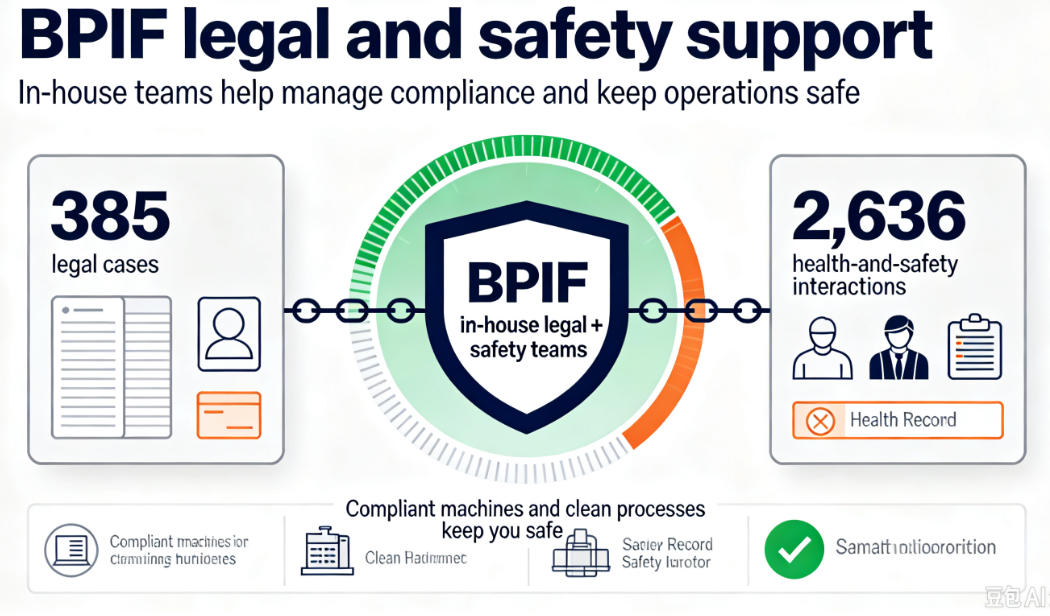
Charles Jarrold, the BPIF CEO, said the federation sold its training arm in 2026 so it could focus on core member services. The biggest core service is helping firms deal with a more complex regulatory world. The BPIF is rare. It has employed qualified solicitors in-house for more than 30 years. Last year those lawyers handled 385 activities, including 10 employment tribunals. ### What this means for your machines Regulation is not only about paper forms. It also touches the machines you run. Safety guards, CE marking, glue chemistry, and noise levels all have rules. If you buy a machine that does not meet current standards, you carry the risk.
| Compliance area | Common risk | Kylin's approach |
|---|---|---|
| Machine safety | Missing guards, exposed parts | CE-approved safety guards on all lines |
| Adhesives | Banned or restricted chemicals | Water-based and hot-melt options that meet rules |
| Waste | Discharge limits | Closed-loop glue systems to cut waste |
| Electrical | Wiring and earthing faults | Full electrical testing before shipment |
Our Ky-430A Auto rigid box machine ships with CE approval and safety guards built in. We also train your team on safe setup and operation. This lowers your audit risk from day one. ## How can sustainable packaging become your competitive advantage? Your customers ask about recycling. They ask about carbon. They ask about waste. If you cannot answer, they walk away. The BPIF lists sustainability as a must-have trend.
Sustainable packaging uses recyclable board, water-based glues, and low-waste production. It protects the planet and wins contracts from brands that demand green supply chains.
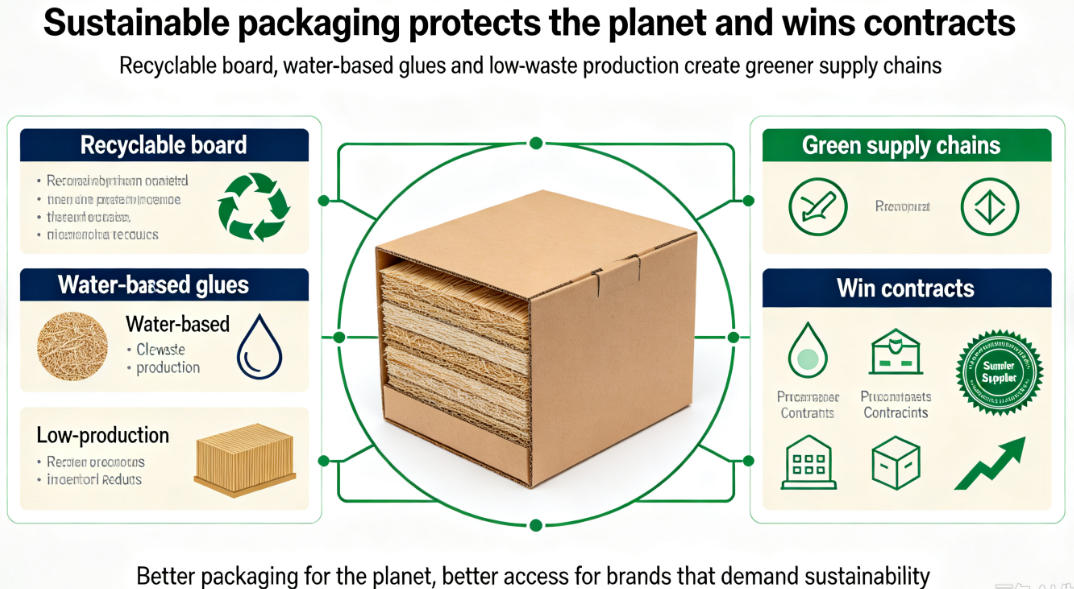
The BPIF economist put sustainability in the top four trends for a reason. Big brands no longer just want a cheap box. They want proof that the box is recyclable, that the glue is safe, and that the factory wastes as little as possible. In the UK, carton printers are some of the BPIF's strongest members because brands hold them to these standards. ### How our machines reduce waste At Kylin Machine, we design every line to cut material and glue waste. Smaller waste means lower cost and a greener story to tell your customers.
| Waste source | Old way | Kylin's solution |
|---|---|---|
| Board trim | Manual cutting leaves ragged edges | Precision die lines, clean edges |
| Glue over-spray | Hand gluing wastes 30%+ | Glue Spraying Assembly Machine with metered spray |
| Misplacement | Hand-placed boards shift | AI robotic spotter with exact placement |
| Defects | Rework or scrap | CCD visual inspection rejects only bad units |
Our CCD Visual Anti-Mixing Detection Equipment checks every box as it leaves the line. It catches mixed or flawed boxes before they ship. Fewer defects means less scrap and fewer returns. That is sustainability you can measure. ## Why does creativity still matter in an automated print world? Machines make boxes fast. But a boring box does not sell. The BPIF says creativity is one of the four forces that will keep print alive.
Creativity is what makes a rigid box feel like a gift, not a container. Unique shapes, finishes, and cover designs help your customers stand out and keep ordering from you.
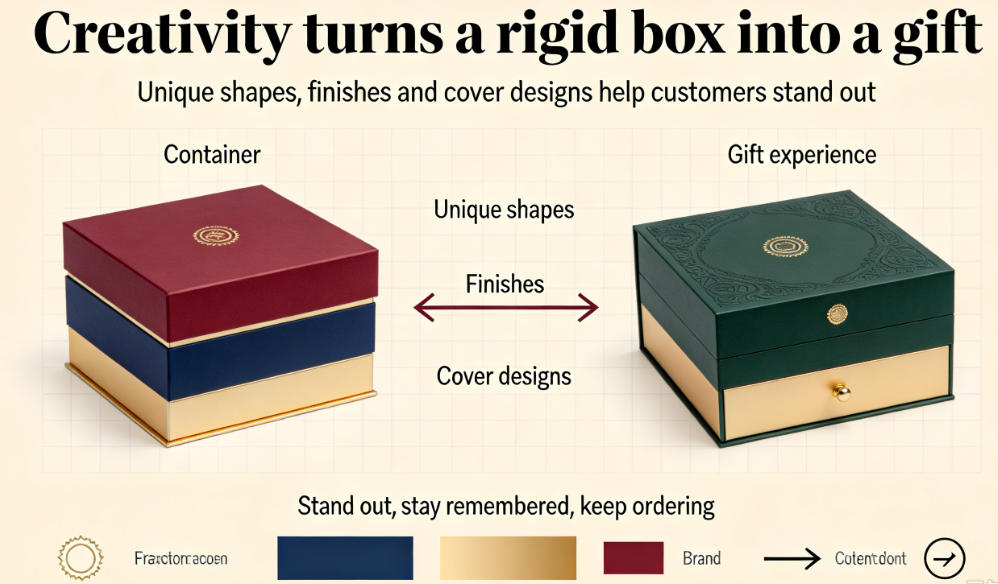
Charles Jarrold said print has one power digital cannot copy. It can "get in your face." A well-made box or a beautiful hardcover book sits in a customer's hands. It has weight, texture, and smell. That physical experience is why print survives. Creativity is how you unlock it. ### Creativity needs flexible machines A creative order often means a strange shape or a mixed run. You need a machine that can switch jobs fast and handle more than one product type. That is why we built hybrid lines.
| Creative demand | Machine that handles it |
|---|---|
| Rigid box AND book cover on one order | Automatic Robotic Spotter Hybrid |
| Irregular polygon boxes | Semi Auto Polygon Rigid Box Wrapper |
| All-in-one hard cover case making | Ky-380 Hard Cover Making Machine |
| Collapsible or connected boxes | Connected box machine |
When a brand asks for a special box, you do not have to say no. You can say yes and make it profitably. That is the creative edge the BPIF is talking about. ## Conclusion The BPIF's 125 years prove print adapts. Invest in automation, stay compliant, go green, and stay creative. The next chapter is yours to write. ## My Role About me:
My Name: Jacob
Link to my website: https://postpressmachines.com/
Brand Name: Kylin Machine
Country: China
Products: Post-press machines
Business Model: B2B, Wholesale only

发表回复