

How much does a book printing machine cost?
Struggling with book printing costs? Unsure where to invest for your business? Find clarity and explore smart solutions right here.
A book printing machine's cost varies hugely. It can range from a few thousand dollars for basic models to millions for large industrial lines. Post-press machines, like those we specialize in at Kylin Machine, are vital for the final quality and value.
So, you're thinking about the price tag for book printing equipment. It's a big question, and a valid one for any business in the graphic arts or packaging industry. But before we dive into specific numbers, it's important to understand that "book printing machine" isn't just one single device. It's often a series of machines working together. Knowing the different parts of the process helps you see where your money goes and what you truly need. This understanding is key to making a smart investment, especially if you're looking at producing high-quality hardcover books or rigid boxes, which is where my company, Kylin Machine, focuses. Let's break this down further.
How much does printing equipment cost?
Overwhelmed by the sheer number of equipment options? Worried about unforeseen expenses when budgeting? We can simplify printing equipment costs to help you make informed decisions.
Printing equipment costs cover a massive range. A small desktop printer for occasional use is inexpensive. However, industrial presses for books or packaging are major investments, often starting from tens of thousands and going up to millions of dollars.
When businesses like yours, in the graphic arts, paper converting, or bookbindery industries, ask me about printing equipment costs, I always start by clarifying what part of the "printing" process they mean. The term is broad. It covers everything from preparing digital files to the actual printing and then, crucially, the finishing touches. At Kylin Machine, we specialize in post-press machines – the equipment that takes printed sheets and turns them into finished products like hardcover books and luxury rigid boxes. The cost here can also vary significantly based on automation, capacity, and specific features like our Robotic Spotter technology.
Let's look at the general categories:
Pre-Press Equipment Costs
This includes software for design and layout, proofing systems, and CTP (Computer-to-Plate) machines if you're going the offset route. Costs can range from a few hundred dollars for software subscriptions to tens of thousands for CTP systems. This stage is foundational, ensuring your designs translate correctly to print.
Printing Press Costs
This is where the ink meets the paper.
- Digital Presses: Better for short runs, variable data, and quick turnarounds. Prices can range from $10,000 for entry-level production printers to over $500,000 for high-volume, high-quality systems.
- Offset Presses: Ideal for long runs where the per-unit cost becomes very low. These are substantial investments, from $50,000 for smaller, older models to several million dollars for new, large-format, multi-color presses.
Post-Press & Finishing Costs
This is our specialty at Kylin Machine and where a lot of the perceived value of a book or package is created.
As I mentioned to a client recently, "You can have the best printing in the world, but if the cover is poorly made or the box flimsy, the customer's perception of quality plummets." This is why investing in good post-press equipment is so important.
| Equipment Type | General Price Range (USD) | Key Function for Books/Boxes | Kylin Machine Focus |
|---|---|---|---|
| Guillotine Cutter | $5,000 - $100,000+ | Trimming paper and book blocks | Essential partner machine |
| Folding Machine | $10,000 - $150,000+ | Folding printed sheets | Feeds into our binding solutions |
| Book Block Making | $20,000 - $200,000+ | Assembling inner pages | We integrate with these systems |
| Case Maker | $30,000 - $500,000+ | Creating hardcovers | Yes, core Kylin product (e.g., KCM series) |
| Casing-In Machine | $25,000 - $300,000+ | Attaching cover to book block | Yes, core Kylin product (e.g., KCI series) |
| Rigid Box Machine | $40,000 - $600,000+ | Making luxury boxes | Yes, core Kylin product (e.g., KRB series) |
| Robotic Spotter Unit | $70,000 - $250,000+ | High-precision placement | Yes, Kylin high-tech for case & box making |
| Spot UV/Coating Machine | $50,000 - $300,000+ | Decorative finishes | Yes, via our Robotic Spotter capabilities |
The costs for Kylin machines, like our case makers or rigid box lines, reflect the technology, precision, and durability built into them, designed for B2B wholesale needs and demanding production environments.
How much does it cost to print a book?
Wondering about the actual per-book costs you might face? Trying to budget effectively for your next print run? Let's get a clearer picture of all the expenses involved in book printing.
Printing a single book can cost from $5 for a simple paperback to $500+ for a highly customized hardcover, depending on quantity, type, and finish. For bulk orders, per-unit costs drop significantly, but the initial machine investment for in-house production is key.
The cost to print a book isn't just about ink and paper; it's a sum of many parts. When my customers, who are often in the packaging and printing business themselves, consider producing books, they need to factor in various elements. If they decide to bring production in-house using equipment like ours from Kylin Machine, they gain more control over these costs and, importantly, over quality and turnaround times, especially for complex items like hardcover books.
Let's break down the typical cost components:
Factors Influencing Per-Book Cost
Many variables influence the final cost of each book. Understanding these can help you optimize your production. For example, I once worked with a publisher who switched from a very heavy art paper to a slightly lighter, but still high-quality, stock for their coffee table books. This small change, multiplied over thousands of copies, saved them a significant amount without compromising the reader's experience.
The Role of Quantity
This is a fundamental concept in printing. The more you print, the lower the per-unit cost. This is because the setup costs (preparing files, making plates for offset, setting up binding machines) are spread across a larger number of books. For businesses using Kylin machines for case making or rigid box production, achieving efficient run sizes is key to maximizing profitability.
Investing in In-House Capabilities vs. Outsourcing
Bringing production in-house with machines like ours means an upfront investment. However, for businesses with consistent volume, this can lead to lower per-unit costs, faster turnaround, greater quality control, and the ability to offer more customized products. This is especially true for value-added processes like hardcover binding or premium box making.
Here's a table summarizing these cost factors:
| Cost Component | Description | Impact on Per-Book Cost | Relevance to Kylin Machines |
|---|---|---|---|
| Design & Pre-Press | Layout, typesetting, proofing, plate making (for offset) | Medium (amortized) | Efficient pre-press is needed for any printing job that will use our post-press equipment. |
| Paper Type & Weight | Affects look, feel, durability, and shipping costs. | Medium to High | Quality inputs are essential for the quality outputs produced by Kylin finishing machines. |
| Ink (Color/B&W/Spot) | Full color is more expensive than black and white; special inks add more. | Medium | The printed sheets are what our machines process. |
| Printing Method | Digital (good for short runs) vs. Offset (good for long runs). | Medium | Determines the format and quality of sheets coming to our post-press lines. |
| Print Run Size | Larger runs significantly reduce per-unit cost due to amortized setup. | High | Kylin machines are designed for efficient production runs, justifying the investment. |
| Binding Type | E.g., saddle-stitch, perfect bound, spiral, hardcover (case bound). | Medium to Very High | Hardcover (case bound) is a Kylin specialty. Our case makers and casing-in lines are crucial here. |
| Cover Materials | Paper, cloth, leatherette, special finishes (lamination, foil, spot UV). | Medium to Very High | Our case makers handle various materials. Our Robotic Spotter can apply spot UV. |
| Labor & Overheads | Machine operation, maintenance, utilities, rent. | Medium | Efficient, automated Kylin machines can help reduce labor costs per unit over time. |
| Shipping & Distribution | Getting books to their final destination. | Low to Medium | Not directly related to machine cost but part of the overall book cost. |
By investing in Kylin post-press equipment, such as our advanced case makers with Robotic Spotter technology, our customers can directly control and optimize the costs associated with high-quality binding and finishing, which are significant factors in the overall cost and perceived value of a book.
What machine is used to print a book?
Confused by all the printing industry jargon when trying to figure this out? Need to know the exact types of machines involved in creating a book from start to finish? We can explain the essential equipment used in modern book production.
Books are made using several machines. First, printing presses (offset or digital) print the pages. Then, a series of post-press machines handle folding, collating, binding, and finishing. Kylin Machine specializes in these post-press stages, like case makers for hardcovers.
When people ask me, "What machine is used to print a book?", they're often surprised to learn it's not just one machine, but a whole line-up, especially for a durable, attractive hardcover book. As someone who has been in the post-press machinery business with Kylin Machine since 2003, I've seen how each step contributes to the final product. While we don't make the printing presses themselves, our machines are essential for what comes after the ink hits the paper.
Let's walk through the typical journey of a hardcover book and the machines involved:
From File to Printed Sheets: The Printing Press
The process starts with a digital file. This file is sent to:
- Digital Printing Press: For shorter runs or print-on-demand, these machines print directly from the digital file.
- Offset Printing Press: For longer runs, plates are made (often via a CTP - Computer-to-Plate machine), and these are used on the offset press to print sheets of paper. These presses can be very large and complex.
Assembling the Book Block: The Inner Pages
Once the sheets are printed (often with multiple pages on one large sheet), they go to:
- Folding Machine: Folds the large printed sheets into "signatures" (groups of pages, e.g., 16 pages).
- Collating Machine/Gathering Line: Gathers the different signatures in the correct order to form the complete set of book pages, known as the "book block."
- Sewing Machine or Adhesive Binder (Perfect Binder):
- For high-quality books, signatures are often sewn together.
- Alternatively, the spine edge is ground off, and pages are glued together (perfect binding).
Creating the Cover: The Role of Case Makers
This is where Kylin Machine's expertise really shines for hardcover books.
- Board Cutter: Cuts thick greyboard to the right size for the front cover, back cover, and spine.
- Case Maker: This is a key machine. It takes the cut boards and the printed/finished cover material (paper, cloth, etc.) and glues them together, wrapping the material around the boards to create the hard book cover (the "case"). Our Kylin KCM series case makers, especially those equipped with our Robotic Spotter, offer incredible precision in board placement, which is crucial for a quality look and feel. I often tell my clients, "The precision of the case determines the first impression of the book."
Bringing It All Together: Casing-In and Finishing
- Casing-In Machine: This machine takes the finished book block and the finished hard case and glues them together. It carefully applies adhesive and presses the book block into the case. Our Kylin KCI series are designed for this critical step.
- Book Press / Joint Forming Machine: Presses the cased-in book to ensure good adhesion and often forms the "hinge" or joint along the spine.
- Trimmer (Three-Knife Trimmer): Trims the three open edges of the book (top, bottom, fore-edge) to give it a clean, uniform finish.
- Optional Finishing: Machines for dust jacket application, shrink-wrapping, or applying special effects like spot UV (where our Robotic Spotter can also play a role in precision application on covers before case making).
| Production Stage | Key Machine Type(s) | Primary Function | Kylin Machine's Involvement |
|---|---|---|---|
| 1. Content Printing | Digital Press, Offset Press | Prints text/images onto paper sheets | We don't make these, but our machines are vital for what comes next. |
| 2. Sheet Processing | Folder, Collator | Folds sheets into signatures, gathers them to form book blocks | Our solutions follow this stage. |
| 3. Book Block Binding | Sewing Machine, Perfect Binder | Binds the loose pages of the book block together | Creates the "insides" that go into the covers made by our machines. |
| 4. Cover Creation | Board Cutter, Case Maker (e.g., Kylin KCM series) | Cuts boards, creates the hard book cover ("case") | Core Kylin products. Our Robotic Spotter enhances precision. |
| 5. Book Assembly | Casing-In Machine (e.g., Kylin KCI series) | Attaches the book block to the hard case | Core Kylin products for final assembly. |
| 6. Final Trim | Three-Knife Trimmer | Trims book edges for a clean finish | Essential for a professional look. |
| 7. Special Finishes | Spot UV Coater, Laminator, Foil Stamper | Adds decorative/protective elements to covers | Our Robotic Spotter can be used for precise Spot UV application. |
So, while the "printing" press does the literal printing, a significant number of specialized post-press machines, like those manufactured by Kylin Machine, are essential to turn those printed sheets into a finished book, especially a high-quality hardcover.
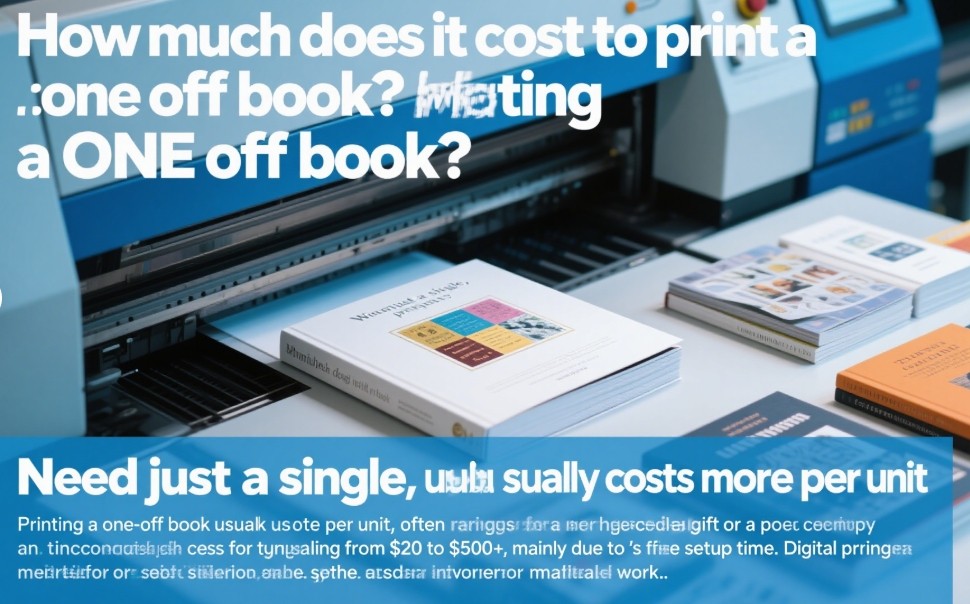
How much does it cost to print a one off book?
Need just a single, unique book printed, perhaps for a special gift or a prototype? Worried about potentially high setup costs for just one copy? Let's discover the options and typical costs for printing just one book effectively.
Printing a one-off book usually costs more per unit, often ranging from $20 to $500+, mainly due to setup time. Digital printing is the most suitable method. For unique, high-quality covers, specialized finishing might be outsourced or involve manual work.
The question of printing a single, "one-off" book comes up occasionally, and it's quite different from the bulk production that my customers at Kylin Machine typically handle. Our machines, like robust case makers and rigid box lines, are built for wholesale B2B volumes where efficiency and automation drive down per-unit costs. However, understanding the dynamics of one-off printing can be helpful. I once had an aspiring author ask if they could use our factory's industrial case maker to produce just one copy of their manuscript as a hardcover. I had to explain that while technically possible, it would be like renting an entire commercial bakery to bake a single cupcake – highly impractical and very expensive for just one!
Why One-Offs Are Costly
The main reason single copies are expensive is setup.
- Printing Setup: Even with digital printing, there's file preparation, calibration, and loading paper for one item. Offset printing is entirely out of the question due to plate costs.
- Binding & Finishing Setup: For a hardcover, setting up a case maker, casing-in machine, and trimmer for just one book takes significant time. This labor and machine time is the same whether you're making one book or a hundred, so for a single unit, that cost isn't amortized.
Digital Printing & Print-on-Demand (POD) Services: The Go-To for Singles
For one-off books, digital printing is the only economically viable printing method. Many online Print-on-Demand (POD) services specialize in this. They have streamlined workflows for individual orders. You upload your files, choose your specifications, and they print and ship it. This is usually the best route for individuals.
Achieving Quality for a Single Book
If you need a very high-quality, bespoke one-off hardcover that mimics traditionally produced books, the cost will increase significantly.
- Materials: Special cover materials or high-end paper will add to the cost.
- Binding: A custom hand-binding service might be an option for true artisan quality, but this is a craft, not industrial production. Some smaller print shops with flexible equipment might offer single hardcover binding, but expect to pay a premium.
- Finishing: Things like debossing, foil stamping, or spot UV on a single cover are very tricky and expensive to do as a one-off unless done by hand or by a specialist with very adaptable (often manual or semi-manual) equipment.
| Aspect of One-Off Printing | Consideration | Relevance to Kylin Machines' World |
|---|---|---|
| Printing Method | Almost exclusively digital printing. | Kylin machines are post-press; they process output from any print method, but are designed for volume. |
| Binding | Simple perfect binding, spiral, or a basic machine-made hardcover (if available). | A business using a Kylin case maker could produce a one-off hardcover, but the setup time makes it costly for a single unit. |
| Cover Finishing | Often limited to digital print options or simple lamination. Manual work for more. | Our Robotic Spotter could technically do a single spot UV job, but it’s designed for efficient production runs. |
| Cost | High per unit due to setup, labor, and lack of economies of scale. | Businesses using Kylin machines for production would price one-offs very high to cover their operational and machine time. |
| Achieving "Kylin Machine Quality" Feel | You'd need to find a print shop or bindery that has invested in high-quality finishing equipment (potentially including Kylin or similar machines) and is willing to do a custom job. | This is where the value of our B2B customers comes in – they have the capability to produce such quality, even if one-offs aren't their main business. |
So, while Kylin Machine focuses on providing the machinery for businesses to produce many books efficiently, the principles of quality construction that our machines enable are what people often seek, even in a single copy. For that, they'd typically approach a specialized print shop or a business that has invested in professional-grade equipment like ours.
Conclusion
Understanding book printing machine costs involves many factors, from pre-press to finishing. Kylin Machine offers robust, specialized post-press solutions for high-quality book and packaging production worldwide.

发表回复