

Why do pages become loose in a new thick paperback book?
Have you ever bought a brand new, thick paperback only to have pages fall out on the first read? It is frustrating when your investment falls apart before you finish it.
Pages become loose in new thick paperback books primarily because of poor adhesive application or stiff "perfect binding." When the book is too thick, the glue cannot handle the physical stress of opening the spine wide, causing the brittle adhesive bond to crack and release the pages.
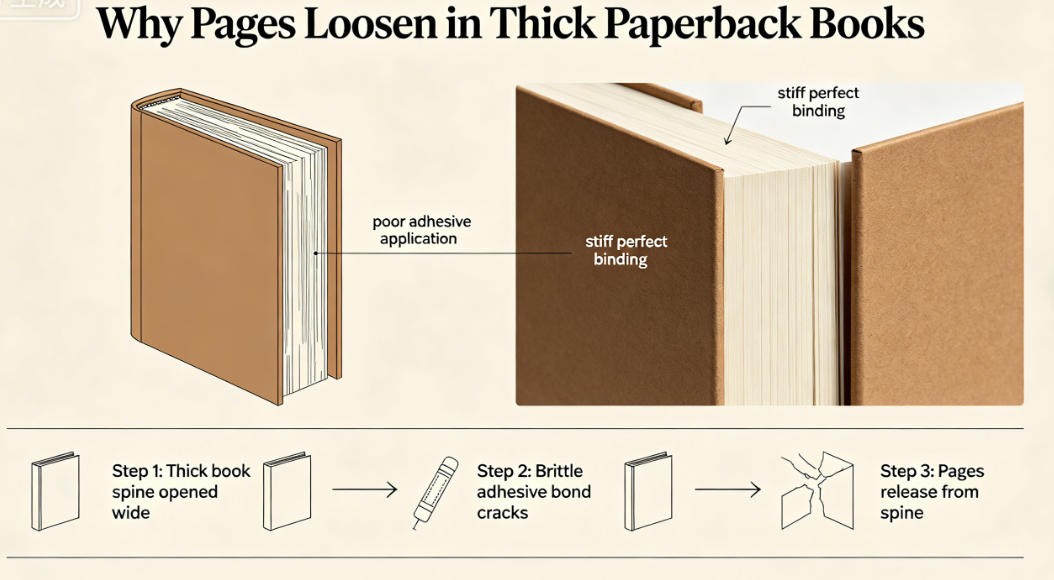
I have spent over twenty years in the post-press industry at Kylin Machine. I see this problem often when manufacturers try to save costs on glue or use outdated binding methods for high-volume orders. If you want to stop your books from falling apart or need better equipment to produce them, you should keep reading to find the right solutions.
How to fix loose pages in a paperback book?
It is heartbreaking to see your favorite story literally falling into pieces in your hands. You might think the book is ruined forever, but you can actually save it with some simple tools.
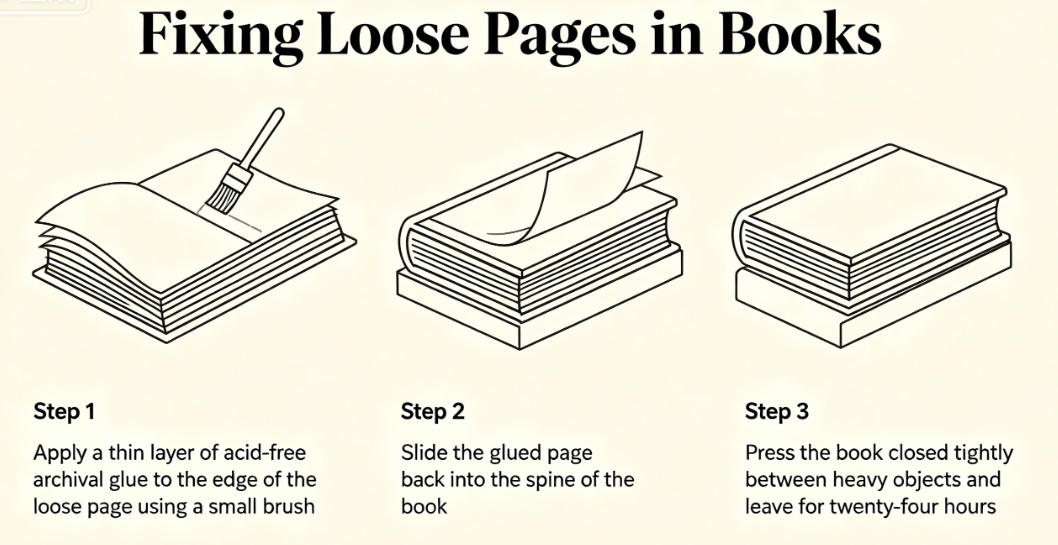
You can fix loose pages by using acid-free archival glue and a small brush. Apply a thin layer of glue to the edge of the loose page, slide it back into the spine, and press the book closed tightly between heavy objects for twenty-four hours.
Understanding Professional Binding Solutions
In my factory in Dongguan, we focus on the machinery that prevents these issues from happening in the first place. Most paperbacks use "perfect binding," where the pages are glued directly to the cover. For thick books, this is risky. If the glue is not flexible, it snaps. Professional binderies often switch to "section sewn" binding for thicker volumes, where groups of pages are sewn together before being glued. This creates a much stronger structure.
Tools and Methods for Repair
If you are a library or a wholesale distributor dealing with damaged stock, you need a systematic approach to repairs. Using the right materials is the most important part of the process.
| Repair Tool | Purpose | Why it matters |
|---|---|---|
| Acid-free Glue | Bonding pages | Prevents yellowing and paper decay |
| Bone Folder | Creasing paper | Ensures the page sits flush against the spine |
| Press/Clamps | Pressure | Creates a uniform bond while the glue sets |
I always tell my clients that a Glue Spraying Assembly Machine is the industrial answer to these problems. In a B2B environment, you cannot fix books one by one with a brush. You need automated precision to ensure every page receives the exact amount of adhesive. This consistency is what separates a cheap book from a high-quality product that lasts for years.
What is the 5 finger rule for books?
Are you struggling to find the right books for your customers or your children? Choosing a book that is too hard can lead to frustration and a loss of interest in reading entirely.
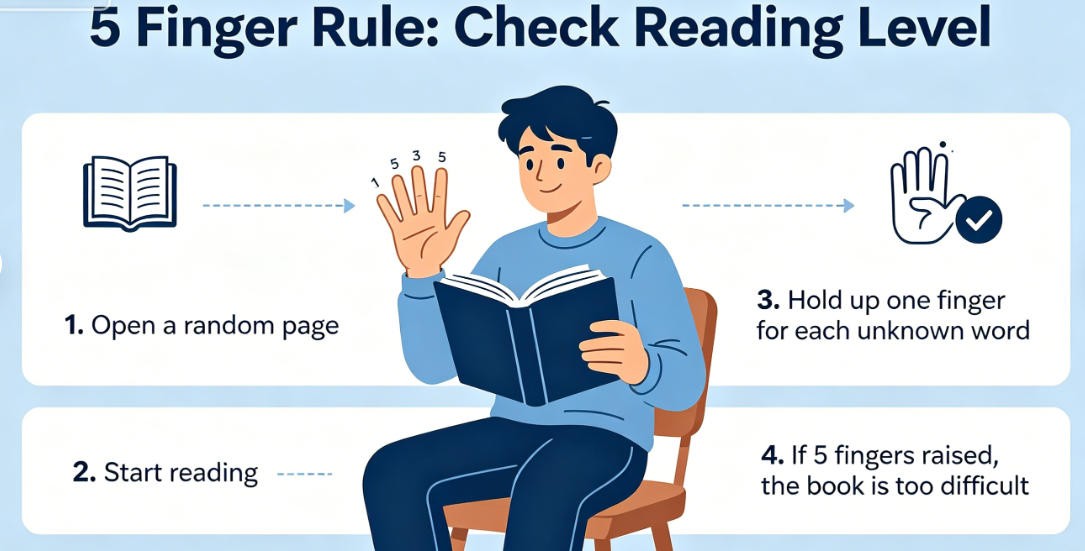
The 5 finger rule is a quick way to check if a book's reading level is appropriate. A reader opens a random page and starts reading; they hold up one finger for every word they do not know. If they reach five fingers, the book is too difficult.
Why Reading Levels Matter to Printers
As a machine manufacturer, I look at the 5 finger rule from a production perspective. When publishers use this rule to categorize books, it dictates the physical format of the book. Younger readers need books that stay open easily, often requiring thinner paper and more flexible spines. If a child is struggling with the words, they should not also have to struggle with a stiff binding that keeps snapping shut.
Decoding the Finger Counts
The rule is simple but very effective for quickly sorting through a large inventory of titles. Here is how we break down the results for different types of readers:
| Number of Fingers | Difficulty Level | Recommendation |
|---|---|---|
| 0-1 Fingers | Very Easy | Good for building confidence |
| 2-3 Fingers | Just Right | Best for learning and engagement |
| 4 Fingers | Challenging | May need help from a teacher or parent |
| 5+ Fingers | Too Hard | Save it for later when skills improve |
When we design our Ky-380 Hard Cover Making Machine, we think about the end user. A "Just Right" book should feel good in the hands. It needs a smooth cover and a solid weight. If the physical quality matches the appropriate reading level, the reader is much more likely to finish the book and come back for more from the same publisher.
What is the 50 page rule?
Do you feel guilty when you stop reading a book before the end? Many of us force ourselves to finish every book we start, even if we are bored to tears by the middle.
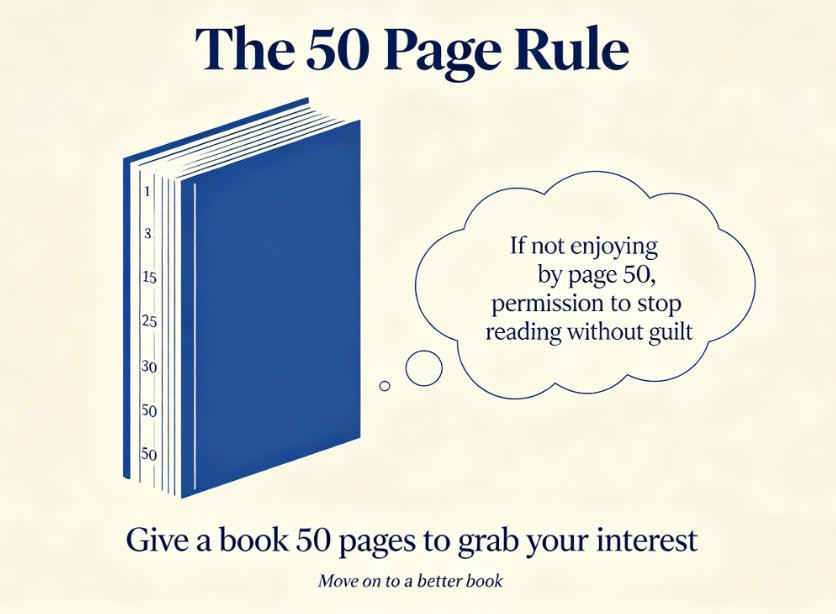
The 50 page rule states that you should give a book exactly fifty pages to grab your interest. If you are not enjoying it by page fifty, you have permission to stop reading and move on to a better book without any guilt.
The Psychology of the First 50 Pages
From my experience in the packaging business, the first fifty pages are not just about the story. They are about the "haptic" experience—how the book feels. If the pages are hard to turn or the margins are too small, the reader will get tired faster. I have seen many great stories fail because the physical production was poor. A book that feels "cheap" or has loose pages by page thirty will likely be put down, regardless of the plot.
Factors that Influence the "Keep Reading" Decision
There are several physical and content-related factors that play into whether a reader makes it past that fifty-page mark. We try to help our B2B clients optimize these through better machinery.
| Factor | Impact on Reader | Kylin Machine Solution |
|---|---|---|
| Binding Tension | Ease of holding | Hybrid Robotic Spotters for perfect alignment |
| Paper Quality | Tactile satisfaction | Precise folding and pressing machines |
| Page Layout | Visual comfort | High-tech cutters for clean, even edges |
I believe that life is too short for bad books and bad binding. If a book is falling apart in your hands, it breaks the magic of the story. At Kylin Machinery, we provide the technology to ensure that every page stays exactly where it belongs. This allows the reader to focus entirely on the words. If you are a wholesaler looking to improve your product quality, you can see our full machine list here to find better binding solutions.
Why do some paperback books have uneven pages?
Have you ever noticed that some books have rough, jagged edges while others are perfectly smooth? You might think it is a mistake or a sign of a cheaply made book, but it is often intentional.
Paperback books have uneven pages either because of a design choice called "deckle edges" or because of a manufacturing error during the trimming process. Deckle edges are meant to look like old, hand-made paper to give the book a classic, premium feel.
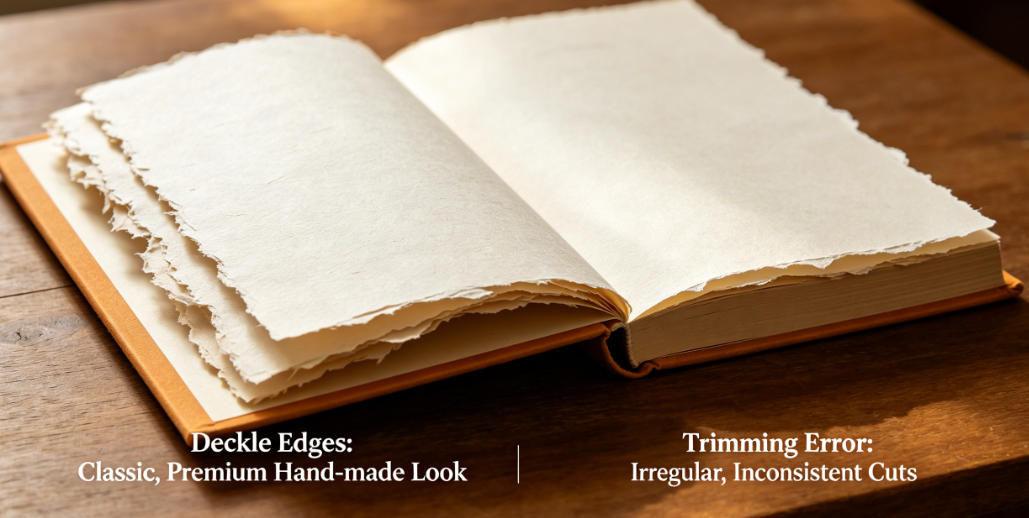
The Difference Between Style and Errors
In the world of B2B printing, we have to distinguish between aesthetic choices and mechanical failures. A deckle edge is created by not trimming the outer edges of the paper. However, if the pages are uneven in a way that looks messy or prevents the book from closing properly, that is a problem with the machinery. Most modern high-speed production lines use three-knife trimmers to ensure every side of the book is perfectly straight.
Why Precision is Key in Manufacturing
When I work with my R&D team on our Auto Rigid Boxes Machine, we focus on millimeter-level accuracy. The same logic applies to book production. If the folding machine is off by just a tiny bit, the entire "signature" (the group of pages) will be crooked.
| Type of Edge | Appearance | Reason for Choice |
|---|---|---|
| Smooth/Trimmed | Perfectly flat | Standard for modern paperbacks and textbooks |
| Deckle Edge | Rough and feathered | Used for literary fiction and luxury editions |
| Misaligned | Jagged and accidental | Caused by dull blades or poor machine calibration |
I personally prefer a clean, smooth edge because it shows the precision of the machines. When a book has perfectly even pages, it tells me the manufacturer cares about quality control. If you are seeing too many misaligned pages in your production line, it might be time to upgrade your equipment. We offer advanced solutions for hard book covers and rigid box packing that ensure every product comes out looking professional and consistent.
Conclusion
Loose pages and uneven edges often come down to the quality of the binding machinery. Choosing the right equipment ensures your books stay together and look great for every reader.

发表回复