

What are corrugated boxes made of?
Are you wondering what gives shipping boxes their strength? Not knowing can mean damaged goods. I will show you the simple yet strong materials in corrugated boxes.
Corrugated boxes are mainly made from paper. This paper includes linerboard, which is the flat outer layers, and a fluted, wavy paper called medium, which sits between the linerboards. This structure makes them strong.
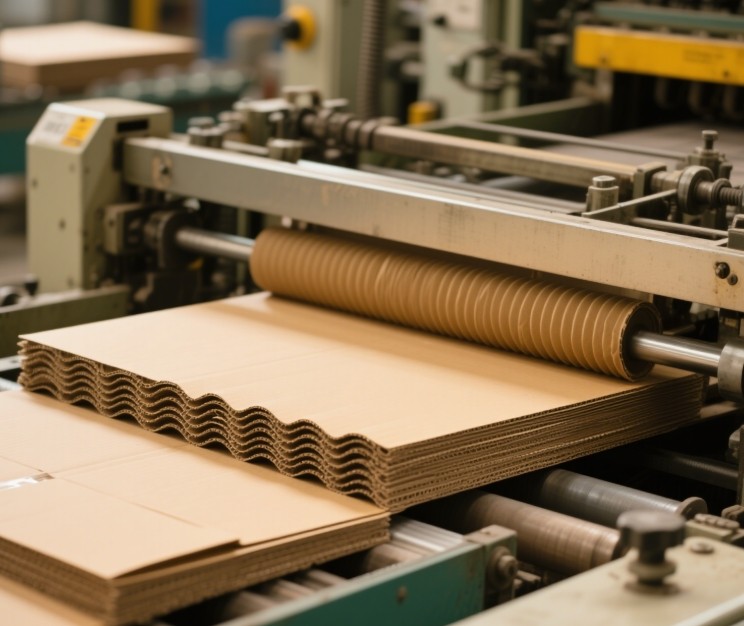
You now see the basic makeup of these essential boxes. But there is more to learn about how these materials come together. This knowledge is key if you are in the packaging business. Let us look deeper into the specific materials and their roles. Understanding this helps in choosing the right box and even the right machinery for making specialized packaging.
What is the raw material for a corrugated box?
Do you know where the journey of a box begins? Using the wrong base material can lead to weak packaging. I want to help you understand the true source of a corrugated box's toughness.
The main raw material for corrugated boxes is paper. This paper comes from cellulose fibers. These fibers are mostly sourced from virgin wood pulp, like pine or fir trees, or from recycled paper and cardboard.
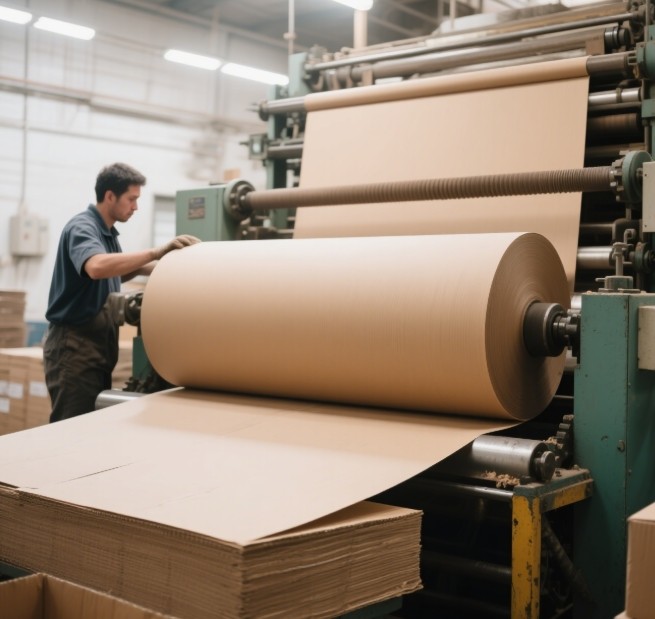
The journey from a tree or old paper to a sturdy box is quite interesting. Softwood trees like pine and fir are often used for virgin pulp. They have long fibers, which give the paper its strength. Hardwood trees have shorter fibers and can be used too, often for a smoother surface. Recycled paper is also a huge source. Old newspapers, cardboard, and office paper are collected, cleaned, and pulped again. This process is good for our planet.
These raw materials are turned into large rolls of paper. There are two main types:
- Linerboard: This is the flat paper that forms the outside and inside surfaces of the corrugated sheet. Kraft liner, made from virgin pulp, is very strong. Test liner, often with more recycled content, is another option.
- Fluting Medium: This is the wavy paper that goes in the middle. It is usually made with a higher percentage of recycled fibers.
The quality of these paper rolls is so important. At Kylin Machine, we don't make the paper itself. But our machines, like our advanced Robotic Spotters for rigid boxes, are designed to work with precision. They handle the sheets made from these papers perfectly. This ensures that when you are making high-end rigid boxes, which often use a strong core material, the final product is flawless. It all starts with good raw materials, handled well by sophisticated machinery.
What type of material is corrugated?
Is "corrugated" just another word for thick paper? Thinking this way means you miss its clever design. Let me explain the unique, layered structure that defines corrugated material.
Corrugated material is a paper-based composite. It is made of one or more layers of fluted paper, known as the medium, glued between one or more flat sheets of paper, known as linerboard.
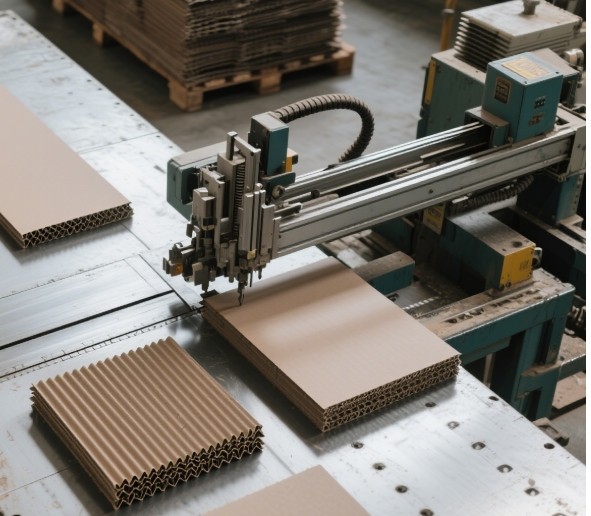
Corrugated material is much more than just thick paper. It is an engineered structure. Imagine a sandwich. The linerboard is like the bread – flat and strong. The fluting, or medium, is the filling – a wavy layer of paper. This wave creates small arches. These arches are very strong and can support a lot of weight. The spaces created by these waves also trap air, which gives the material excellent cushioning properties. This is why corrugated boxes protect goods so well during shipping.
There are different types of corrugated board, based on how many layers they have:
- Single Wall: This is the most common type. It has one layer of fluting glued between two linerboards.
- Double Wall: This has two layers of fluting and three linerboards. It is much stronger and used for heavier items.
- Triple Wall: This is extremely strong, with three layers of fluting and four linerboards. It is used for industrial parts or very heavy goods.
The flutes themselves also come in different sizes, known as flute profiles (like A, B, C, E, F). Larger flutes (like A and C) offer better cushioning. Smaller flutes (like E and F) provide a smoother surface for printing and are good for retail packaging. Sometimes, these are combined. In my work at Kylin Machine, we often see complex packaging designs. For example, high-quality rigid boxes sometimes incorporate elements of corrugated board for added strength before being wrapped with decorative paper. Our machines are built to handle such diverse materials precisely, ensuring a premium finish.
What is the difference between cardboard and corrugated boxes?
Do you say "cardboard box" for everything? This common habit can lead to mix-ups in the packaging world. I will help you clearly tell apart these two widely used packaging terms.
"Cardboard" is a general term for any heavy-duty paper stock. Corrugated boxes are a specific type of cardboard, engineered with an arched paper layer (fluting) between flat linerboards for superior strength and cushioning.
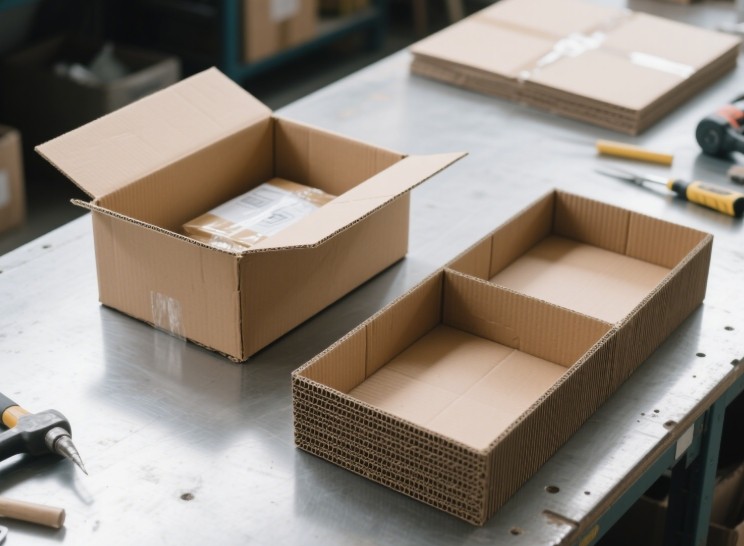
Many people use the words "cardboard" and "corrugated" as if they mean the same thing. But in the packaging industry, they are different. "Cardboard" is a very broad term. It can refer to things like a cereal box, a shoebox, or even the backing of a notepad. These are usually made from paperboard, which is a single, thick layer of paper pulp pressed into a sheet. It is denser than regular paper but does not have the layered structure of corrugated material.
Corrugated material, as we have discussed, is specifically engineered for strength. It has at least three layers:
- An inside liner.
- An outside liner.
- A layer of fluting (the wavy paper) in between.
This construction makes corrugated boxes much stronger than simple paperboard boxes, especially for stacking and resisting impact. Think about it: a cereal box (paperboard) crushes easily. A shipping box (corrugated) can take a lot more pressure.
| Here's a simple way to remember: | Feature | Cardboard (often Paperboard) | Corrugated Material |
|---|---|---|---|
| Structure | Single, thick paper layer | Multiple layers (liner, flute) | |
| Strength | Moderate | High, good for stacking | |
| Common Uses | Cereal boxes, shoe boxes | Shipping boxes, moving boxes |
At Kylin Machine, our focus is on machinery for post-press operations, particularly for creating high-quality rigid boxes, collapsible boxes, and book covers. While simple "cardboard" might be used for some basic folding cartons, the robust, often premium packaging our clients produce often involves more complex structures. For instance, a luxury rigid box might use thick paperboard for its walls, or even incorporate corrugated sections for added support before being wrapped. Our Robotic Spotters and Hybrid machines are designed for the precision needed to assemble these more sophisticated packaging types, going far beyond what you might think of as a basic "cardboard" box.
What are the components of a corrugated box?
A box looks quite simple from the outside, doesn't it? But its parts are engineered to work together for optimal performance. Let me break down the essential components that make up a corrugated box.
The main components of a corrugated box are the linerboard (the flat paper facings on the outside and inside) and the medium (the fluted, wavy paper layer in the middle). These are glued together to form corrugated board.
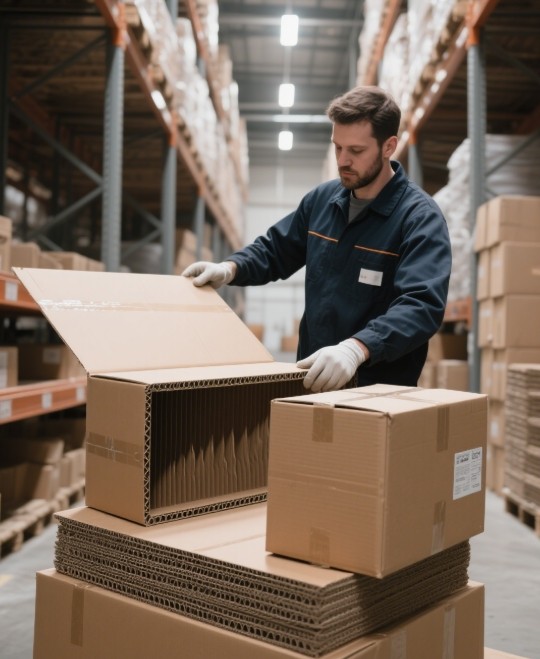
Let's look at these components more closely:
- Linerboard: This is the flat paper that you see on the outside and inside of a corrugated sheet.
- Outer Liner: This is often made of Kraft paper, which is strong and durable. It can also be treated for water resistance or have a white top for better printing.
- Inner Liner: This provides additional strength and a smooth surface inside the box. It can be similar to the outer liner or a different grade of paper.
- Medium (Fluting): This is the heart of the corrugated board. It's the wavy layer of paper pressed into arches, called flutes.
- The flutes create air pockets that provide cushioning and insulation.
- They also act like columns, giving the board its rigidity and stacking strength. Different flute sizes (A, B, C, E, F) offer different combinations of cushioning and printability.
- Adhesive: A strong adhesive, usually starch-based, is used to glue the tips of the flutes to the linerboards. The quality of this bond is critical to the overall strength of the corrugated board.
These components are first combined on a large machine called a corrugator to produce flat sheets of corrugated board. These sheets are then cut, scored (creased for folding), and sometimes printed. Finally, they are folded and glued or stitched to form a box. The precision in each of these steps is vital. In my experience at Kylin Machine, when we develop machines for creating rigid boxes or book covers, we understand that the base materials—even if they are not always standard corrugated—must be handled with extreme care. Our machines, like the Hybrid series for rigid box making, are built to ensure that every component, whether it's a grey board for a rigid box or a pre-cut corrugated insert, is assembled perfectly. This attention to detail in handling components leads to the high-quality finished products our customers expect.
Conclusion
So, corrugated boxes are not just simple paper containers. They are cleverly engineered from specific paper layers. This design gives them the strength needed for so many applications. At Kylin Machine, we provide the technology to transform such materials into premium packaging.

发表回复