
Trio Team Up to Develop New Paper-Based Packaging: Is This the Future of Your Industry
Big brands are dumping plastic. Your customers are asking for paper. If you do not move now, you will lose orders to faster competitors.
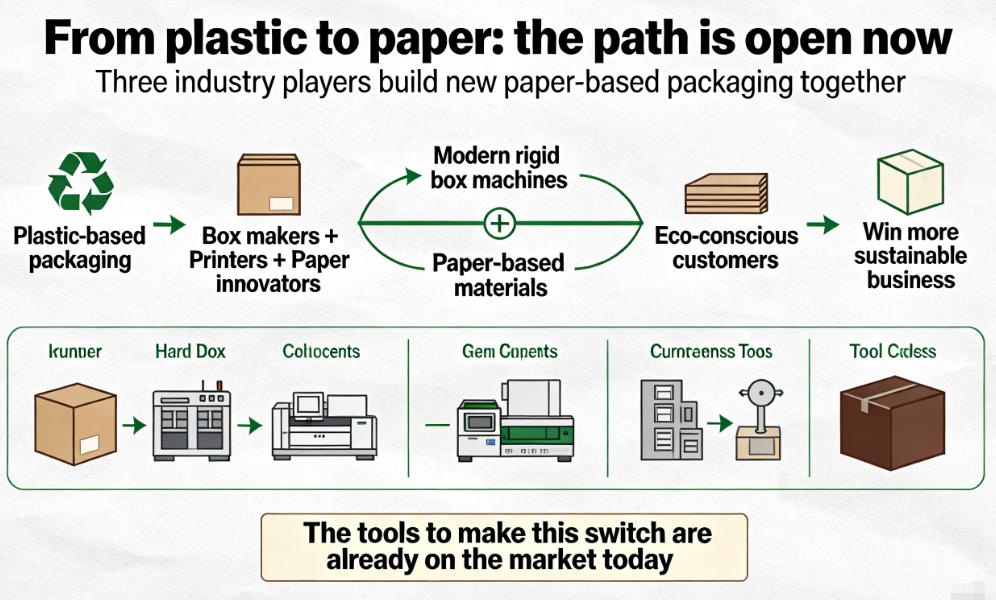
Three industry players just joined hands to build new paper-based packaging. This move gives box makers and printers a clear path: switch from plastic to paper, use modern rigid box machines, and win more eco-conscious customers. The tools to make this switch are already on the market today.
Paper-based packaging is not a far-off idea. It is happening right now, and the trio's move sends a loud signal to every factory that still relies on plastic. If you run a packaging or printing business, you need to know what this means and how you can take part. The machines you need are ready. Let me walk you through the details. ## Why are three companies joining forces on paper-based packaging? Plastic waste fills our oceans. Governments ban single-use plastic. Customers pick paper over plastic every single day.
The trio teams up because no single company can solve the paper packaging puzzle alone. One brings material science. One brings machine building. One brings market reach. Together, they turn paper into strong, low-cost packaging that can replace plastic in many uses.
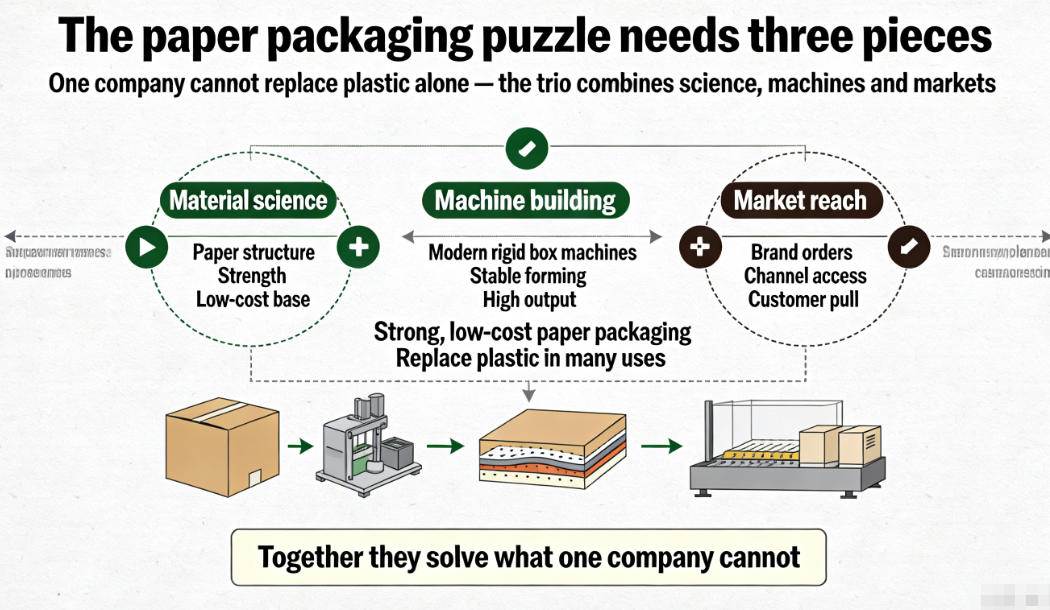 ### Three roles, one goal A three-way split of work makes the project move fast. Each party does what it does best.
| Party | Main job | Why it matters |
|---|---|---|
| Material maker | Develops stronger paper board | Boxes hold heavy goods without breaking |
| Machine builder | Builds forming and gluing machines | Factories make paper boxes at high speed |
| Brand owner | Tests and buys the new packaging | Real orders prove the idea works |
I have seen this pattern before in our own factory in Dongguan. When a material supplier, a machine maker, and a box buyer sit at the same table, problems get solved in weeks, not years. The trio is using the same logic. They want to remove the risk that stops most factories from trying paper-based packaging. If you want to follow this path, look at a proven Fully Auto rigid box machine that can handle a wide range of paper board grades. ## What makes paper-based packaging better than plastic? Plastic costs less per unit. But plastic bans raise your risk. Customers pay more for paper. The math is changing fast.
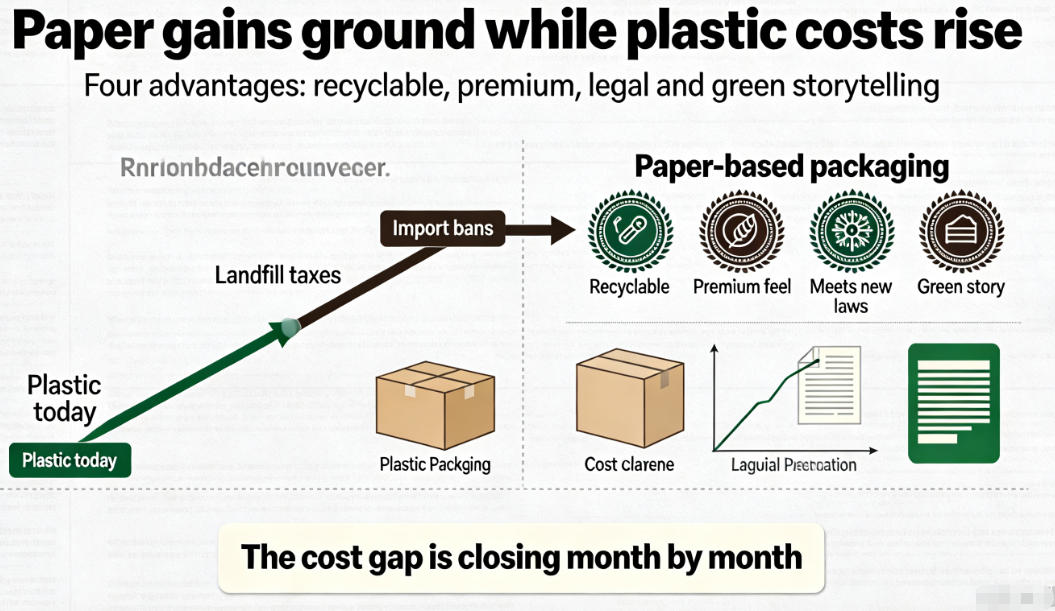
Paper-based packaging wins on four fronts: it is recyclable, it feels premium, it meets new laws, and it lets brands tell a green story. Plastic is cheap today, but landfill taxes and import bans are closing that gap month by month.
 ### A side-by-side look at paper vs plastic I made this table so you can see the gap clearly. Most of my customers care about the last two rows the most.
| Factor | Plastic packaging | Paper-based packaging |
|---|---|---|
| Raw material cost | Lower | Slightly higher |
| Recyclability | Low, most ends as waste | High, easy to recycle |
| Premium feel | Cheap look | Luxury look for gifts |
| Legal risk | Banned in many countries | Supported by green laws |
| Customer appeal | Falling | Rising fast |
For luxury goods like perfume, jewelry, and electronics, paper rigid boxes already beat plastic by a wide margin. A rigid box made on an Auto Rigid Boxes Machine 2025 version gives a brand the high-end feel that plastic can never match. My customers in the Middle East and Europe tell me the same thing: buyers will pay 20 to 30 percent more for a paper box that looks and feels premium. ## How can rigid box machines turn paper into premium packaging? A handmade paper box is slow and uneven. Customers reject weak glue and bad edges. You need a machine that keeps quality high and cost low.
A modern rigid box machine cuts board, applies glue, wraps edges, and presses the box in one smooth line. It turns plain paper board into a luxury box at a speed no human hand can match. This is exactly the kind of tool the trio's new paper packaging will need.
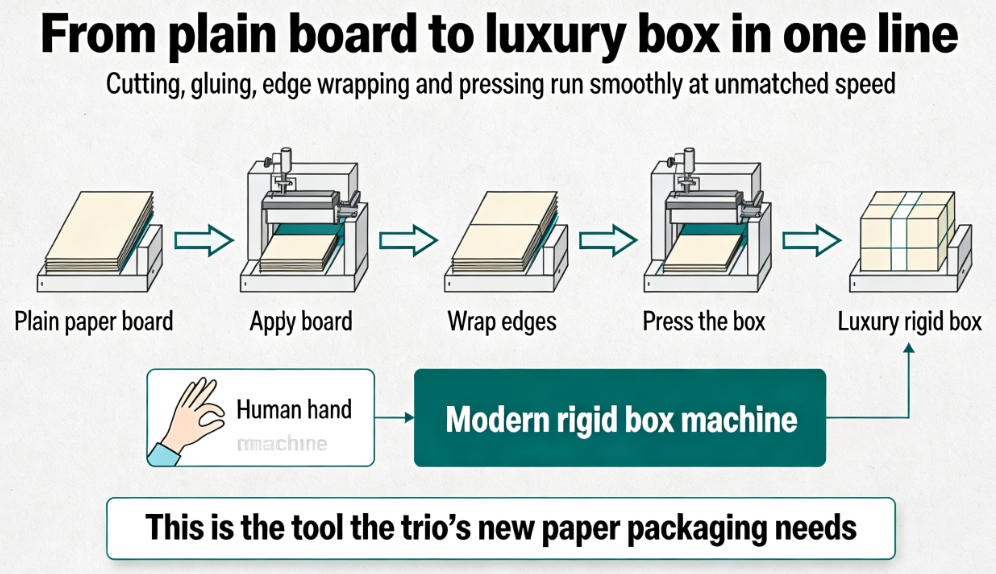 ### The four steps a rigid box machine handles A full line does not just do one job. It links four steps so your worker only feeds paper and takes finished boxes.
| Step | What the machine does | Manual alternative |
|---|---|---|
| 1. Board cutting | Cuts grey board to exact size | Worker cuts by hand, slow and off-size |
| 2. Gluing | Applies even glue layer | Worker brushes glue, too much or too little |
| 3. Wrapping | Wraps printed paper around board | Hand folding leaves wrinkles |
| 4. Pressing | Presses box flat and strong | Hand press gives uneven result |
For factories that want to start small, a Semi Auto Polygon Rigid Box Wrapper is a smart first step. It handles the hardest part, edge wrapping, while you keep some manual steps. When volume grows, you can step up to a fully automatic line. I always tell new buyers: start where your orders are, then scale up. Do not buy the biggest machine on day one. ## Why are collapsible paper boxes the smart choice for brands? A fixed rigid box takes space. Shipping air costs money. Storage fills up fast. Collapsible boxes solve all three pains at once.
Collapsible paper boxes fold flat for shipping and pop into shape at the store. They cut transport cost by up to 60 percent. They reduce warehouse space. They still give the premium look of a rigid box. This is one of the fastest growing parts of the paper packaging market.
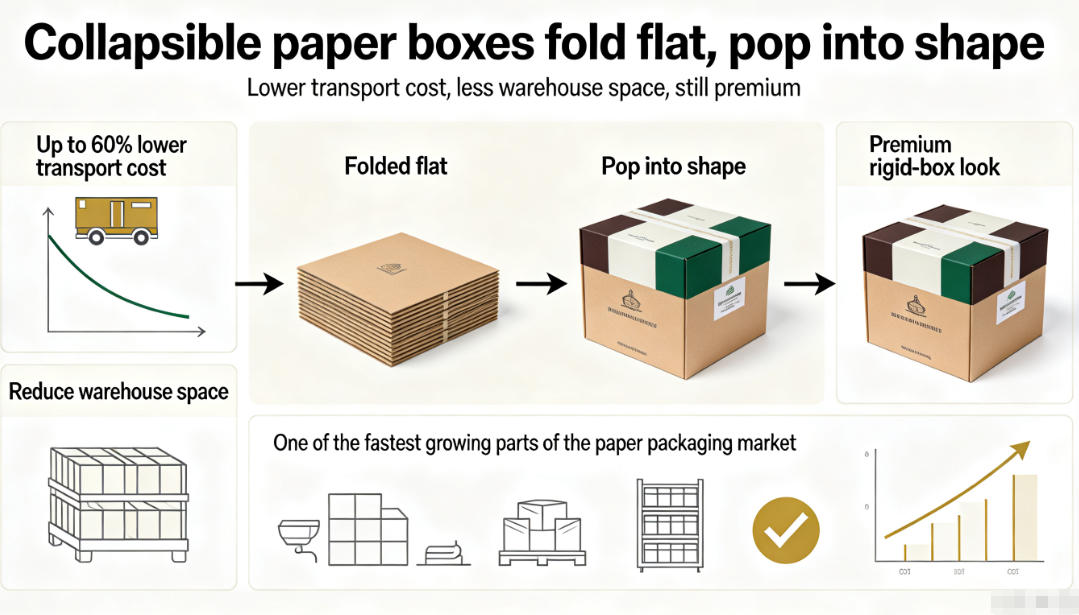 ### How collapsible boxes save money Let me break down the savings so you can explain them to your own customers.
| Cost item | Fixed rigid box | Collapsible paper box |
|---|---|---|
| Shipping volume | 100% | 40% to 50% |
| Warehouse space | Full box takes shelf | Flat sheet stacks thin |
| Assembly at store | None, ready to use | Quick pop-up, 3 seconds |
| Damage in transit | Corners break easily | Flat sheets are safer |
An Automatic collapsible box wing making machine is built for this exact job. It makes the folding wings that let a box go flat and then snap into shape. I have a customer in Turkey who switched from fixed boxes to collapsible boxes last year. His shipping cost dropped by half, and his retail clients love the easy assembly. This is the kind of win the trio's new paper packaging will bring to more brands. ## How does cold glue technology make paper packaging more eco-friendly? Hot melt glue is plastic based. It leaves a sticky film that makes paper hard to recycle. Cold glue is water based. It lets paper be pulped and reused.
Cold glue, also called animal glue or jelly glue, is the eco-friendly choice for paper boxes. It bonds paper board and printed paper with a strong, clean joint. When the box reaches the end of its life, the paper can be recycled without removing the glue. This matters more each year as recycling rules get stricter.
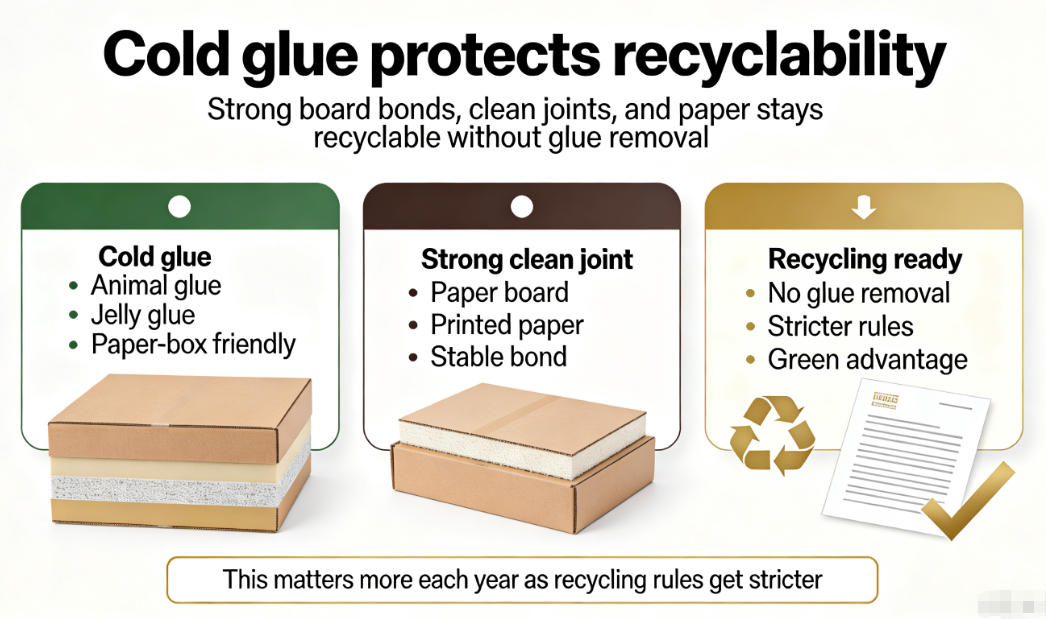 ### Hot melt vs cold glue for paper boxes The choice of glue is not a small detail. It decides if your box can be recycled and if it meets green laws.
| Glue type | Base material | Recyclability | Common use |
|---|---|---|---|
| Hot melt | Plastic resin | Low, leaves plastic film | Fast sealing, but not eco |
| Cold / animal glue | Water + protein | High, paper stays recyclable | Premium rigid boxes |
| PVA white glue | Water + plastic mix | Medium | General paper bonding |
An Anilox Gluing Machine is the key tool here. It applies cold glue in an even, thin layer using an anilox roller. This means less glue per box, lower cost, and a cleaner bond. For factories that want to sell to brands with strict green targets, a cold glue line is no longer optional. It is the ticket to get into their supplier list. I have seen buyers refuse whole shipments because the glue was not recyclable. Do not let that happen to you. ## Conclusion The trio's move is a clear sign: paper-based packaging is growing fast. Check your machines, pick cold glue, and switch your box lines early to win the new orders.

发表回复