
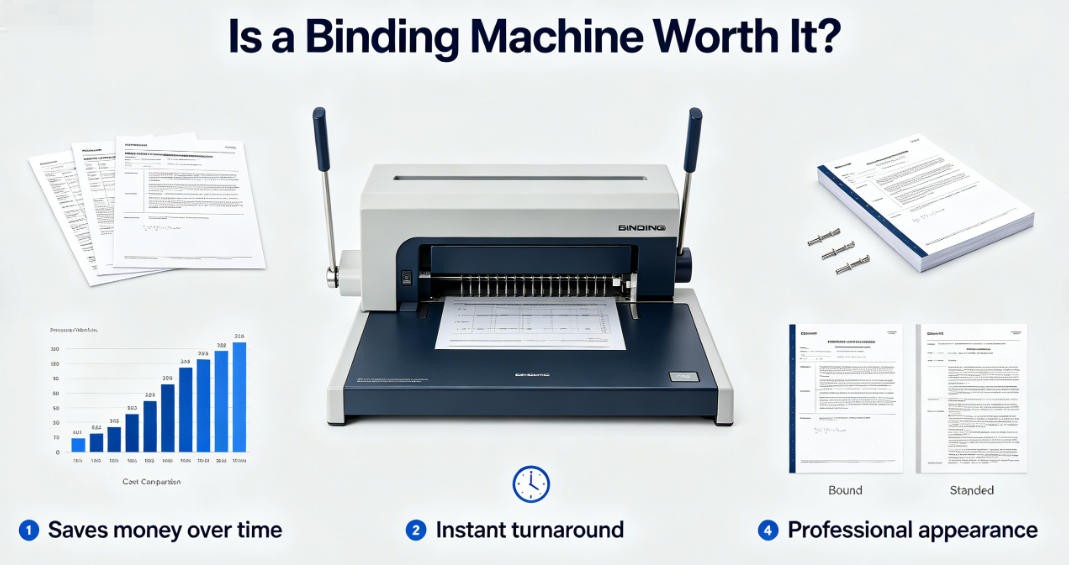
Is a binding machine worth it?
You spend money every month on outsourced binding. The bills pile up, the turnaround time drags, and you have zero control over quality. Something has to change.
Yes, a binding machine is worth it if your office produces reports, proposals, or presentations regularly. It saves money over time, gives you instant turnaround, and makes your documents look far more professional than stapled pages.
I learned this lesson the hard way. Three years ago, I was running a small print shop in Dongguan. Every month, I paid a third-party binder nearly $800 to handle my clients' booklets and reports. Then one week, the binder was late by four days. I lost a client. That was the day I bought my first binding machine. Now I want to share what I have learned so other small business owners can make the right choice.
What is a binding machine used for in an office?
You have stacks of loose paper on your desk. They look messy, they get lost, and they do not impress anyone. Your work deserves better presentation.
A binding machine turns loose printed pages into professional booklets, reports, calendars, and manuals. It uses plastic combs, wire loops, or thermal glue to hold pages together with a clean, polished finish.
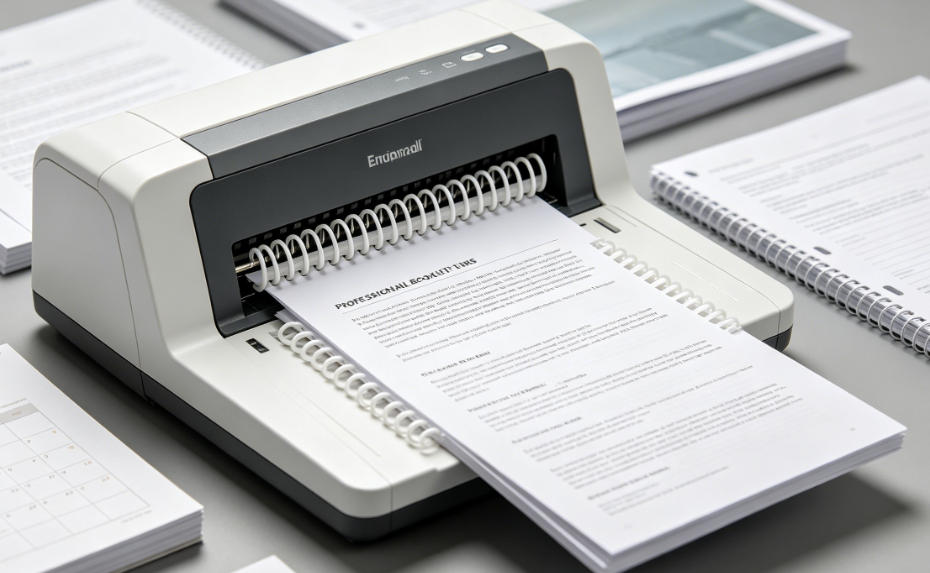
In my early days, I thought binding machines were only for big printing factories. I was wrong. A binding machine can serve many purposes inside an office. I use mine for creating training manuals for my team. I also bind sales proposals before sending them to potential clients. My accountant binds monthly financial reports so nothing gets lost. Even our HR department binds employee handbooks.
Here is a simple table that shows what different departments can do with a binding machine:
| Department | Common Use | Binding Type |
|---|---|---|
| Sales | Proposals, Pitch Decks | Wire or Comb |
| HR | Employee Handbooks, Policy Docs | Comb or Thermal |
| Finance | Monthly Reports, Audit Files | Comb |
| Marketing | Product Catalogs, Brochures | Wire |
| Admin | Meeting Agendas, Training Materials | Comb or Wire |
The key point is this. A binding machine is not just for print shops. It is a tool that almost every department in a small office can use. Once you have one, you start finding new ways to use it every week. I remember the first time my team bound a client proposal with a wire spine. The client actually commented on how professional it looked. That small detail helped close the deal.
What is a good binding machine for a small office?
You walk into a supplier showroom or browse online. Dozens of models stare back at you. Some are tiny, some are huge, and the price tags range from $100 to $10,000. It is easy to feel lost.
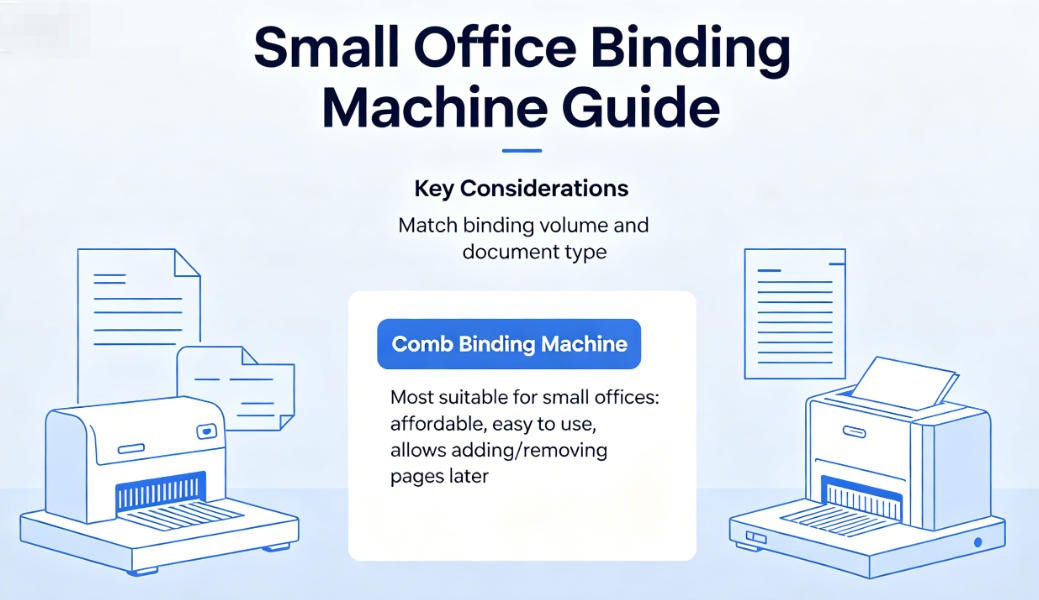
A good binding machine for a small office is one that matches your binding volume and document type. A comb binding machine works best for most offices because it is affordable, easy to use, and allows pages to be added or removed later.
When my shop was still small, I bought a cheap manual comb binder for about $150. It worked fine for the first six months. But as my business grew, I found myself spending too much time punching holes by hand. That is when I upgraded to a more capable machine.
For a small office, I think there are three things you should think about before choosing. First, how many documents do you bind each week? If it is fewer than 10, a manual machine is enough. If it is 10 to 50, consider an electric punch model. Second, what kind of look do you want? Wire binding looks more elegant. Comb binding is more practical. Thermal binding looks like a real paperback book. Third, what is your budget?
Let me put this in a simple table for you:
| Office Size | Weekly Volume | Recommended Type | Price Range |
|---|---|---|---|
| 1-5 people | Under 10 docs | Manual Comb Binder | $100-$300 |
| 5-15 people | 10-30 docs | Electric Punch Comb Binder | $300-$800 |
| 15-30 people | 30-100 docs | Electric Wire Binder | $800-$2,000 |
| 30+ people | 100+ docs | Heavy-Duty Electric Binder | $2,000-$5,000 |
I always tell my customers this. Do not buy the cheapest machine you can find. And do not buy the most expensive one either. Buy the one that fits your real needs today, with a little room to grow. For most small offices I visit here in China, an electric comb binding machine in the $400 to $600 range is the sweet spot. It punches fast, binds clean, and lasts for years. If you want to check out the binding machines we offer at Kylin Machine, you can take a look at our Auto Double Wire Binding Machine — it is built for offices that need speed and a high-end finish. For smaller jobs, our Small Edge Folding Machine is also a good companion tool for finishing edges neatly.
Are electric or manual binding machines better?
You stand there pulling a manual punch lever for the tenth time today. Your arm is tired, your time is gone, and you still have twenty more documents to go. There has to be a better way.
Electric binding machines are better for offices that bind more than 10 documents per week. Manual machines are better for very low volume or tight budgets. An electric machine saves time, reduces fatigue, and produces more consistent results.
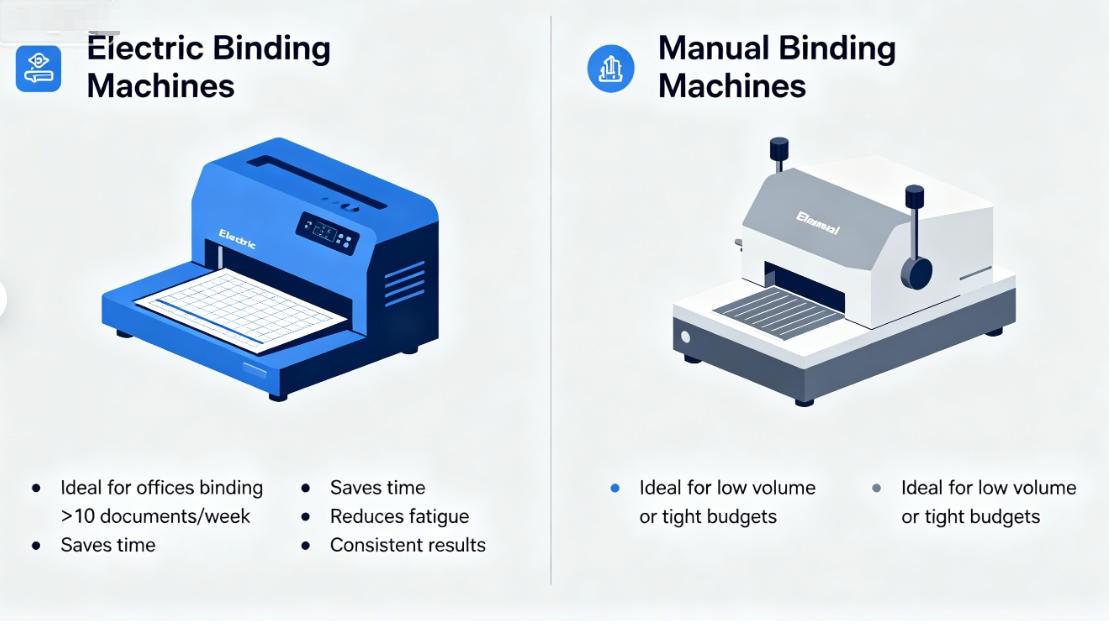
I have used both types for years in my own factory. Here is what I have learned from real experience. A manual binding machine costs less upfront. You can find one for under $200. It works by pulling a lever that drives a punch through the paper. The good thing is that it never breaks down because there is no motor to fail. The bad thing is that punching thick stacks of paper takes real physical effort. After binding 15 documents in a row, your arm will feel it.
An electric machine is different. You slide the paper in, press a button or step on a foot pedal, and the motor does the work. It can punch through 20 to 40 sheets at once, depending on the model. The punch holes are always clean and aligned because the force is the same every time. But electric machines cost more. They need maintenance. And if the motor burns out, you have a repair bill.
Here is a comparison table based on my own experience running both types in my shop:
| Feature | Manual Binding Machine | Electric Binding Machine |
|---|---|---|
| Upfront Cost | $100-$400 | $500-$5,000 |
| Punching Speed | Slow, one stack at a time | Fast, foot pedal operation |
| Physical Effort | High, requires arm strength | Low, motor does the work |
| Hole Consistency | Varies with user strength | Always consistent |
| Maintenance | Almost none | Motor and parts need care |
| Best For | Under 10 docs per week | Over 10 docs per week |
| Noise Level | Quiet | Can be loud |
| Lifespan | 5-10 years | 5-8 years with maintenance |
I tell my clients this. If you only bind a few reports each month, save your money and get a manual machine. But if binding is a daily task in your office, do not think twice. Get an electric one. The time you save alone will pay for the price difference within the first year. I remember calculating this for my own shop. With a manual machine, each document took me about 4 minutes to bind. With an electric one, it took under 2 minutes. For 30 documents a week, that saved me one hour every single week. Over a year, that was 52 hours saved.
What to look for in a binding machine?
You open the box of your new binding machine. The punch does not go through cleanly, the comb opener is flimsy, and the whole thing shakes on the desk. You realize you bought the wrong one.
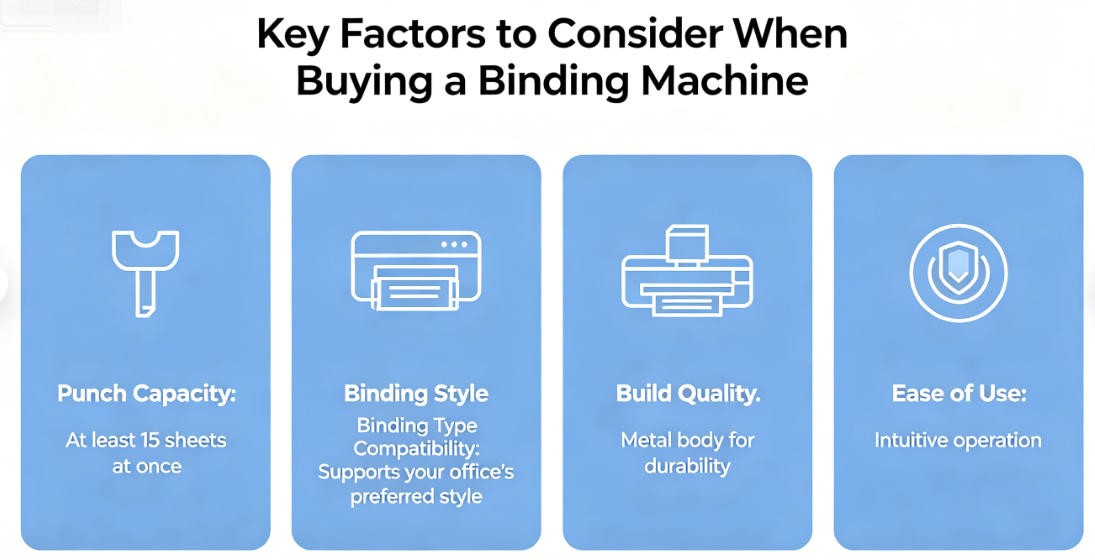
When buying a binding machine, look at punch capacity, binding type compatibility, build quality, and ease of use. A good machine should punch at least 15 sheets at once, have a metal body, and support the binding style your office prefers.
I have made mistakes buying equipment for my factory. I once ordered a cheap binding machine from an unknown brand to save money. The plastic body cracked within three months. The punch pins got dull after punching maybe 500 books. I ended up spending more money replacing it than if I had bought a good one in the first place. So let me tell you what really matters when you are shopping for a binding machine.
The first thing is the punch mechanism. Look at how many sheets the machine can punch in one go. A good machine punches 15 to 25 sheets of standard 80gsm paper per cycle. If the spec says 10 sheets or less, walk away. Also check if the punch pins are made of hardened steel. Cheap pins go dull fast and leave rough holes.
The second thing is the body material. A binding machine with a metal body lasts longer than one with a plastic body. It does not shake when you punch, so the holes come out cleaner. It also handles daily use without cracking. In my factory, all our machines run on metal frames. I would not trust plastic for anything I use every day.
The third thing is the binding style. Make sure the machine supports the binding type you actually need. Comb binding is the most common. Wire binding looks nicer but needs a separate wire closer. Thermal binding gives a book-like finish but does not let you open the pages flat.
Here is what I check before buying any binding machine:
| Feature to Check | Why It Matters | What to Avoid |
|---|---|---|
| Punch Capacity | Determines how fast you work | Under 10 sheets per cycle |
| Body Material | Affects durability and stability | All-plastic body |
| Binding Style | Must match your document needs | Single-style if you need variety |
| Punch Pin Material | Affects hole quality over time | Non-hardened steel pins |
| Warranty | Protects your investment | No warranty or under 1 year |
| Brand Reputation | Indicates reliability and support | Unknown brands with no reviews |
One more thing I always tell my customers. Check the availability of binding supplies before you buy the machine. Some machines use special binding rings or combs that are hard to find. Stick with machines that use standard supplies you can buy from multiple sources. This way, you never run out of materials when you have an urgent job. Our Ky-380 Hard Cover Making Machine is built with these principles in mind — solid metal construction, high punch capacity, and compatibility with standard binding supplies. It is the kind of machine I wish I had when I first started my business.
Conclusion
A binding machine pays for itself through saved time, fewer outsourcing costs, and the professional edge that helps you win more clients.

发表回复