
What Does Hardcover Book Mean?
You pick up a beautiful book only to find its cover bends and tears after just a few reads. A hardcover book solves this problem forever.
A hardcover book means a book built with stiff, rigid covers made from thick board wrapped in cloth, leather, or printed paper. These strong covers protect the inside pages and help the book last for decades without damage.

I have spent more than 20 years building machines that make hardcover books at my factory in Dongguan, China. Every day, I see customers from all over the world come to me looking for the right way to make books that last. I want to share what I have learned with you.
What Is Better, Hardcover or Paperback?
You walk into a store and see two versions of the same book. One costs twice as much as the other. You wonder if the extra money is really worth it.
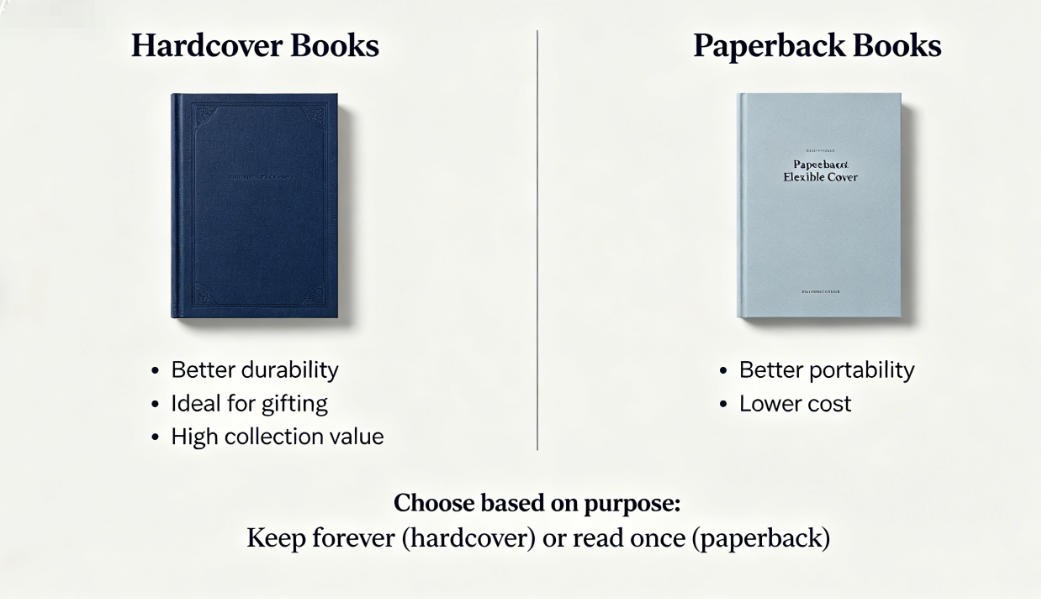
Hardcover books are better for durability, gifting, and collection value. Paperback books are better for portability and lower cost. Your choice depends on whether you want to keep the book forever or just read it once and move on.
I run a factory called Kylin Machine. Over the years, I have watched thousands of customers face this same question. Let me help you think it through step by step.
For Durability
Hardcover books use thick board covered with cloth or printed paper. The spine is strong. The pages are sewn together with thread. This means the book can sit on a shelf for 50 years and still look like new. I have a hardcover book on my desk that my father gave me 30 years ago. The cover is still firm. The pages are still tight. Paperbacks use glue to hold the pages. The cover is thin card stock. After you read a paperback five or six times, the spine starts to crack. Pages begin to fall out. I see this happen all the time with the paperback novels I keep in my workshop.
For Cost and Value
Paperback books cost less to make. The materials are cheaper. The process needs fewer steps. That is why most novels today come out in paperback first. Hardcover books cost more to produce. But they hold their value much better. A well-made hardcover book can be worth more money years after you buy it. Some of my customers print limited hardcover editions that sell for three or four times the paperback price. People pay more because they know the book will last.
For Feel and Experience
There is something special about holding a hardcover book. The weight sits in your hands. The cover snaps open with a crisp sound. The book stays open on a table without you holding it down. My customers who make luxury gift boxes and high-end packaging always choose hardcover. It feels like a premium product. A paperback feels light and cheap. It bends in your bag. The cover curls up after a few days in the sun. Hardcovers feel like they matter.
| Feature | Hardcover | Paperback |
|---|---|---|
| Cover Material | Thick board + cloth or printed paper | Thin card stock |
| Binding Method | Sewn signatures + glue | Glue only |
| Lifespan | 20 to 50+ years | 2 to 5 years |
| Cost per Unit | Higher | Lower |
| Weight | Heavier | Lighter |
| Best Use Case | Collections, gifts, libraries | Travel, casual reading, mass market |
At Kylin Machine, we build the Ky-380 Hard Cover Making Machine. This all-in-one case maker produces the rigid covers used on high-end books all around the world. If you plan to start making hardcover books, this machine can change your whole production line.
What Is the Difference Between a Hardcover Book and a Normal Book?
You walk into a bookstore and see the same title in two formats. One version feels solid and heavy in your hand. The other version bends easily. You ask yourself what really makes them different.
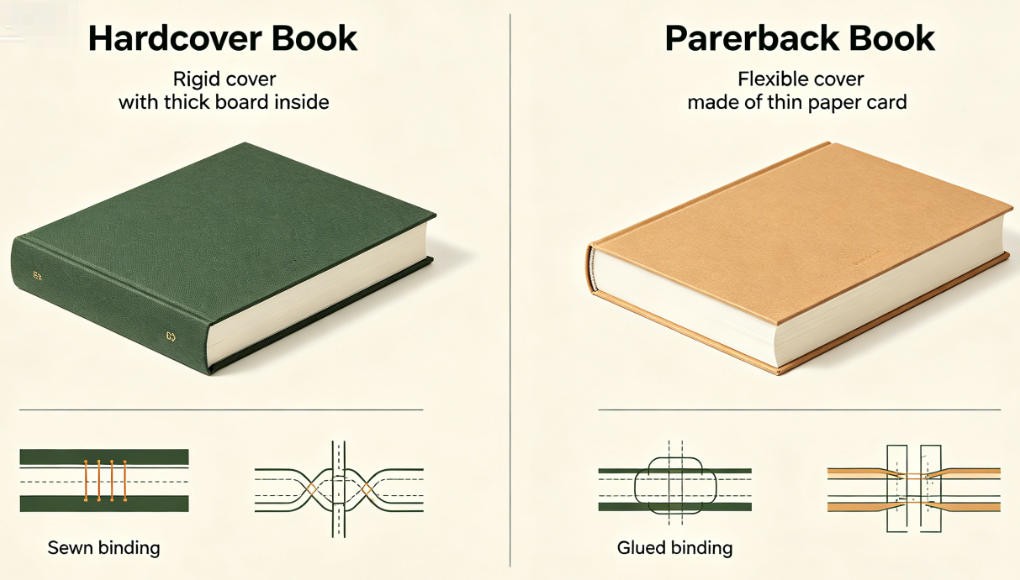
The biggest difference between a hardcover book and a normal paperback book is the cover structure. Hardcover books have rigid covers built with thick board inside. Normal paperback books have flexible covers made only from thin paper card. The binding method is also completely different.
When people say "normal book," they almost always mean a paperback. But in my factory, there is no such thing as one normal type of book. Each kind of book is built for a different purpose. Let me show you what makes a hardcover book different from the inside out.
The Cover Structure
A hardcover book cover has three layers working together. The inner layer is gray board or cardboard. It is usually 2mm to 3mm thick. This gives the cover its stiffness. The middle layer is the covering material. It can be cloth, leather, or printed paper wrapped around the board. Some books add a dust jacket as a fourth outer layer. A paperback cover is just one single layer of thick paper. That is all. Usually 250gsm to 300gsm stock. No board inside. No cloth. No extra layers. Just paper.
The Binding Method
Hardcover books use Smyth sewing. The pages are folded into groups called signatures. Each signature is sewn to the next one with strong thread. Then the whole book block gets glued to the cover using endpapers. This two-step binding makes a hardcover book very strong. You can open it flat. You can pull on the pages. Nothing falls apart. Paperbacks use perfect binding. The pages are stacked together and the edge gets dipped in glue. That glue holds the pages to the spine. When the glue gets old and dry, the pages simply fall out.
The Extra Parts
A hardcover book has parts that paperbacks do not have at all. There are endpapers — the decorated sheets that connect the cover to the book block. There are headbands — the small fabric bands at the top and bottom of the spine. Many hardcovers also have a ribbon bookmark sewn into the spine. Each of these parts adds to the look and the strength of the book. At Kylin Machine, we build separate machines for each of these parts. Our Book Block Head Band Machine sews the fabric headbands onto the book spine. Our Automatic Notebook Ribbon Machine inserts ribbon bookmarks into the spine during production.
The Production Steps
Making a hardcover book needs a lot more steps than making a paperback. First, you print the inside pages. Then you fold the sheets into signatures. Then you sew the signatures together into a book block. At the same time, you make the cover on a separate line. Finally, you join the book block to the cover and press it. The last step is creasing the hinge so the cover opens smoothly. Our Hard Cover Book Pressing & Creasing Machine handles this final step. It presses the finished book and creates a clean, sharp hinge line. When this step is done right, the book opens beautifully every time.
What Are the Four Types of Books?
You look at a library shelf and see books of every shape and size. They seem so different from each other. But the truth is almost all books belong to just a few basic types.
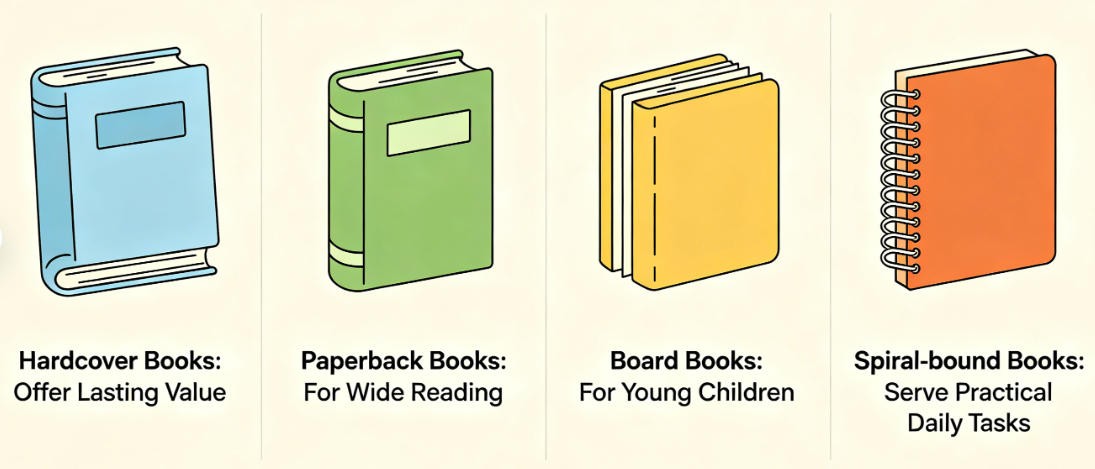
The four main types of books based on how they are made are hardcover books, paperback books, board books, and spiral-bound books. Each type is built differently for a different purpose. Hardcover books offer lasting value. Paperbacks are for wide reading. Board books are for young children. Spiral-bound books serve practical daily tasks.
In my 20 years of building post-press machines at Kylin Machine, I have worked with all four types of books. Each type needs different machines. Each type needs different skills. Each type solves a different problem. Here is what makes each one special.
1. Hardcover Books
Hardcover books are the top choice for quality. They have rigid covers made from board wrapped in cloth or printed paper. The pages are sewn together in signatures. They often come with a dust jacket for extra protection. Libraries buy hardcovers because they survive hundreds of readings. Publishers release hardcovers first because they sell at higher prices and bring in more profit. Museums and art galleries print hardcover catalogs that people keep for a lifetime. At Kylin Machine, we build the Ky-380 Hard Cover Making Machine to produce these covers. It can make up to 900 hard covers in a single hour. That speed means a small printing shop can produce enough covers for a large order in just a few days.
2. Paperback Books
Paperback books are the everyday choice for mass reading. They use flexible covers made from single-layer card stock. The pages are glued to the spine with perfect binding. They are cheap to make and cheap to buy. Most fiction novels, school textbooks, and mass-market books come in paperback format. A paperback costs about one-third of what a hardcover costs to produce. That is why they dominate the market in volume. But paperbacks do not last. They are made to be read and replaced. If you want a book to pass down to your children, paperback is not the right choice.
3. Board Books
Board books are made just for babies and toddlers. Every single page is a thick piece of pressed cardboard. The pages cannot be torn by little hands. The corners are rounded so no child gets poked. Board books use a special binding method where the pages are interlocked. They do not need glue at all. This makes them safe for children who put everything in their mouths. Board books are small. They usually have only 10 to 20 pages. They teach colors, numbers, animals, and simple words. Parents love them because they survive being thrown, chewed, and stepped on.
4. Spiral-Bound Books
Spiral-bound books use a metal wire or plastic coil to hold the pages together. The coil runs through holes punched along the edge of the pages. The best thing about spiral binding is that the book opens completely flat. You can fold it back on itself. The pages stay open without you holding them. That is why cookbooks, instruction manuals, calendars, and notebooks use spiral binding. Chefs can read a recipe while both hands are busy cooking. Our Auto Double Wire Binding Machine makes this binding fast and clean. It automatically inserts the wire and closes it tight. One operator can bind hundreds of books in a day.
| Book Type | Cover Style | Binding Technique | Best Used For |
|---|---|---|---|
| Hardcover | Rigid board + cloth or paper | Sewn signatures + glued endpapers | Libraries, gifts, art books, collector editions |
| Paperback | Flexible card stock | Glued perfect binding | Fiction novels, textbooks, mass-market books |
| Board Book | Thick pressed cardboard pages | Interlocking pages, no glue | Children's books, baby books, early learning |
| Spiral-Bound | Flexible cover + wire or coil | Punched holes + metal or plastic coil | Cookbooks, notebooks, manuals, calendars |
No matter which type of book you want to produce, having the right machine makes all the difference. If you are in the bookbinding business or thinking of starting one, come see our full range of machines at postpressmachines.com. We also offer the Glue Spraying Assembly Machine for precise glue application and the Dual-Purpose Positioning Machine for accurate cover-to-book alignment. Every machine we build helps you make better books, faster.
Conclusion
Hardcover books offer unmatched quality and durability. Choose the right type for your needs and let the right machine bring your books to life.

发表回复