
What Is a Binding Machine?
You have stacks of printed sheets on your desk. They are loose. They are messy. Your customer wants a finished product. What do you do?
A binding machine is a piece of equipment that joins loose pages together into a single, secure document using methods like wire, glue, spiral, or thermal binding, turning raw prints into professional-looking books or booklets.
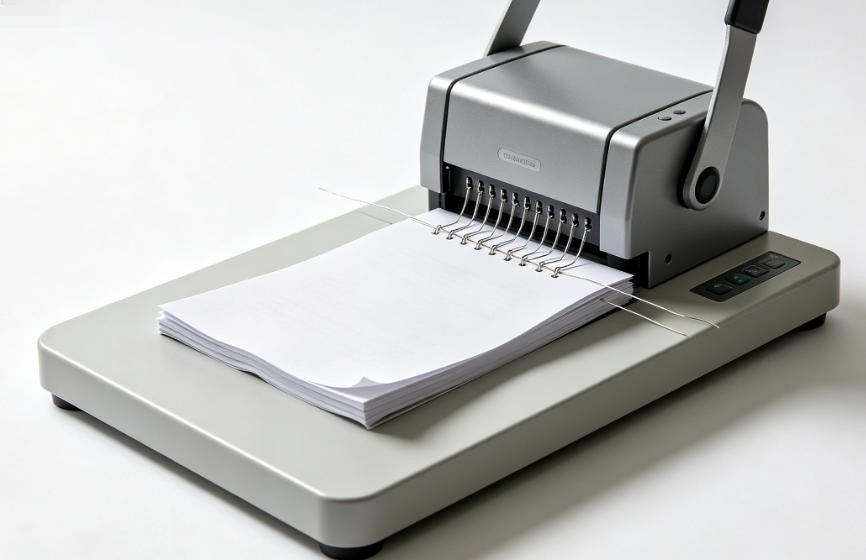
I first saw a binding machine in 2005 at a small print shop in Dongguan. The operator fed a stack of paper into the machine. Seconds later, a clean, bound notebook came out. I knew right then that this equipment was the backbone of any serious print finishing operation. Over the years, I have watched binding technology change. I have supplied machines to bookbinders in over 20 countries. I want to share what I have learned.
What Is a Binding Machine?
You hear the word "binding machine" all the time. But what does it really do? Most people think it just puts pages together.
A binding machine is a device that fastens loose sheets of paper into a single unit. It uses mechanical force, heat, or adhesive to create a spine that holds pages together, producing everything from simple notepads to thick hardcover books.
The Core Function of a Binding Machine
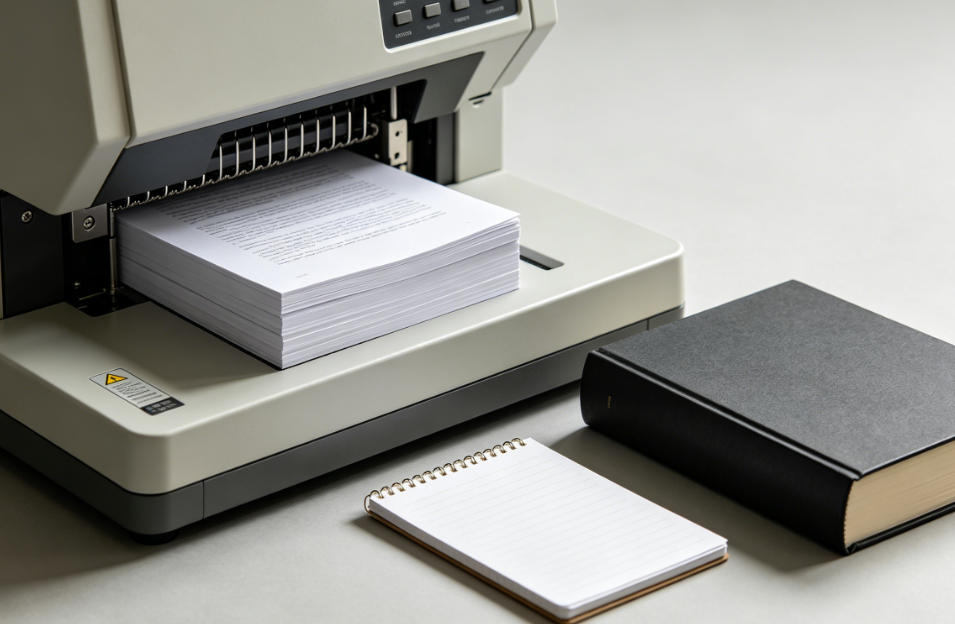
A binding machine does three things. First, it gathers the pages. Second, it aligns them. Third, it fastens them along one edge. That sounds simple. It is not. The machine must apply the right amount of pressure. Too much, and the pages tear. Too little, and the book falls apart. The binding material must be exactly right for the paper type. Thick paper needs a stronger bind. Thin paper needs a gentler touch. This is why I always tell my customers at Kylin Machine to test their materials before buying. A wrong match wastes money.
The quality of the bind affects the final product more than most people realize. A poorly bound book has pages that fall out after a few uses. A well-bound book can last for decades. I have seen cheap binding machines produce books that crack at the spine within a week. I have also seen our Auto Double wire binding machine produce notebooks that survive daily use for years. The difference is in the engineering. Good binding machines control the force. They calibrate the heat. They measure the glue. Every small detail matters. That is why we spend so much time on R&D at our factory. Our KY-G-400 Automatic Photo Book Lay Flat Binder is one example. It uses precise temperature control to create lay-flat photo books that do not crack when opened. This level of precision was not possible ten years ago.
What Is a Binding Machine Operator Job Description?
You bought a binding machine. Now who runs it? Many shop owners think anyone can do it. They are wrong.
A binding machine operator sets up, runs, and maintains binding equipment. They load paper, adjust machine settings, check output quality, fix minor jams, and keep production records to make sure every bound product meets the required standards.
What the Operator Does Every Day
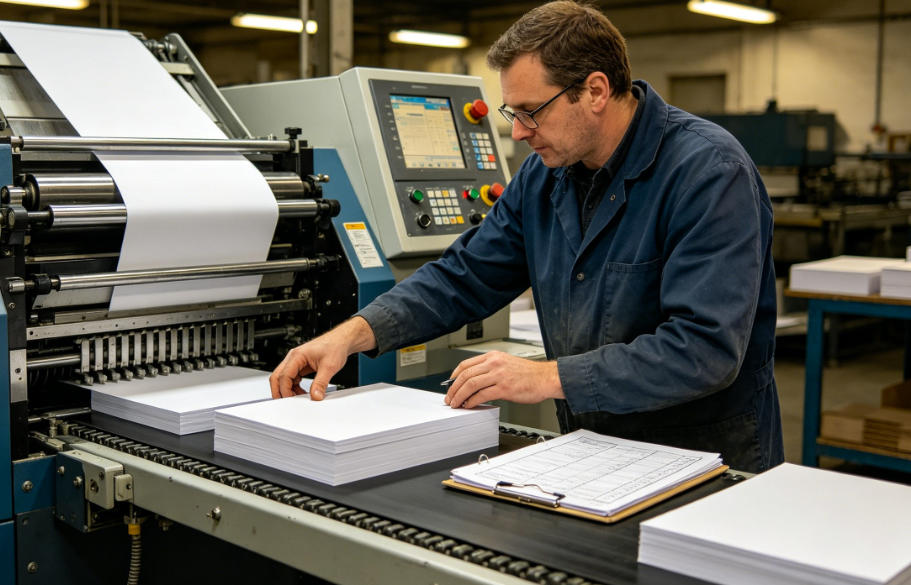
The operator's day starts before the machine runs. They check the job order. They read the specs. How many pages? What size? What binding type? Then they set up the machine. This means loading the right binding material. Adjusting the clamps. Setting the temperature if glue is involved. Testing the first few pieces. The operator runs these through and checks for problems. Pages not aligned? Spine crooked? Glue too thin? They adjust and test again. Only when the sample passes do they start full production.
During the run, the operator watches everything. They listen to the machine. A strange sound often means trouble is coming. They check output quality every few minutes. They clear paper jams when they happen. They refill binding supplies. At the end of the shift, they clean the machine. They record how many units were made. They note any problems for the next shift. This is not unskilled work. A good operator saves a shop thousands of dollars by catching problems early. A bad operator wastes materials and damages equipment. I have trained operators at customer sites in Turkey and India. The best ones treat the machine like their own. They notice small changes. They care about every book that comes out. When you buy a machine like our Hard Cover Book Pressing & Creasing Machine, you need someone who understands pressure and alignment. It is an investment in your people as much as in the equipment.
What Are the Different Types of Binding Machines?
Walk into a print finishing expo. You will see dozens of binding machines. They all look different. How do you choose?
The main types of binding machines are wire binding, spiral coil binding, thermal glue binding, perfect binding, saddle stitching, and hardcover case binding. Each type serves a different purpose and produces a different look and durability level.
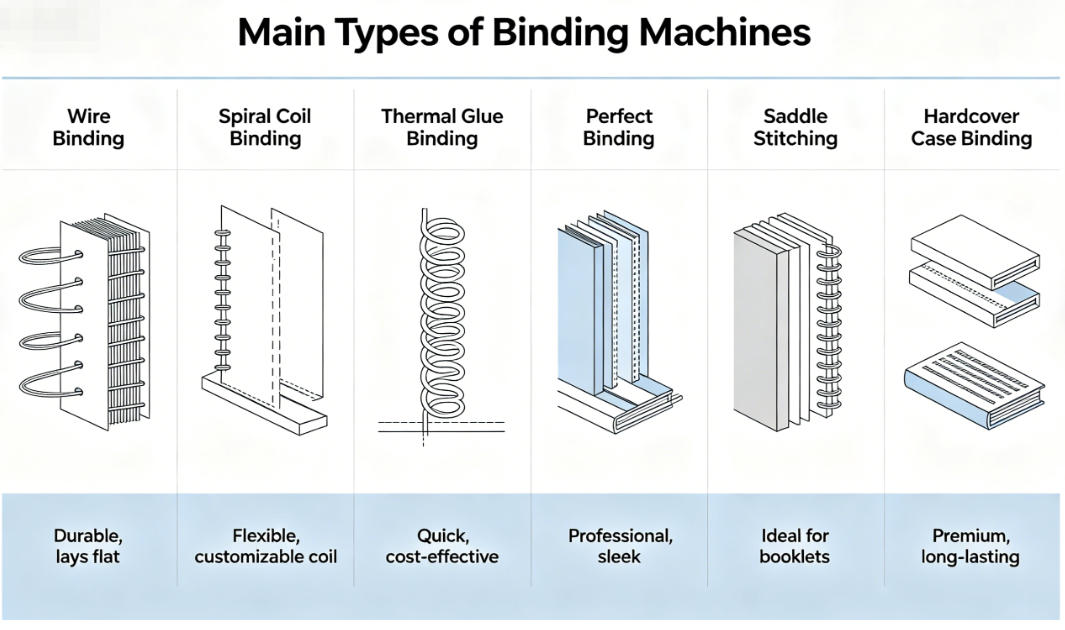
A Closer Look at Each Type
| Binding Type | How It Works | Best For | Durability |
|---|---|---|---|
| Wire Binding | Metal wire loops through punched holes | Notebooks, calendars, manuals | High |
| Spiral Coil | Plastic or metal coil through punched holes | School books, cookbooks | Medium |
| Thermal Binding | Heat-activated glue in the spine | Softcover books, reports | Medium |
| Perfect Binding | Strong glue applied to the spine edge | Paperback books, catalogs | High |
| Saddle Stitching | Staples through the fold line | Magazines, brochures, thin booklets | Medium |
| Case Binding | Pages sewn and glued into a hard cover | Hardcover books, premium products | Very High |
Wire binding is the most common in offices. It is fast. It is cheap. The pages lay flat. This is why we designed our Auto Double wire binding machine for high-volume work. It punches and binds in one pass. Perfect binding is for paperback books. It looks professional. It allows printing on the spine. Our Glue Spraying Assembly Machine handles this with precision glue application. Case binding is the premium option. It uses sewn signatures glued into a rigid cover. This is what you see on library books. It costs more. It lasts longer. For this work, our Ky-380 Hard Cover Making Machine combines cover making and case binding in one system. I always tell customers to pick the binding type first. Then pick the machine. Not the other way around. The binding type decides the customer's experience. The machine just delivers it.
Is a Binding Machine Worth It?
You run a print shop. Money is tight. A binding machine costs thousands. You wonder if you should just outsource.
Yes, a binding machine pays for itself quickly. In-house binding cuts outsourcing costs by 40 to 60 percent. It gives you faster turnaround, better quality control, and the ability to take on higher-margin jobs that competitors cannot handle.
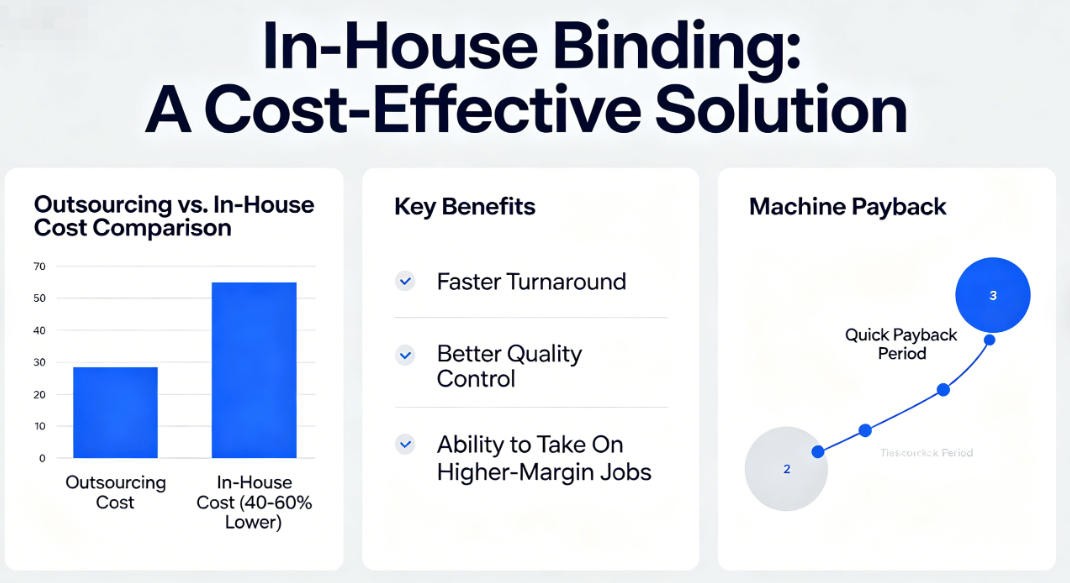
Breaking Down the Real Value
The math is straightforward. A typical print shop spends $0.80 to $2.00 per book on outsourced binding. An in-house machine brings that down to $0.10 to $0.30 per book. That is materials and labor. Nothing more. On 5,000 books per month, the savings add up fast. Around $3,500 to $8,500 per month. A good binding machine pays for itself in six to twelve months. I have seen it happen many times with my customers.
But cost is not the only reason. Speed matters more. Outsourcing binding adds two to five days to every job. In-house binding lets you deliver the next day. Customers pay more for speed. They pay a premium for a shop that can handle rush jobs. Quality control matters too. When you bind in-house, you see every book before the customer does. A problem caught early costs nothing. A problem found by the customer costs your reputation. I learned this the hard way in my early years at Kylin. We outsourced binding for a large order. The subcontractor used cheap glue. The books fell apart after one month. We replaced them all at our cost. Never again. Since then, every machine we make and recommend is built for shops that want control over their quality. Our Dual-Purpose Positioning Machine helps operators align materials perfectly before binding. Our Book Block Head Band Machine adds that finishing touch that turns a plain book into a premium product. Each machine adds value. Together, they build a production line that no outsourcer can match. The question is not whether a binding machine is worth it. The question is how long you can afford to operate without one.
Conclusion
A binding machine turns loose pages into finished products. It saves money. It improves quality. It gives you control over your production and your reputation.

发表回复