

Are You Still Making Rigid Boxes the Hard Way?
Struggling with slow, inefficient rigid box production? You're losing time and money, and your competitors are getting ahead. It's frustrating to see your profits shrink while you're stuck with outdated methods.
The secret to boosting your rigid box business is automation. By using an automatic rigid box-making machine, you can increase production speed, improve quality, and reduce labor costs, giving you a competitive edge.
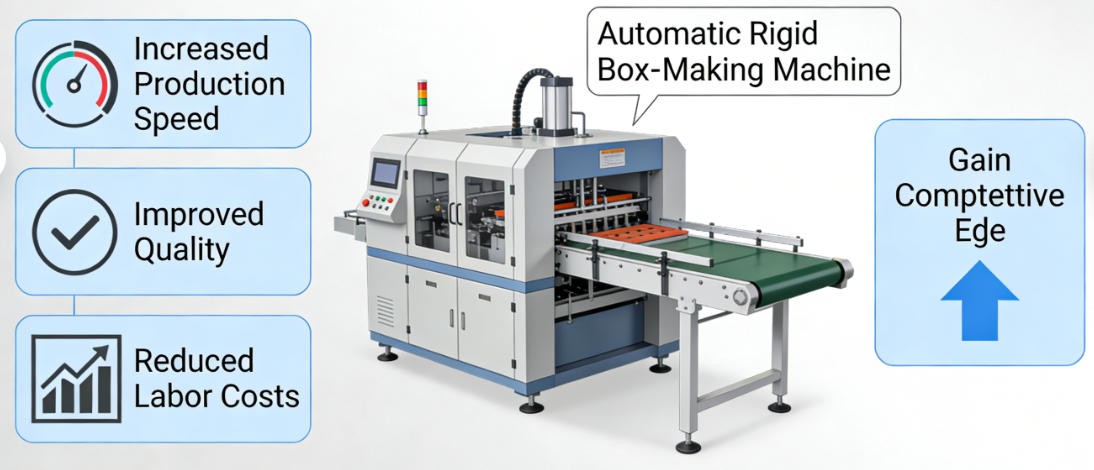
I remember when I first started in the packaging industry. We made every rigid box by hand. It was a slow, painstaking process. We could only produce a few hundred boxes a day, and the quality was inconsistent. I knew there had to be a better way. That's when I discovered automatic rigid box-making machines, and it changed everything for my business. If you're facing similar challenges, I want to share what I've learned and help you find the right solution.
How is rigid packaging made?
Are you wondering how those beautiful, sturdy rigid boxes are created? It's a process that involves several key steps, from preparing the materials to forming the final box. It can seem complex, but with the right equipment, it's a smooth and efficient operation.
The process starts with cutting and grooving the greyboard, which forms the core of the box. Then, the wrapping paper is glued and precisely positioned. Finally, the machine folds the edges and presses the box to ensure a strong, clean finish.
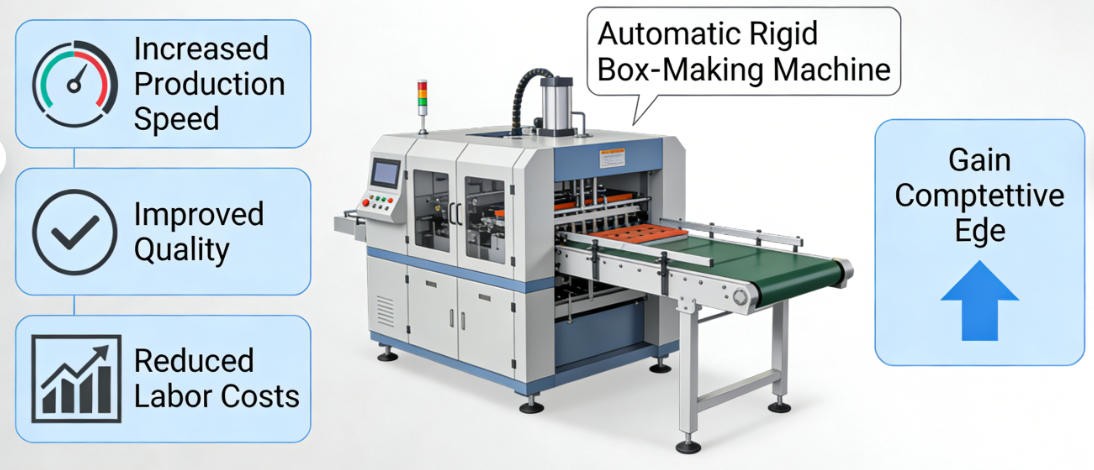
To give you a clearer picture, let's break down the manufacturing process of a rigid box. It’s a fascinating journey from raw material to a premium packaging product. I’ve seen this process thousands of times, and it still impresses me.
The Journey of a Rigid Box
The creation of a rigid box is a multi-stage process. Each step is crucial for the final quality of the product.
| Step | Description | Machine Involved |
|---|---|---|
| 1. Board Cutting | The large sheets of greyboard are cut into the required size for the box. | Sheet Cutting Machine |
| 2. V-Grooving | V-shaped grooves are cut into the greyboard to allow for sharp, clean folds. | Grooving Machine |
| 3. Corner Pasting | The corners of the cut and grooved board are taped to form the box shape. | Corner Pasting Machine |
| 4. Gluing and Spotting | The wrapping paper is glued, and the formed box is accurately placed on it. | Glue Spraying Assembly Machine |
| 5. Wrapping and Folding | The machine wraps the paper around the box, folding the edges neatly. | Auto Rigid Boxes Machine |
| 6. Pressing | The finished box is pressed to ensure all glued parts are firmly attached. | Pressing Machine |
Understanding this process helps you appreciate the technology and precision involved in creating high-quality rigid packaging. Our Auto Rigid Boxes Machine 2025 version is a great example of a machine that automates many of these steps.
What machine is used to make cardboard?
Are you confused about the difference between cardboard and the material used for rigid boxes? While they are both paper-based, the machinery and processes to create them are quite different. Let's clear up this common misconception.
The material for rigid boxes is typically greyboard or chipboard, which is much denser and stronger than corrugated cardboard. The machines used to process this material are specialized for cutting, grooving, and wrapping, not for creating the corrugated structure of cardboard.
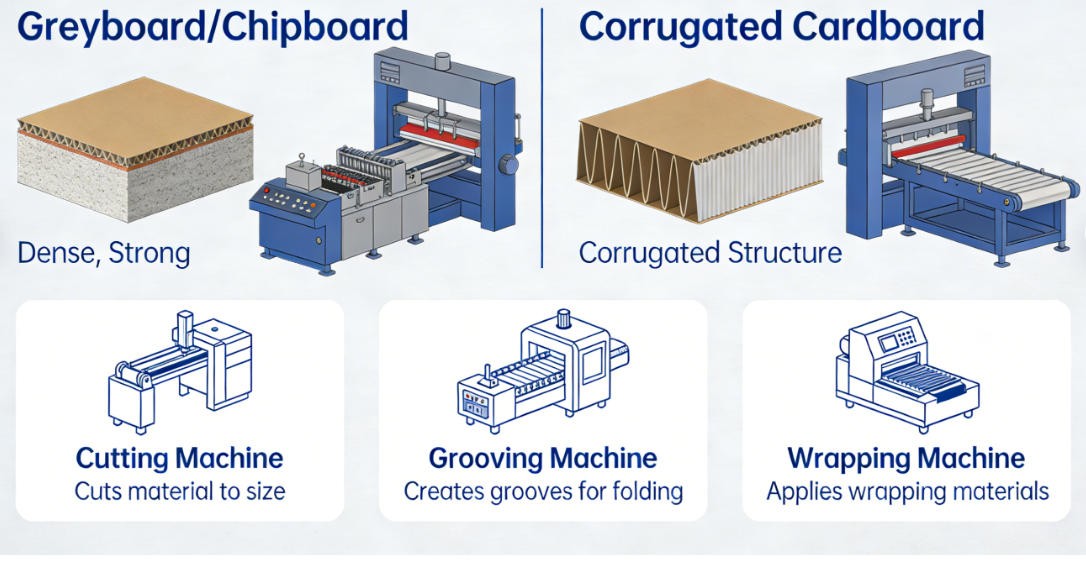
When I talk to clients, many of them initially ask about "cardboard box machines." It's a common term, but in the world of luxury packaging, we're dealing with something more specialized. Let's dive deeper into the specifics of the machinery used for rigid boxes.
Beyond "Cardboard": The Machines for Rigid Boxes
The term "cardboard" is often used generically, but in the packaging industry, precision matters. The material for rigid boxes is solid board, not the fluted material you see in shipping boxes.
The machines we use at Kylin Machine are designed for this high-density board. For example, our Semi Auto Polygon Rigid Box Wrapper is perfect for creating unique, multi-sided boxes that you just can't make with a standard cardboard machine.
Here's a look at the types of machines involved:
- Grooving Machines: These create the sharp 90-degree angles that are a hallmark of rigid boxes.
- Corner Pasting Machines: They reinforce the corners of the box, adding to its strength and durability.
- Wrapping Machines: These are the heart of the operation, applying the decorative wrap with precision and care. Our Connected box machine integrates several of these functions for a streamlined workflow.
So, while you might be searching for a "cardboard machine," what you really need for premium packaging is a rigid box-making machine.
What is the raw material for rigid box?
Ever wondered what gives a rigid box its strength and premium feel? It all comes down to the raw materials. Choosing the right materials is the first step to creating packaging that impresses your customers and protects your products.
The primary raw material is greyboard, a thick, dense paperboard made from recycled paper. This provides the structural integrity of the box. For the exterior, a wide variety of wrapping materials can be used, from fine paper and fabric to leatherette.
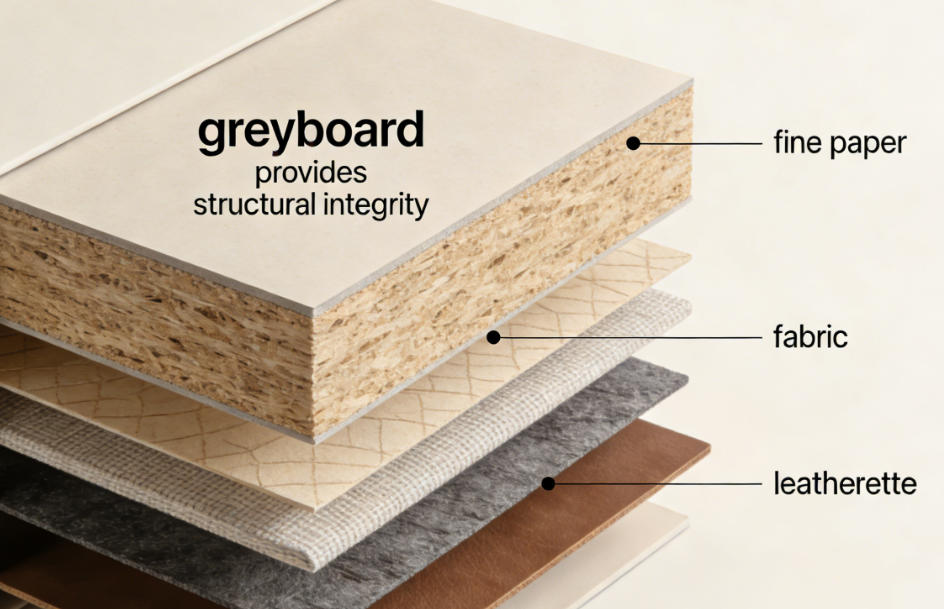
I've worked with countless clients to select the perfect materials for their packaging. The choice of raw materials not only affects the look and feel of the box but also its performance and cost. Let's explore the options in more detail.
The Foundation of Quality: Rigid Box Materials
The quality of your rigid box is directly tied to the materials you use. It's a combination of a strong core and a beautiful exterior.
Here’s a breakdown of the common raw materials:
| Material | Purpose | Characteristics |
|---|---|---|
| Greyboard | Structural Core | High density, strong, made from recycled materials. |
| Wrapping Paper | Exterior Finish | Can be printed, embossed, or foiled for branding. |
| Adhesive | Bonding | Hot or cold glue is used to bond the wrap to the board. |
| Lamination | Protection & Finish | A thin film applied to the wrap for a matte or gloss finish. |
The choice of these materials will depend on your product, brand, and budget. For example, a luxury jewelry box might use a thicker greyboard and a soft-touch laminated wrap, while a board game box might use a standard paper wrap with a vibrant print. Our machines, like the Ky-380 Hard Cover Making Machine, are designed to handle a wide range of these materials, giving you the flexibility to create the perfect packaging.
What is a rigid box?
So, what exactly is a rigid box, and why is it the preferred choice for premium products? A rigid box, also known as a set-up box, is a type of packaging that is made from thick, sturdy paperboard and is not collapsible.
It's the kind of box you find holding a new smartphone, a luxury watch, or high-end cosmetics. Its strength, premium feel, and design possibilities make it the go-to choice for brands that want to make a statement.
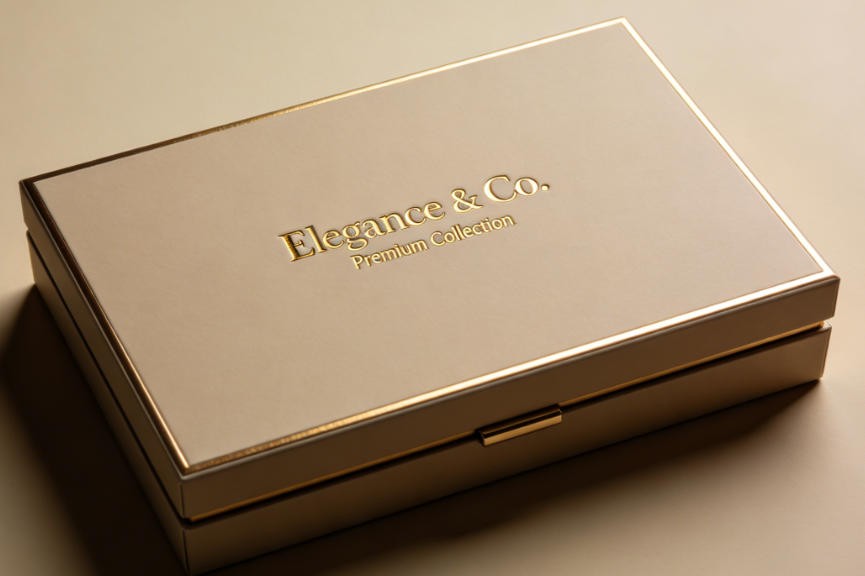
When I help a client move from flexible packaging to rigid boxes, the transformation in their brand perception is incredible. A rigid box communicates quality and value before the customer even sees the product inside. It's an investment that pays off.
The Unmistakable Appeal of the Rigid Box
A rigid box is more than just a container; it's part of the product experience. Its defining characteristic is its non-collapsible, sturdy construction, which offers superior protection and a premium feel.
Here's what sets rigid boxes apart:
- Durability: They are built to last and can be reused by the customer.
- Luxury Feel: The weight and sturdiness of a rigid box convey a sense of quality.
- Customization: They can be made in almost any shape and size, and the wrapping options are virtually limitless.
- Branding: A rigid box is a blank canvas for your branding, from printing and embossing to foiling and special finishes.
At Kylin Machine, we specialize in the technology that makes these amazing boxes possible. From our CCD Visual Anti-Mixing Detection Equipment that ensures quality control to our advanced wrapping machines, we provide the tools you need to create stunning rigid packaging.
Conclusion
Automating your rigid box production is the key to unlocking higher efficiency, better quality, and increased profitability. Let's build your success together.

发表回复