

What Are the Standard Cube Box Sizes?
When a cube box looks fine on screen but fails in packing or shipping, I lose money, waste board, and make my customer wait.
There is no one universal cube box size, but I often use 2x2x2, 3x3x3, 4x4x4, 6x6x6, 8x8x8, and 10x10x10 inches as common reference sizes. I choose the final size by product dimensions, board thickness, insert space, and shipping limits.
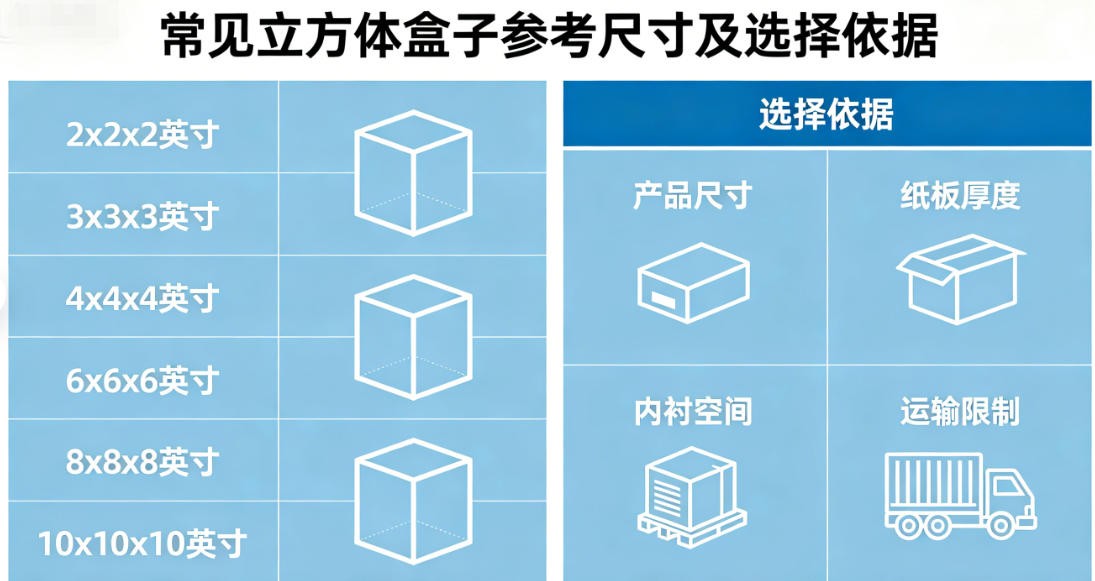
I always tell my buyers that cube box sizing is not only about length, width, and height. It is also about how the product sits, how the lid closes, how the corners fold, and how the box moves through shipping. That is why I keep reading the drawing, the sample, and the end use before I approve any size.
How to choose the right size for custom cube boxes?
A box that is too tight damages products. A box that is too loose looks cheap and ships badly. I have seen both mistakes cost real orders.
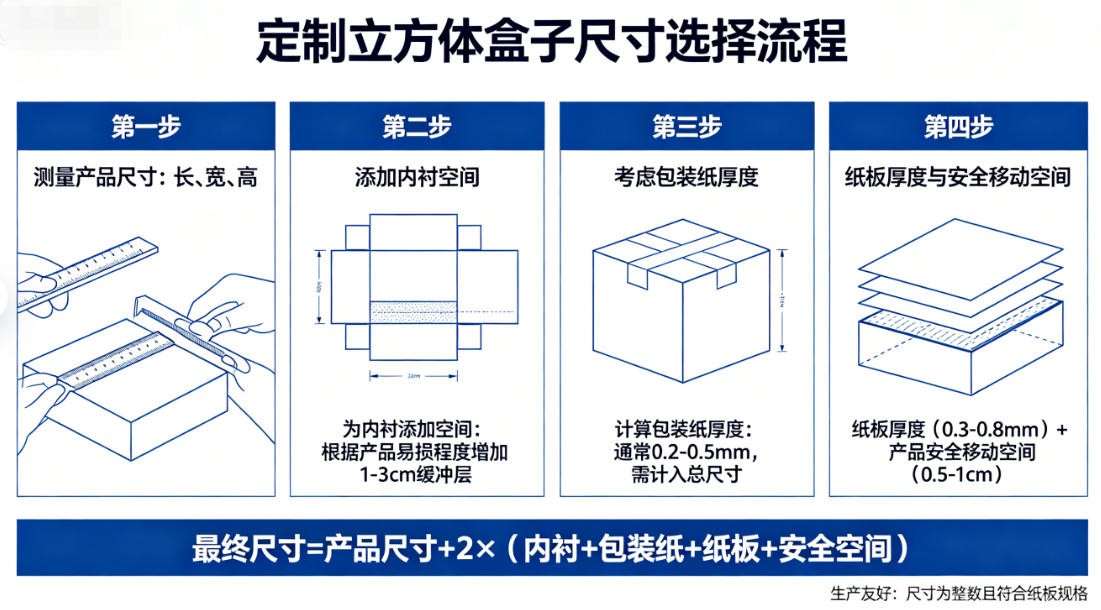
I choose the right custom cube box size by measuring the product first, then adding space for inserts, wrap paper, board thickness, and safe product movement. A good cube box fits the product well, protects it, and still makes production easy.
What I measure first
When I size a custom cube box, I begin with the real product, not the idea of the product. I measure the longest point, the widest point, and the tallest point. Then I check if the item needs foam, EVA, paper tray, or tissue space. I also check if the buyer wants a very tight luxury feel or a little free space for easy take-out. I learned this after one gift box job where the sample looked beautiful, but the product scraped the side wall every time we packed it. Since then, I always add practical clearance before I confirm a size. I also look at board thickness because thick greyboard changes the final inside space. Then I test stacking and shipping. If the box is hard to load into a master carton, the nice cube shape stops being useful.
| What I check | Why I check it | My usual action |
|---|---|---|
| Product size | It sets the inside box size | I measure all sides at least twice |
| Insert or tray | It takes extra room | I add insert depth before final sizing |
| Board thickness | It changes inside and outside size | I confirm inside and outside dimensions separately |
| Packing speed | It affects production cost | I avoid sizes that slow manual loading |
| Shipping carton fit | It affects freight and damage | I test how many boxes fit per case |
How to choose the right box size?
Many buyers choose box size by eye. That feels fast at first, but it often creates waste, returns, and ugly shelves later.
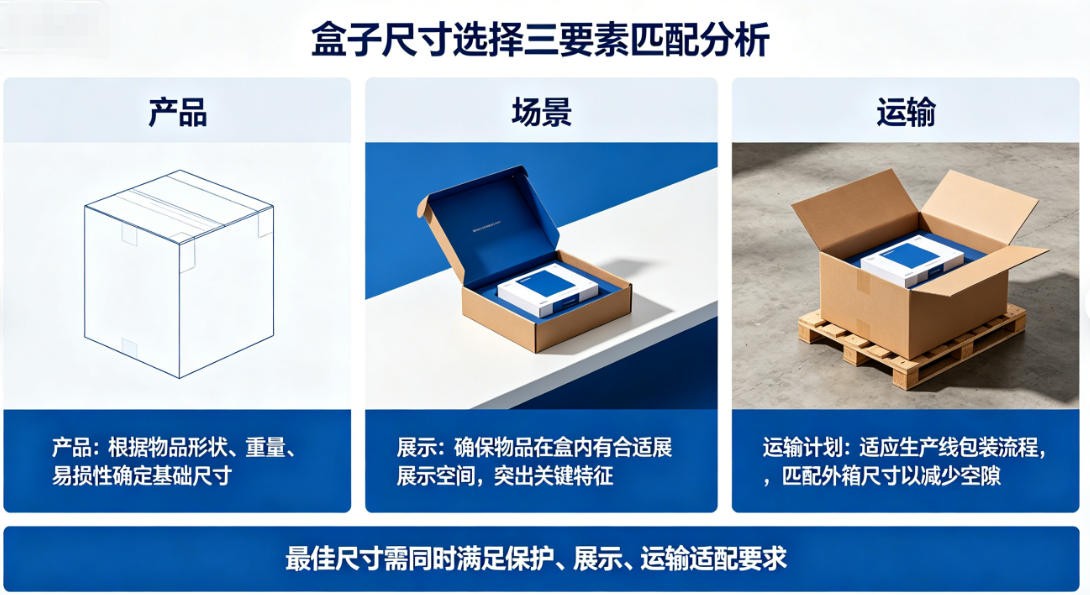
I choose the right box size by matching three things: the product, the presentation, and the shipping plan. The best size protects the item, shows it well, and still fits the production line and outer carton.
How I balance product, display, and factory limits
I think about box size in three layers. First, I think about the product. Second, I think about the customer experience. Third, I think about how the box will be made in the factory. A buyer may ask me for a perfect 5x5x5 inch cube, but if the wrap paper margin, board thickness, and folding method do not match that plan, the final box may not run well. I also check if the size suits the machine range and the finish quality we want. For example, when I move from sample work to volume production, I usually compare a few machine options on my site, such as Fully Auto rigid box machine 2024, Auto rigid box machine, Auto Cardboard groove machine, Large Box pressing machine, and Board Corner cutting machine. If a reader wants help matching size and machine, I want them to open those pages, review the options, and leave contact details on the site so I can suggest the right setup.
| Decision point | Small cube box | Medium cube box | Large cube box |
|---|---|---|---|
| Best use | Jewelry, gifts, samples | Cosmetics, candles, mugs | Shoes, premium kits, sets |
| Main concern | Tight fit and neat finish | Balance of look and cost | Strength and shipping size |
| My focus | Insert accuracy | Clean wrap and lid fit | Board strength and pressing quality |
How to size a cube?
People often think cube sizing is hard. In fact, the rule is simple, but the production details are what make the result good.
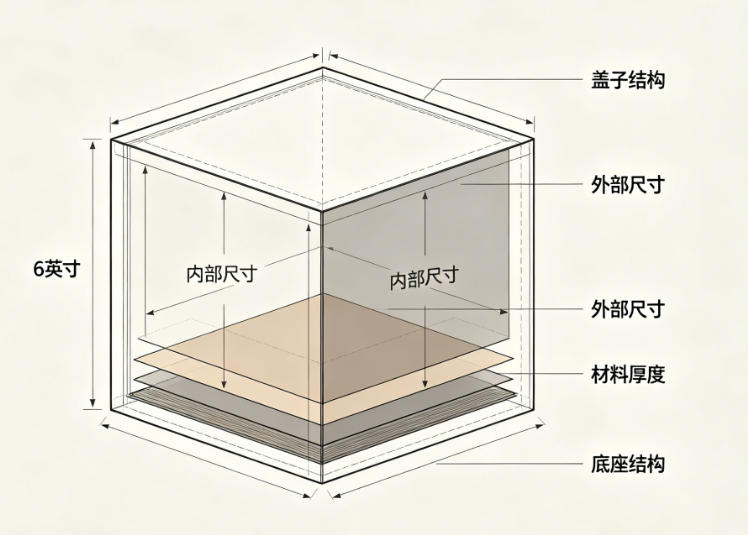
I size a cube by keeping length, width, and height equal. If one side is 6 inches, then all sides are 6 inches. After that, I adjust for inside size, outside size, material thickness, and lid or base structure.
The simple rule and the real factory rule
The math part is easy. A cube has equal sides. So if my inside size is 4x4x4 inches, I start there. But I do not stop there. In rigid box work, I must separate inside size from outside size. If I use thick greyboard and wrapped paper, the outside size grows. If I make a lid-and-base box, I also need to plan the lid overlap, the shoulder, and the clearance so the lid closes smoothly. I remember one perfume box project where the buyer only gave me an outside size. That caused confusion because the glass bottle and insert were designed from the inside size. We fixed it, but it taught me to state both numbers in every drawing. I also test the corners because cube boxes make corner errors easy to see. Good grooving and cutting matter a lot. That is why I often review sample rigid box making tools, V groove tools, and the automatic grooving option before I confirm a production route.
| Size term | What it means | Why I use it |
|---|---|---|
| Inside size | Space for the product | It controls product fit |
| Outside size | Final box dimensions | It controls shipping and display |
| Lid clearance | Small extra room for closing | It keeps the lid from sticking |
| Board thickness | Thickness of greyboard or MDF | It changes the final structure |
How to calculate case cube size?
Freight costs rise fast when the case cube is wrong. I have seen a good box turn into a bad deal because of shipping math.
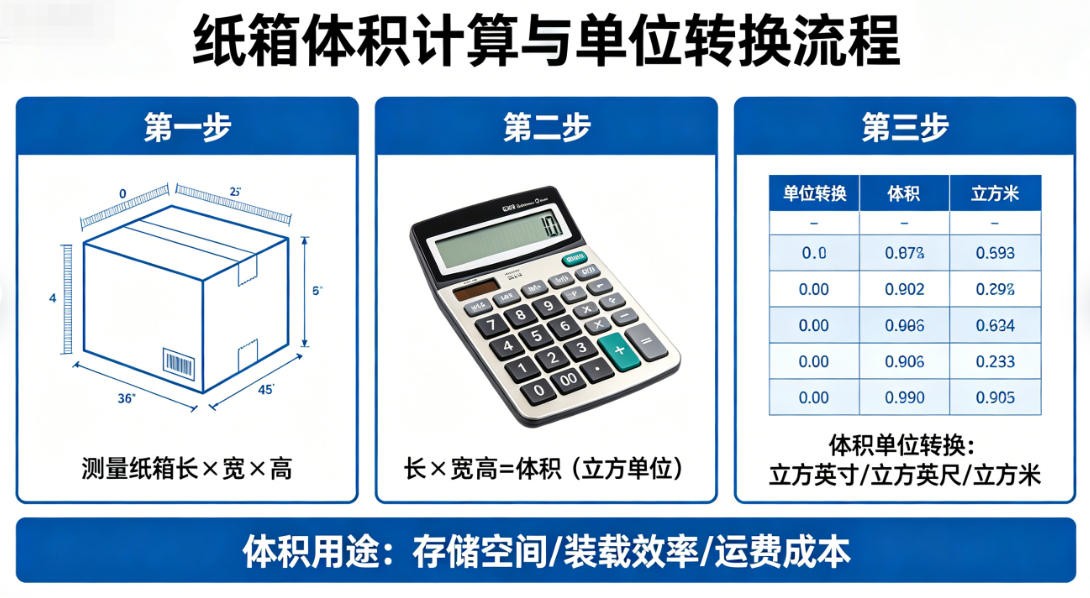
I calculate case cube size by multiplying carton length x width x height. Then I convert the number into cubic inches, cubic feet, or cubic meters. This tells me storage space, loading efficiency, and freight cost.
The formula I use in real shipping work
When I calculate case cube size, I start with the master carton, not the single box. If a cube box measures 6x6x6 inches and I pack 8 units in a 2 by 2 by 2 layout, I still need extra room for carton wall thickness, dividers, and packing tolerance. So the outer carton may end up larger than the simple product math suggests. The main formula is easy: case cube = length x width x height. If I work in inches and want cubic feet, I divide by 1,728. If I work in centimeters and want cubic meters, I divide by 1,000,000. I use this number to compare freight options and pallet efficiency. This step helps me see whether a nice-looking cube box is still a smart business choice. If a buyer plans to scale, I also suggest checking machine pages like Auto Rigid Boxes Machine 2025 version, Semi Auto Polygon Rigid Box Wrapper, and Small edge folding in machine. If these products fit the project, I want the reader to visit the product pages and leave contact details so I can reply with a size and machine suggestion.
| Formula | Use | Example |
|---|---|---|
| L x W x H | Finds carton volume | 20 x 20 x 20 = 8,000 cubic inches |
| Cubic inches / 1,728 | Converts to cubic feet | 8,000 / 1,728 = 4.63 cu ft |
| Cubic cm / 1,000,000 | Converts to cubic meters | 125,000 / 1,000,000 = 0.125 cbm |
Conclusion
I treat cube box sizing as a mix of fit, finish, and freight, and that is what helps me turn a simple cube into a sellable package.

发表回复